Search this site
648 results found with an empty search
- Raisin Scones | Fungus Federation of Santa Cruz
Raisin Scones Some of you may remember the delicious scones that Shoshana served at one of our Albion forays. Here she has given us her recipe. by Shoshana Abrass Raisin scones. Photo by Lisa Tesler Method Combine the fresh milk with 1 1/4 tablespoon (i.e., 1 tbsp. plus 3/4 tsp.) of lemon juice, and stir it briefly. Let stand at room temperature, undisturbed for 5 or 10 minutes until the milk sours* and curdles. You'll know it's ready when it thickens slightly and tiny curdled specks form on the sides of the glass. Mix the melted butter, brown sugar, and raisins in a bowl. Mix the salt, baking soda, and baking powder together, and stir it thoroughly into the bowl. Add the soured milk to make a soft batter. Drop large spoonfuls onto a greased cookie sheet. Bake at 375°F until lightly browned and they spring back to the touch (about 15-20 minutes). * Soured milk is not the same as spoiled milk. The acid in freshly soured milk reacts with the baking soda to create carbon dioxide bubbles in the dough. This makes the scones more light and fluffy, and gives a clean, tangy taste similar to buttermilk while being a little less rich. Recipe contributed: February 1992 Objective: Dessert Total Time: About 1.5 hours Yield: 10 to 12 large scones Suggested Mushrooms: Without mushrooms (non applicabilis, sine fungis) Join FFSC or renew your membership to access the rest of this content. Join FFSC Login as an FFSC member to access the rest of this content. Login Ingredients 1/2 Cup melted butter 1/2 Cup brown sugar 1 Cup raisins or walnuts 3 Cups flour 1/2 tsp salt 1 tsp baking soda 1 tsp. baking powder 1 1/4 Cups (10 fl. oz.) whole milk* 1 1/4 tablespoon (i.e., 1 tbsp. plus 3/4 tsp.) lemon juice (or white vinegar) Cookie sheet Butter or your preferred grease for the cookie sheet Previous Recipe All Recipes Next Recipe
- Auriscalpium vulgare | Fungus Federation of Santa Cruz
Auriscalpium vulgare. Photo by Dan Tischler Auriscalpium vulgare Dan Tischler The ear-pick or pine cone mushroom is a member of the order Russulales , making it a close relative of Russula and Lactarius species along with Stereum and Hericium . Camera Olympus TG-4 Focal L. 6mm Aperture f/3.2 Shutter Sp. 1/100s ISO 200 Flash Off Photo taken on January 19, 2019 Mushroom(s) ... Previous Photo Back to Gallery Next Photo
- Special Thanks from Minister of Stores | Fungus Federation of Santa Cruz
News & Stories / Stewardship Special Thanks from Minister of Stores A special thanks to everyone who helped get us through the 2001 Santa Cruz Fungus Fair. John Brown • March 1, 2001 FFSC store at a past Santa Cruz Fungus Fair. Photo by Mary Alice Jonason Davis Members Only Content Login Join FFSC Related Posts Previous Article All News & Stories Next Article
- 2011 Holiday Potluck was Magnificent! | Fungus Federation of Santa Cruz
News & Stories / Stewardship 2011 Holiday Potluck was Magnificent! The Holiday potluck was a magnificent feast, featuring the best efforts of our many great cooks. Lucky FFSC! Deb • January 1, 2012 Santa and Chicken. 2011 Holiday Potluck photos by Shea Moss, Joel Weinstein and Hugh Smith The room was beautifully decorated and incredibly festive, thanks to the efforts of Margaret Carpenter and the Culinary Committee party hounds. Pecan, Bourbon, and Butterscotch Bread Pudding. 2011 Holiday Potluck photos by Shea Moss, Joel Weinstein and Hugh Smith The appetizers alone would have made anyone happy, but were followed by delicious main dishes and an over-the-top dessert buffet, including delicious Mushroom Piroshki by Vellany Pearce and a great Pecan, Bourbon, and Butterscotch Bread Pudding from Epicurious (Bon Appétit) prepared by Monise Sheehan. It doesn’t contain mushrooms, but it is divine and would be really good with a few Candy Caps thrown in. The final treat was a tray of Candy Cap Glazed Pumpkin Tarts made by Bob Wynn! Login for more photos below! Members Only Content Login Join FFSC Related Posts 2008 Holiday Potluck Recap Previous Article All News & Stories Next Article
- Melany Kahn | Fungus Federation of Santa Cruz
Melany Kahn Author, Painter, Film Producer Melany Kahn started hunting for mushrooms in Vermont in 1968 when her family bought a farm in West Brattleboro. For the last 22 years she has taught children how to forage for wild mushrooms. Recently, Melany presented a talk to children at TEDxBoston on planetary stewardship, "You're never too young to learn or too old to start foraging" She is a member of the Education Committee for the North American Mycological Association (NAMA), and a Board Member of the Monadnock Mushroomers Unlimited, her local NH mushroom club. https://www.masongoesmushrooming.com/ Melany Kahn Upcoming Santa Cruz Fungus Fair Talks Buy Tickets A Multi-Generational Hobby An animated read aloud of Mason Goes Mushrooming by author Melany Kahn, followed by a beginner's mushroom ID session and Q and A for… Show More Saturday, January 13, 2024 10:30 AM - 11:30 AM Room 1 Family friendly Kid's Interactive Mushroom Cooking Demo How to cook a mushroom for the non-mushroom lover in your life, with humor and a lot of butter. Saturday, January 13, 2024 1:30 PM - 2:30 PM Room 1 A Multi-Generational Hobby An animated read aloud of Mason Goes Mushrooming by author Melany Kahn, followed by a beginner's mushroom ID session and Q and A for… Show More Sunday, January 14, 2024 1:30 PM - 2:30 PM Room 1 Past Santa Cruz Fungus Fair Talks A Multi-Generational Hobby An animated read aloud of Mason Goes Mushrooming by author Melany Kahn, followed by a beginner's mushroom ID session and Q and A for the entire family. Santa Cruz Fungus Fair Sunday, January 14, 2024 1:30 PM - 2:30 PM Room 1 Family friendly Kid's Interactive Mushroom Cooking Demo How to cook a mushroom for the non-mushroom lover in your life, with humor and a lot of butter. Santa Cruz Fungus Fair Saturday, January 13, 2024 1:30 PM - 2:30 PM Room 1 A Multi-Generational Hobby An animated read aloud of Mason Goes Mushrooming by author Melany Kahn, followed by a beginner's mushroom ID session and Q and A for the entire family. Santa Cruz Fungus Fair Saturday, January 13, 2024 10:30 AM - 11:30 AM Room 1
- CEOs Epistle to the Fungophiles: April 2000 | Fungus Federation of Santa Cruz
News & Stories / Stewardship CEOs Epistle to the Fungophiles: April 2000 What a party!! Last night was the annual Wme & Mushroom Fest and it was, by overwhelming consensus, the best ever. Deb • April 1, 2000 Turbinellus floccosus. © aguadinero (CC-BY-NC) (inaturalist.org, obs. 253312082) Well over a hundred FFSC members and their lucky guests brought a great array of delicacies, complemented by wine from Bonny Doon, Ahlgren, Santa Cruz Mountain Vineyards, Zayante Vineyards, Osocalis, River Run and David Bruce. We were serenaded with recorder music by Ensemble Virelai. Table arrangements and twinkling lights set the mood beautifully. It seems like every year this "do" is a little bit bigger and a little bit better, but this year was a quantum leap! Big thanks and congratulations for a job well done are in order for Culinary Minister Rene Seltzer and the Culinary Committee and Jeff Emery, de facto Minister of Libations. Stop everything right now, get out that exquisite FFSC wineglass you brought home, and raise a glass for them again (on-duty air traffic controllers excepted!) Local forays are still on the agenda - check the Hotline for Ken Sommers' scheduled dates. Bob Sellers is planning further forays for the Jasper Ridge Study. You can call him for details. As the rains taper off locally, we shift our focus to long distance forays. You'll fmd details inside about the Spring Foray on May 5-7, as well as the Lake Tahoe Foray on September 15-17 and the Echo Summit Foray on September 29 - October 1. Clear your calendar and come along! See you at the Continental Foray and Picnic on Sunday, April 16th. Members Only Content Login Join FFSC Related Posts Previous Article All News & Stories Next Article
- Jason Raiti | Fungus Federation of Santa Cruz
Jason Raiti Botany-Mycology Graduate Student, Pringle Lab | University of Wisconsin–Madison I’m Jason Raiti—a mycologist, educator, and creative technologist. I’m currently pursuing a graduate degree in Botany at the University of Wisconsin–Madison, where I study the evolutionary morphology of Amanita spores in the Pringle Lab. My research integrates ecology, phylogenetics, and computational analysis, with a strong focus on science communication and fungal conservation. I also serve as a board member for the Wisconsin Mycological Society, where I run our speaker series. Prior to joining UW–Madison, I served as a board member of the Central Texas Mycological Society, where I led hands-on workshops in low-tech mushroom cultivation and wild-to-agar cloning. My work has included cultivating bioluminescent fungi in Brazil, co-authoring a paper on robotic water sampling for IROS, and contributing to NASA-affiliated robotics projects, including an autonomous lunar rover and a space-trash cleaning robot! I am also passionate about teaching, interdisciplinary collaboration, and finding unexpected intersections between science, technology, and creativity. From developing conservation-themed mobile games to generating mushroom-inspired AI art and poetry, I aim to foster curiosity and accessible engagement with the natural world. Outside of academia, I enjoy doing anything outdoors- hiking, foraging, surfing, climbing, running etc. I also love to play guitar and make any kind of art or poetry. I believe that creativity and science are deeply intertwined, and I strive to bring a sense of wonder and playfulness to everything I do. Botany-Mycology Graduate Student Pringle Lab | University of Wisconsin–Madison Jason Raiti Upcoming Santa Cruz Fungus Fair Talks Buy Tickets Fungi in Art Through Space and Time A continent-by-continent exploration of the role the fungi have played in art from 10,000 years ago with petroglyphs, to medieval southeast Asian poetry, to… Show More Saturday, January 10, 2026 12:40 PM - 1:40 PM Room 3 The Mystery of Amanita phalloides A deep dive into the literature in an accessible form, to tell the story of the invasive fungus Amanita phalloides. This is not your… Show More Sunday, January 11, 2026 12:40 PM - 1:40 PM Room 3 Past Santa Cruz Fungus Fair Talks The Mystery of Amanita phalloides A deep dive into the literature in an accessible form, to tell the story of the invasive fungus Amanita phalloides. This is not your average "invasion biology" story, it will touch upon the themes of historical collections, community science, and "Mother Trees". It will end with a discussion of open questions in the field of mycology, and their implications for our societal discourse around cooperation and competition. Santa Cruz Fungus Fair Sunday, January 11, 2026 12:40 PM - 1:40 PM Room 3 Fungi in Art Through Space and Time A continent-by-continent exploration of the role the fungi have played in art from 10,000 years ago with petroglyphs, to medieval southeast Asian poetry, to Mario and The Last of Us in modern age. Santa Cruz Fungus Fair Saturday, January 10, 2026 12:40 PM - 1:40 PM Room 3
- Chicken Marsala with Chanterelles | Fungus Federation of Santa Cruz
Chicken Marsala with Chanterelles At an Albion foray, I overheard someone speak of Marsala wine and chanterelles being a natural combination. I didn't get their recipe, so here's mine. by John Brown Cantharellus californicus. © b0ry (CC-BY-NC) (from inaturalist.org, obs. 346500162) Method Melt butter in the skillet, then place the chicken thighs skin-side down. (To avoid crowding the skillet, fry in 2 or 3 batches.) Pan fry the chicken at medium-high heat (375°F to 400°F) for 6 to 8 minutes until the skin is golden and crisp, then flip and cook for another 4 or 5 minutes on the other side. Transfer chicken to the pot. (If using batches, repeat above with remaining chicken thighs.) Add the entire bottle of Marsala wine to the pot of chicken thighs, and bring to a boil. Let it boil fiercely for 2 or 3 minutes. Cover the pot and simmer on low-medium, until tender and falls apart easily when scrunched (30 to 45 minutes). Use tongs to remove chicken and let rest on a platter, leaving the liquid in the pot. Strip off and discard skin from chicken. While the chicken rests, turn the heat up to medium, and let the pot of Marsala heat up until the sauce bubbles. (At this point, you can either use the sauce as-is for a thinner au jus style sauce, or let it continue to bubble until it reduces down by about half into a thicker glaze, about 12-15 more minutes). Whisk in a knob of butter, plus salt and pepper to taste. In the skillet, melt a bit more butter on medium heat and sauté the chanterelles until tender and aromatic (about 5 minutes). (To avoid crowding the skillet, sauté in 2 separate batches.) Transfer the sautéed chanterelles and the resting chicken back into the pot of bubbling Marsala sauce until heated through (2 to 3 minutes), then serve. Recipe contributed: January 1996 I came up with this recipe after that Albion foray. The next day the leftovers were delicious, and I could swear I could still taste the delicate chanterelle flavor in the mushrooms, and further plan to freeze the leftovers. I'm allergic to flour, and except for the added butter, I add no thickeners to the sauce, preferring the au jus effect as the thin sauce penetrates better. Objective: Main course Total Time: 1.5 to 2 hours Yield: 8 mains or 16 potluck servings Suggested Mushrooms: Chanterelle (Cantharellus californicus, Cantharellus formosus, Cantharellus subalbidus) Join FFSC or renew your membership to access the rest of this content. Join FFSC Login as an FFSC member to access the rest of this content. Login Ingredients 15 to 17 chicken thighs, with skin Butter 1 bottle (750 ml) of Marsala wine (e.g., Gibson) Salt and pepper to taste 1 to 1.5 lbs of fresh chanterelles 12" or 14" large skillet (cast iron, stainless steel, or hard-anodized so it doesn't react to the wine) 6 to 8 quart Dutch oven or heavy-bottomed stockpot Previous Recipe All Recipes Next Recipe
- Coprinopsis Lagopus Group | Fungus Federation of Santa Cruz
Coprinopsis lagopus gr. © Terry Way Coprinopsis Lagopus Group Terry Way This beautiful mushroom was found in Terry's backyard. Phil Carpenter pegs it as being in the Coprinopsis lagopus group. One of the Inky Caps, this exquisite and evanescent member of the Psathyrellaceae family is a feast for the eyes. Not for the table, though: this tiny mushroom is considered inedible. Camera Canon EOS 5D Mark III Focal L. 100mm Aperture f/22.0 Shutter Sp. ISO 10000 Flash Off Photo taken on September 29, 2014 Mushroom(s) ... Previous Photo Back to Gallery Next Photo
- Roasted Garlic and Portobello Sandwich | Fungus Federation of Santa Cruz
Roasted Garlic and Portobello Sandwich This portobello sandwich from the turn of the 21st century is a classic! by Rene Seltzer Agaricus bisporus. © yashou10 (CC-BY-NC) (from inaturalist.org, obs. 61125717) Method Roasted Garlic Puree Preheat oven to 450°F. Lay the full head of garlic on a square of foil. Drizzle 1 tsp. of the olive oil over the top. Bring up the sides of the foil and wrap up the garlic. Roast garlic head until tender (about 40 minutes). In the meantime, prepare the mushrooms (below), and add them to the same oven so that they finish at about the same time. Prepare the Mushrooms Remove stems from portobellos, wipe caps clean with a moist paper towel. Rub the caps all over with 1 Tbsp. olive oil and sprinkle with salt. Lay them in an ovenproof pan, gill sides up. In a small bowl, combine the shallots, 1 clove chopped garlic, thyme, balsamic vinegar, and salt and pepper to taste. Sprinkle the shallot mixture evenly over each portobello cap. Roast the filled portobellos until the mushrooms are tender and browned (20 to 30 minutes). Assemble and Serve Remove garlic from oven when done, and allow garlic head to cool to the touch. Squeeze the garlic pulp into a small bowl and mash. Remove the portobellos from the oven when done, and set the oven temperature to broil. Toast the bread slices on both sides under the broiler. Spread each slice with a portion of the roasted garlic puree. Sprinkle with salt and pepper to taste. Top four of the slices with a roasted portobello cap, and place them on a baking sheet. Sprinkle the cheese over each cap, and return them to the oven to melt the cheese. Top with parsley and another bread slice complete the sandwich. Recipe contributed: October 2000 This dish was inspired by a recipe in the Nov. 2000 issue of Fine Cooking . In this recipe, the portobello is served whole, like a hamburger. Editor's Note : Fine Cooking magazine ceased being published in 2022, and shut down its website shortly afterwards. Objective: Main course Total Time: About 1½ hours Yield: 4 servings Suggested Mushrooms: Portobello/portabella, champignon, cremini, button (Agaricus bisporus) Join FFSC or renew your membership to access the rest of this content. Join FFSC Login as an FFSC member to access the rest of this content. Login Ingredients 1 full head garlic, loose papery skins removed 1 clove garlic, finely chopped 1 Tbsp. olive oil 8 slices whole grain bread 4 medium portobellos (cap diameters about 1" wider than the bread)* Coarse salt 2 medium shallots, finely chopped (¼ cup) 1 tsp. chopped fresh thyme 1 Tbsp. balsamic vinegar Freshly ground black pepper ⅔ cups grated Monterey Jack cheese 1 Tbsp. chopped fresh parsley * If your loaf is 4.5" wide, then 5.5" caps (raw) usually shrink down to fit nicely after cooking. If a cap is very large, slice it on the diagonal to fit the slices on the bread. If too small, use additional caps as needed. Previous Recipe All Recipes Next Recipe
- Relishing Medicinal Mushrooms Part II | Fungus Federation of Santa Cruz
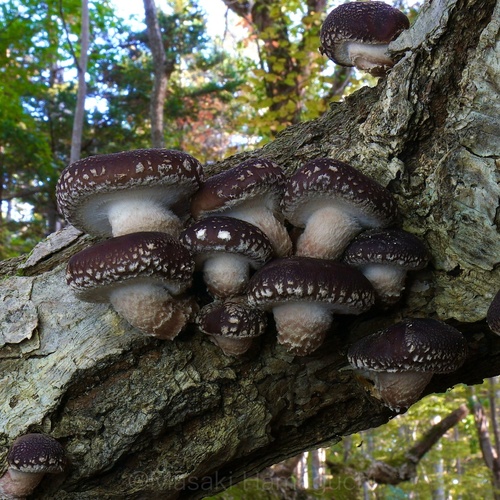
News & Stories / Mycology & Art News Relishing Medicinal Mushrooms Part II Food Is Medicine Coach/Chef Zachary Mazi welcomes you back to our two-part journey into the use of medicinal mushrooms in cooking. Chef Zachary Mazi • April 1, 2013 Photo copyright by Masaki Hamaguchi (https://www.inaturalist.org/photos/443071643) In the first part, we visited the history and use of medicinal mushrooms, and attempt to answer why, at this time in our history, we are inundated with a wealth of new knowledge on the subject. Now, in part 2, we will explore the medicinal values of many of our favorite edibles. We will also include more delicious recipes that Food Is Medicine has created to really relish this delicious medicine. In part 1, we explored the historical context for our desire to know more about mushroom medicines, learned a few of their traditional uses, and learned how vast and truly varied the subject is! Indeed, every year, scores of new studies using medicinal mushrooms and their fractionated parts and pieces are being explored. Their pharmaceutical grade, nearly side-effect-free medicines are indeed being eyed as the next cash crop for pharmaceutical manufacture. The results of these studies are often times staggering, as many of the medicines tackle some very trying problems such as cancer, heart disease, diabetes and brain disease, while leaving few of the side effects associated with our current medications. In certain cases, these medicines make changes in how our bodies respond in ways that can last long after the medicine is no longer ingested. Our body is physically changed! In order for our medicine to be able to utilized in cooking, it must either be medicinal when eaten in its whole form (bio-available) or it must be extractable in water, hot or cold. Miraculously, almost all of our commonly eaten mushrooms that you are likely to find in the grocery store, or even a local foray in the fall, have medicines that are available either from the tea, or decoction, or from consumption of the whole mushroom, either cooked or dried. Without leaving the comfort of Button, Shiitake, Chanterelle, Oyster, Morel, Porcini, Maitake, Chicken of the Woods, Cauliflower, and Matsutake mushrooms, we can find effective medicines for the nervous, digestive, skeletal, circulatory, and immune systems. In addition, within this small (and delicious) medicine cabinet, we also find help for skin disorders, and almost all specimens instigate positive tumor growth modulation, many even help with controlling viruses such as HIV/AIDS and hepatitis. And all of the above have some anti-microbial properties. Chicken of the Woods, or Laetiporeus sulphureus kills E.coli on contact! Sparassis crispa, the cauliflower mushrooms has shown promise against drug-resistant super bacteria… we may demand medicinal mushrooms in the near future if our antibiotic use continues unchecked. Maitake mushrooms seem to have more recorded health effects and means of deriving medicines than any of the above, and many of the medicines derived from this delicious mushroom require complex laboratories. Just Google “maitake medicine” and sit down for a long read. Laboratory or not, there is no reason to stop eating them! Just within this small and extremely accessible selection of fungi, we find vitamins A (and beta carotene), the entire B complex, C, D, K, CoQ10, minerals such as iodine, magnesium, iron, copper, gold, potassium, germanium, zinc, many diverse amino acids, including the essential eight we can’t manufacture in our bodies and must get from the environment. Not to mention a library of thousands of molecules both small and extremely large, (like the polysaccharides such as the beta-glucans that are receiving the spotlight for their clear role in cancer prevention and reversal) arranged bio-chemically into incredibly diverse suites of molecules, many newly discovered and named for their sources exclusive to the parent fungi (Rogers). There is great benefit in exploring the commonly known and recognized mushrooms for medicines. Many of them have been written about for more than a millennium, as in the case of shiitake ( Lentinula edodes , mentioned in part 1). Most common edibles—because of their relative accessibility—have been more thoroughly researched and studied over the past fifty years than many of the more obscure and difficult to access medicinal fungi. Unfortunately, it would take a book to talk about all of the benefits of each of these mushrooms, so we will touch on five of the most popular edibles, and leave the rest for another article or conversation…this topic is as vast as the unknown Kingdom itself. Agaricus It seems fitting, to discuss the delicious and healing properties of mushrooms in the order of popularity and familiarity. One mushroom amongst all others, so well known that it is the default that comes to mind when “eating mushrooms” is mentioned: the Agaricus mushroom. It is commonly known as the button mushroom, the crimini mushroom, or the mighty Portobello (the “adult” crimini). All three of these belong to the Agaricus bisporus (or A. brunnescens , depending upon whom you ask), and indeed there are a number of Agaricus mushrooms not commonly eaten that can provide powerful medicines as well, such as the Horse mushroom ( A. arvensis ), and the field mushroom ( A. campestris ). The common button mushroom has been used in Chinese medicine for many centuries, for easing indigestion, and increasing appetite. In 2008, the Journal of Nutrition published the following about a study at Tufts University: “The results suggest that white button mushrooms may promote immune function by increasing production of antiviral and other proteins that are released by cells while seeking to protect and repair tissue.”(3) White button mushrooms! The US produces 500 million pounds of white button mushrooms every year, a portion of the world trade, and of these almost 350 million pounds are grown near Kennett Square, PA, USA(4), which holds a yearly mushroom fest open to the public. Unfortunately, it is also one of the most common crops to rely on the heavy use of pesticides and preservatives like hydrogen peroxide, which is used to prevent browning and kill invaders(2). It is important to seek organic mushrooms exclusively, as these mass produced mushrooms are generally not washed before being served in even the most elegant eating establishments. What’s more, uncooked button mushrooms contain the carcinogen agaritine, a potentially lethal chemical in the hydrazine family (think: rocket fuel) that seems to break down during cooking. Some texts purport, however, that as much as 75% of the toxin does not even break down in cooking, and that long binges on these mushrooms can cause a toxic build-up in the body of these potentially lethal chemicals. The Agaricus is probably not a good everyday mushroom, but certainly not one to be simply forgotten in lieu of the more exotic mushrooms to which we now turn our attention. The medicine is in the mushroom! Shiitake Second in commercial popularity only to the Agaricus is the shiitake mushrooms ( Lentinula edodes ), which have now taken a significant bite out of the multi-billion dollar industry of white button mushrooms during their 30 year rise in use and popularity. These are flavorful and indispensible addition to the refrigerator pharmacy. First, they are easy to grow at home, even easier to find at almost any grocery store, and are often grown locally because of their viability as a crop. Second, very few pesticides are needed to grow these beauties; and third, both their taste and texture can be well adapted to almost any style of cuisine despite their Japanese origins. Shiitake mushrooms have some very powerful medicines indeed. They have been shown to possess compounds that lower triglycerides, cholesterol and phospholipids in blood; decrease bile cholesterol while increasing bile acids, helping to emulsify and digest fats more readily. They are an effective alternative to statin type drugs, which have negative side effects, and decrease blood glucose and increase insulin in diabetic patients. In addition, they are immuno-stimulating, with better recorded activity than Trametes , Cordyceps and Ganoderma (reishi) mushrooms, all of which are currently getting more press than the humble shiitake for their respective medicines! Hot water extracts of shiitake, besides making a delicious miso soup broth, are effective in breast cancer inhibition, and one of the isolated compounds is medically prescribed in Japan for gastric cancer, lung cancer and melanoma. They work with the body systems, and are effective in stimulating the body’s own immune system against the offending cancer cell. In one trial the extract, applied externally to skin carcinoma, induced cell death in the cancer cell and had zero reaction in the adjacent healthy skin cells. Amazing! (Stamets). Even more amazing, they are anti-candida, and hot water extracts inhibit herpes, equine encephalitis, polio, measles, and mumps! The juice of the mushroom was especially effective against E. coli and Staphylococcus aureus , but left the beneficial bacteria in even better condition due to the presence and preference of their mushroom sugars! While some immune reactions have been recorded with shiitakes, it has usually involved dramatic exposure to the mushrooms, such as farm workers or gluttonous binges, rather than normal individual consumption. Eat shiitakes everyday. Coming next month: Oysters, Chanterelles and Morels Members Only Content Login Join FFSC Related Posts Relishing Medicinal Mushrooms Part III Relishing Medicinal Mushrooms Part I Previous Article All News & Stories Next Article
- Beauty Lies in the Eyes of the Beholder - Plato | Fungus Federation of Santa Cruz
Beauty lies in the eye of the beholder--Plato. Photo by Mike Slavers Beauty Lies in the Eyes of the Beholder - Plato Mike Slavers "Remember how in that communion only, beholding beauty with the eye of the mind , he will be enabled to bring forth, not images of beauty, but realities (for he has hold not of an image but of a reality), and bringing forth and nourishing true virtue to become the friend of God and be immortal, if mortal man may." - Plato I have been photographing mushrooms in the Corte Madera Park hiking area for two years. This is photo is the first I saw and started my fascination with the life form. The park is on Skyline Drive about half way between Hwy 92 and Woodside Road. All of the mushrooms I have photographed, I have left them as they were when I found them. Beauty. Photo by Mike Slavers Beauty. Photo by Mike Slavers Beauty. Photo by Mike Slavers Camera Canon EOS Digital Rebel Focal L. 73mm Aperture f/5.6 Shutter Sp. 1/200s ISO 100 Flash Fired Photo taken on January 1, 2014 Mushroom(s) ... Previous Photo Back to Gallery Next Photo