
%20-%20Thum.jpg)
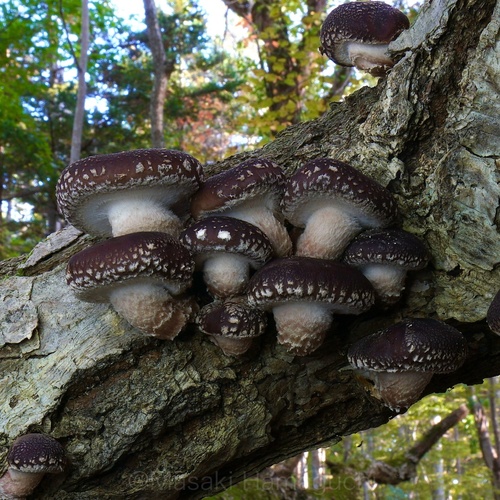
Photo copyright by Masaki Hamaguchi (https://www.inaturalist.org/photos/443071643)
In the first part, we visited the history and use of medicinal mushrooms, and attempt to answer why, at this time in our history, we are inundated with a wealth of new knowledge on the subject. Now, in part 2, we will explore the medicinal values of many of our favorite edibles. We will also include more delicious recipes that Food Is Medicine has created to really relish this delicious medicine.
In part 1, we explored the historical context for our desire to know more about mushroom medicines, learned a few of their traditional uses, and learned how vast and truly varied the subject is! Indeed, every year, scores of new studies using medicinal mushrooms and their fractionated parts and pieces are being explored. Their pharmaceutical grade, nearly side-effect-free medicines are indeed being eyed as the next cash crop for pharmaceutical manufacture. The results of these studies are often times staggering, as many of the medicines tackle some very trying problems such as cancer, heart disease, diabetes and brain disease, while leaving few of the side effects associated with our current medications. In certain cases, these medicines make changes in how our bodies respond in ways that can last long after the medicine is no longer ingested. Our body is physically changed!
In order for our medicine to be able to utilized in cooking, it must either be medicinal when eaten in its whole form (bio-available) or it must be extractable in water, hot or cold. Miraculously, almost all of our commonly eaten mushrooms that you are likely to find in the grocery store, or even a local foray in the fall, have medicines that are available either from the tea, or decoction, or from consumption of the whole mushroom, either cooked or dried. Without leaving the comfort of Button, Shiitake, Chanterelle, Oyster, Morel, Porcini, Maitake, Chicken of the Woods, Cauliflower, and Matsutake mushrooms, we can find effective medicines for the nervous, digestive, skeletal, circulatory, and immune systems. In addition, within this small (and delicious) medicine cabinet, we also find help for skin disorders, and almost all specimens instigate positive tumor growth modulation, many even help with controlling viruses such as HIV/AIDS and hepatitis. And all of the above have some anti-microbial properties. Chicken of the Woods, or Laetiporeus sulphureus kills E.coli on contact! Sparassis crispa, the cauliflower mushrooms has shown promise against drug-resistant super bacteria… we may demand medicinal mushrooms in the near future if our antibiotic use continues unchecked. Maitake mushrooms seem to have more recorded health effects and means of deriving medicines than any of the above, and many of the medicines derived from this delicious mushroom require complex laboratories. Just Google “maitake medicine” and sit down for a long read. Laboratory or not, there is no reason to stop eating them!
Just within this small and extremely accessible selection of fungi, we find vitamins A (and beta carotene), the entire B complex, C, D, K, CoQ10, minerals such as iodine, magnesium, iron, copper, gold, potassium, germanium, zinc, many diverse amino acids, including the essential eight we can’t manufacture in our bodies and must get from the environment. Not to mention a library of thousands of molecules both small and extremely large, (like the polysaccharides such as the beta-glucans that are receiving the spotlight for their clear role in cancer prevention and reversal) arranged bio-chemically into incredibly diverse suites of molecules, many newly discovered and named for their sources exclusive to the parent fungi (Rogers).
There is great benefit in exploring the commonly known and recognized mushrooms for medicines. Many of them have been written about for more than a millennium, as in the case of shiitake (Lentinula edodes, mentioned in part 1). Most common edibles—because of their relative accessibility—have been more thoroughly researched and studied over the past fifty years than many of the more obscure and difficult to access medicinal fungi. Unfortunately, it would take a book to talk about all of the benefits of each of these mushrooms, so we will touch on five of the most popular edibles, and leave the rest for another article or conversation…this topic is as vast as the unknown Kingdom itself.
Agaricus
It seems fitting, to discuss the delicious and healing properties of mushrooms in the order of popularity and familiarity. One mushroom amongst all others, so well known that it is the default that comes to mind when “eating mushrooms” is mentioned: the Agaricus mushroom. It is commonly known as the button mushroom, the crimini mushroom, or the mighty Portobello (the “adult” crimini). All three of these belong to the Agaricus bisporus (or A. brunnescens, depending upon whom you ask), and indeed there are a number of Agaricus mushrooms not commonly eaten that can provide powerful medicines as well, such as the Horse mushroom (A. arvensis), and the field mushroom (A. campestris).
The common button mushroom has been used in Chinese medicine for many centuries, for easing indigestion, and increasing appetite. In 2008, the Journal of Nutrition published the following about a study at Tufts University: “The results suggest that white button mushrooms may promote immune function by increasing production of antiviral and other proteins that are released by cells while seeking to protect and repair tissue.”(3) White button mushrooms! The US produces 500 million pounds of white button mushrooms every year, a portion of the world trade, and of these almost 350 million pounds are grown near Kennett Square, PA, USA(4), which holds a yearly mushroom fest open to the public.
Unfortunately, it is also one of the most common crops to rely on the heavy use of pesticides and preservatives like hydrogen peroxide, which is used to prevent browning and kill invaders(2). It is important to seek organic mushrooms exclusively, as these mass produced mushrooms are generally not washed before being served in even the most elegant eating establishments. What’s more, uncooked button mushrooms contain the carcinogen agaritine, a potentially lethal chemical in the hydrazine family (think: rocket fuel) that seems to break down during cooking. Some texts purport, however, that as much as 75% of the toxin does not even break down in cooking, and that long binges on these mushrooms can cause a toxic build-up in the body of these potentially lethal chemicals. The Agaricus is probably not a good everyday mushroom, but certainly not one to be simply forgotten in lieu of the more exotic mushrooms to which we now turn our attention. The medicine is in the mushroom!
Shiitake
Second in commercial popularity only to the Agaricus is the shiitake mushrooms (Lentinula edodes), which have now taken a significant bite out of the multi-billion dollar industry of white button mushrooms during their 30 year rise in use and popularity. These are flavorful and indispensible addition to the refrigerator pharmacy. First, they are easy to grow at home, even easier to find at almost any grocery store, and are often grown locally because of their viability as a crop. Second, very few pesticides are needed to grow these beauties; and third, both their taste and texture can be well adapted to almost any style of cuisine despite their Japanese origins.
Shiitake mushrooms have some very powerful medicines indeed. They have been shown to possess compounds that lower triglycerides, cholesterol and phospholipids in blood; decrease bile cholesterol while increasing bile acids, helping to emulsify and digest fats more readily. They are an effective alternative to statin type drugs, which have negative side effects, and decrease blood glucose and increase insulin in diabetic patients.
In addition, they are immuno-stimulating, with better recorded activity than Trametes, Cordyceps and Ganoderma (reishi) mushrooms, all of which are currently getting more press than the humble shiitake for their respective medicines! Hot water extracts of shiitake, besides making a delicious miso soup broth, are effective in breast cancer inhibition, and one of the isolated compounds is medically prescribed in Japan for gastric cancer, lung cancer and melanoma. They work with the body systems, and are effective in stimulating the body’s own immune system against the offending cancer cell. In one trial the extract, applied externally to skin carcinoma, induced cell death in the cancer cell and had zero reaction in the adjacent healthy skin cells. Amazing! (Stamets).
Even more amazing, they are anti-candida, and hot water extracts inhibit herpes, equine encephalitis, polio, measles, and mumps! The juice of the mushroom was especially effective against E. coli and Staphylococcus aureus, but left the beneficial bacteria in even better condition due to the presence and preference of their mushroom sugars! While some immune reactions have been recorded with shiitakes, it has usually involved dramatic exposure to the mushrooms, such as farm workers or gluttonous binges, rather than normal individual consumption. Eat shiitakes everyday.
Coming next month: Oysters, Chanterelles and Morels

_%20Photo%20by%20Larry%20Volpe.jpg)