Search this site
648 results found with an empty search
- Will Mushrooms Make Styrofoam Obsolete? | Fungus Federation of Santa Cruz
News & Stories / Mycology & Art News Will Mushrooms Make Styrofoam Obsolete? The May 2013 issue of New Yorker magazine had an article by Ian Frazier about a mycelium-based packaging material destined to make styrofoam packaging obsolete. Here's a shorter recap of the story, focusing on some interesting mycological details. Shea Moss • September 29, 2013 Mycelium Gavin McIntyre and Eben Bayer, two students from Rensselaer Polytechnic Institute in Troy, New York, grow all-natural substitutes for plastic from chitin molecules found in polypores. McIntyre and Bayer were taking a class from Professor Burt Swersey called Inventor’s Studio. When McIntyre and Bayer took the class in the fall term of their senior year, neither came up with anything very workable at first. Gavin’s idea for a car-exhaust attachment that would burn off emissions with charged plasma was ingenious but probably unsafe. “Like driving around with a lightning bolt in your tailpipe.” Eben’s idea for a no-moving parts turbine that could generate electricity in high winds by means of sound did not impress Swersey at all. Toward the end of their first semester, Eben thought of a previous R.P.I. class, in which he had been given the problem of making insulation panels out of a mineral called perlite. The difficulty with perlite is that it’s loose, like handfuls of popped popcorn, and tends to settle. Eben, who is the product of a one room schoolhouse in rural Vermont, grew up helping his Dad, a maple sugar farmer, on a one hundred forty acre sugarbush farm. Ranks of maple trees rise on the rocky hillsides above the farm. In the spring they would tap thousands of the best trees and connect them to a vat in the sugarhouse by PVC tubes along the steep ground. Father and son built a complicated wood chip burner to process the syrup in the sugar shack, without burning the roof down. One of Eben’s chores was to move the wood chips to the burner from on open bunker made of telephone poles and chicken wire. Though covered with a tarp, the pile of chips sometimes got wet and sprouted mushrooms. Eben noticed how the fine white fabric of their mycelium sometimes grew through the pile so tenaciously that big bunches of chips stuck together in a single clump. Eben ordered a grow-it-yourself mushroom kit while he was home during a break. He took the mushroom spores the kit contained, combined them with water and nutrients in a glass jar, added some perlite, and put the jar in the basement. When he checked a few days later, the jar held a solid white disk of perlite knit together by mycelium strands. With not much else to show for the semester of Inventor’s Studio, Eben brought the perlite disk to class. “He takes this thing out of his pocket,” Swersey recalled, “and it’s white, this amazing piece of insulation that had been grown, without hydrocarbons, with almost no energy used. The stuff could be made with almost any waste materials — rice husks, cotton wastes, stuff farmers throw away, stuff they have no market for — and it wouldn’t take away from anybody’s food supply, and it could be made anywhere from local materials, so you could cut down on transportation costs. And it would be completely biodegradable! What more could you want?” Gavin and Eben worked together for the next year trying all kinds of substrates and heating methods. Twice, they almost burned the lab at school down. They tried lint from clothes dryers, Jell-o, lobster shells, even hair. (“If it worked we were going to call the product Hairsulate.”) Instead of hunting for venture capital, Eben and Gavin financed their company by winning grants and competitions. They were still proceeding in the Edisonian hit or miss style, when Sue Van Hook, a senior teaching associate in biology and natural sciences at Skidmore College, in Saratoga Springs, read an article in the local Albany Times Union. When studying for her degree in botany at Humboldt State University in California, she took a course in mycology and was smitten. She wrote her graduate thesis on macrofungi and has been studying mushrooms in the field and under microscopes ever since. After eighteen years of teaching at Skidmore, she saw something that changed her life. She called Eben and talked with him for two hours. She asked Gavin if he knew anything about mushrooms. Neither knew much. She asked, “Can we get married?” (In the fungal sense, I presume). Van Hook went on wide-ranging mushroom hunts collecting new species for the company’s archives. At Skidmore’s bio labs, she and her students spent hours cataloguing the finds and recording their characteristics. The most useful mycelium came from a group of polypores. The mycelium of polypores has very strong hyphae. These hyphae can knit a molded piece of substrate solidly together. A single cubic inch of substrate can contain as much as eight miles of mycelium. Bayer and McIntyre’s invention creates natural substances that imitate plastics. The packaging material made by their factory takes a substrate of agricultural waste, steam pasturizes it, adds trace nutrients and a small amount of water, injects the mixture with pellets of mycelium, puts it in a mold shaped like a piece of packing that protects a product during shipping, and sets the mold on a rack in the dark. Four days later the mycelium has grown throughout the substrate into the shape of the mold, producing a material almost indistinguishable from Styrofoam in form, function, and cost. An application of heat kills the mycelium and stops the growth. When broken up and thrown into a compost pile, the packing material biodegrades in about a month. Van Hook retired from Skidmore to work full time with Eben and Gavin at their company, which they call Evocative . She gives lectures to prospective clients and investors where she projects on screen the molecular structures of chlorophyll, starch, glucose, cellulose, lignin, and chitin. “These are the molecules that nature builds with. For us to have a sustainable planet, we must design and build with these.” The air nearby Evocative often smells of cream of mushroom soup! In a corner of the building a sealed-off space called the Dirty Room receives the agricultural wastes and other substrate materials when they come in. Big white nylon bags filled with chopped up cornstalks, husks, crushed remains of cotton plants, barley hulls, peanut hulls, buckwheat hulls, milo hulls, hemp pith, rice husks, wheat straw and ground up old blue denim. At a conference, Gavin held up a block about the size of half a stick of butter, lighter than balsa, but as hard as pine, a piece of solid mycelium pure chitin that had been grown from nutrients and without any substrate. He said it had possible applications for aeronautics. He added that chitin is also an excellent insulator, and explained how he and his colleagues are growing electric circuits on fungal tissue made of the mycelium of household mold. In the presence of toxic materials, certain molds get around the toxicity by sequestering the metals onto their cell walls. Therefore you can put tissue taken from the mold into a copper solution and impregnate the tissue with varying amounts of copper by changing the concentration. In other words, you can make a fungal resistor that can be part of the circuitry in a computer or a cell phone. Then, instead of sending old computers and phones to be taken apart hazardously in the Third World, you can recycle them with the chitin providing nutrients for new tissue and the metals going back into a solution to be reused. In a press release dated September 24, 2013, Evocative Designs announced upcoming production of Myco Foam surfboard core material. Editor's Note: As of 2025, Evocative has gone on to release numerous mushroom-based meat alternatives, textiles, packaging materials, and construction materials. They're exploring applications in medicine and biotech, as well as computing. The original New Yorker article is now available online. https://www.newyorker.com/magazine/2013/05/20/form-and-fungus Members Only Content Login Join FFSC Related Posts Algae and Fungi Team Up--and They're Lichen It... Previous Article All News & Stories Next Article
- Bioluminescent Mushrooms from Spirits of the Forest | Fungus Federation of Santa Cruz
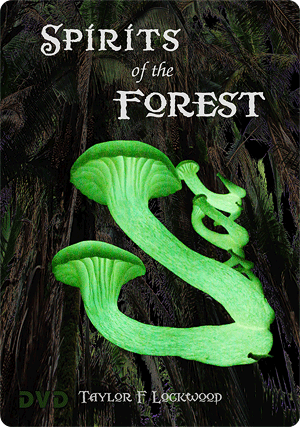
News & Stories / Mycology & Art News Bioluminescent Mushrooms from Spirits of the Forest Bioluminescent mushrooms and classical music from Taylor F. Lockwood. Yevgeny Nyden • November 22, 2013 Cover of Spirits of the Forest DVD (from mushroom.pro). Copyright 2016 Taylor F. Lockwood Enjoy this beautiful video of bioluminescent mushrooms accompanied by classical music, from Taylor Lockwood's "Spirits of the Forest" DVD. Members Only Content Login Join FFSC Related Posts Cam Cam by Taylor Lockwood Taylor Lockwood's National Geographic Magazine Debut Previous Article All News & Stories Next Article
- Albion I Report — Dec 2000 | Fungus Federation of Santa Cruz
News & Stories / Field Reports Albion I Report — Dec 2000 A wonderful time was had by all at the Albion I Foray. The Mushrooms were plentiful, everywhere you looked they perked up their little caps for us to discover. The weather was good, the company exuberant, and everyone had truly a great time. Horst Kuhlmann • January 1, 2001 Ramaria cartilaginea. © Taye Bright (CC-BY-NC) (inaturalist.org, obs. 255731725) Members Only Content Login Join FFSC Related Posts 2002 Albion I Foray: Species List Previous Article All News & Stories Next Article
- Early Fruitings that Don't Require Rain | Fungus Federation of Santa Cruz
News & Stories / Mycology & Art News Early Fruitings that Don't Require Rain It's odd to be writing about the mushroom season in August, when the prospect of rain is months away. Still, there are those early fruitings that do not require rain. Henry Young • September 1, 2002 Agaricus augustus. © Karen Offerein (CC-BY) (from inaturalist.org, ID 345223859) Agaricus augustus , the Prince, fruits in the summer and early fall. A. augustus is related to the common button (and cremini and porcini) mushroom, Agaricus bisporus , found at the market, but with a sweeter almond/anise aroma and taste. This usually is a large mushroom, reaching dinner plate size. The cap is a light tan overlaid with darker fibrils. The flesh of the cap stains a deep yellow when bruised and smells of almond/anise. The gills are pallid when young turning through pink to chocolate brown in age. The stem is about as long as the cap is broad, with a skirt-like annulus. The surface of the stem below the annulus is shaggy. Agaricus augustus. © tovyawager (CC-BY-CC) (from inaturalist.org, ID 359437814) Agaricus augustus cap. © tovyawager (CC-BY-CC) (from inaturalist.org, ID 359437814) Agaricus augustus. © joqatana (CC-BY) (from inaturalist.org, ID 140003307) Agaricus augustus. © snarlsdarwin. (CC-BY-CC) (from inaturalist.org, ID 171088725) Two other mushrooms which can often be found around this time are Laetiporous gilbertsonii (Sulphur Shelf) and Pleurotus ostreatus (Oyster Mushroom). Check out some of our other pages for more info about these mushrooms: What is Not to Love About The Prince? (Agaricus augustus) Four Dry Season Mushrooms To hone up on your ID skills, join our ID classes or drop in at our monthly meetings from September through May. Bring in any mushrooms (the whole mushroom) that you find, in paper or wax bags. Members Only Content Login Join FFSC Related Posts Don't Forget Mushrooms Just Because It’s Summer! Previous Article All News & Stories Next Article
- Phil Carpenter receives Knighton Award at Appalachia NAMA 2023 | Fungus Federation of Santa Cruz
News & Stories / Stewardship Phil Carpenter receives Knighton Award at Appalachia NAMA 2023 Phil Carpenter, FFSC Science Advisor, has been awarded the 2023 Harry and Elsie Knighton Service Award by the North American Mycological Association (NAMA) ! Sue Willis • August 3, 2023 Phil Carpenter receiving Knighton Award. Photo credit: Brennon Strnad The Harry and Elsie Knighton Service Award was established by the NAMA Board of Trustees to recognize and encourage persons who have distinguished themselves in service to their local clubs. It is named for the Knightons, whose efforts began the North American Mycological Association in 1967. The annual award consists of: A plaque Publicity for the winner and club in The Mycophile A one-year membership in the organization Rregistration, housing and foray fees for the next NAMA Foray. Each year's recipient is selected by the three most recent recipients of the Award. Every NAMA-affiliated mycological club may nominate one candidate whom it feels has performed meritorious service during the current or preceding year, which has to be described! The North American Mycological Association (NAMA) is a 501(c)(3) non-profit organization of professional and amateur mycologists with over 90 affiliated mycological societies in the United States, Canada, and Mexico. Phil was presented with the award at the 2023 NAMA National Foray in North Carolina, with over 400 amateur and professional mycologists in attendance. Read a summary of Phil's contributions on pages 9-11 of The Mycophile Quarterly (July August September 2023 issue). Phil Carpenter. (Photo credit: Dan Tischler) Congratulations, Phil! Members Only Content Login Join FFSC Related Posts Field Report - 2021 NAMA Foray Grandby CO Time Lapsed Laetiporous Previous Article All News & Stories Next Article
- Lepiota: Dark Brown Eyes in the Woods | Fungus Federation of Santa Cruz
Lepiota: Dark Brown Eyes in the Woods For me, Lepiota are just the most beautiful mushrooms there are, with perhaps the exception of Marasmius plicatulus . And especially the small scaly species, with the velvety plushy caps and the delicate girdles and flocks on the stipe: little beauties! Those big edibles - I leave them for others! by Else C. Vellinga Lepiota magnispora. © Warren Cardimon (CC-BY-NC) (from inaturalist.org, ID 145543016) The coastal woods of central California are a goldmine for Lepiotas , starting with the group of rubrotincta (now Leucoagaricus rubrotinctoides ) after the first rains, and then, the ones that blush or bleed when you touch them, the lilac and purple ones, the little white powdery species, and the nice dark brown eyes in the woods. Leucoagaricus rubrotinctoides. © Di (direbecca) (CC-BY-NC) (from inaturalist.org, ID 143401786) Lepiota decorata. © Noah Siegel (from mykoweb.com) Leucocoprinus cepistipes. © Bonnie Nickel CC-BY-NC) (from inaturalist.org, ID 137650819) There are not many names around for all these treasures, just a few, and some old names, waiting to be recovered from long forgotten publications. The ones with a striking dark eye in the centre of the cap, and shaggy, woolly stipes hide behind the name Lepiota clypeolaria in American field guides. However, Lepiota clypeolaria proper is a pale brown species, originally described from Europe, though widespread, and found throughout North America. In California, it might occur further north; it certainly is found in southern Oregon (close to Eugene for instance), and also in the mid-west. A nice picture can be found in the Swiss book ' Fungi of Switzerland vol. 4' (by Breitenbach & Kranzlin, 1995). So what is the local " L. clypeolaria "? Lepiota clypeolaria, Switzerland. © Bora Çelen (CC-BY-NC) (from inaturalist.org, ID 319453119) Lepiota clypeolaria, Poland. © Jarosław Krogulec (CC-BY-NC) (from inaturalist.org, ID 309201543) Murrill, a mycologist of the New York Botanical Garden at the beginning of the 20th century, came out west in 1911 and traveled from Seattle south to Pasadena; he spent several days in the Bay Area and visited Muir Woods, and the redwoods near La Honda. He collected everything, made short notes on several thousand collections, and sent them back east to be published in subsequent years. He described many new species, one of them being Lepiota magnispora , with the following notes: "With bay eyes and scales. Always about same size and appearance. As expands to plane, eye fades''. His collections are still at the herbarium of the NYBG and in remarkably good condition, despite their old age. Spores and basidia (the cells which produce the spores), and the hairs on the cap are intact, though the sterile cells on the lamella edge have unfortunately faded away. Lepiota magnispora. © R. Scott LaChance (CC-BY-NC) (from inaturalist.org, ID 193454741) Lepiota magnispora. © Damon Tighe (CC-BY-NC) (from inaturalist.org, ID 67261549) Lepiota magnispora cap. © Damon Tighe (CC-BY-NC) (from inaturalist.org, ID 67261549) Lepiota magnispora. © catkatkata (CC-BY-NC) (from inaturalist.org, ID 324759869) All microscopical characters are exactly the same as in our modern specimens! Now we use this forgotten name again, and we need to change L. clypeolaria in our American guide books accordingly (only Phillips' Mushrooms of North America has it right). Lepiota magnispora is just as widespread as L. clypeolaria , with appearances reported throughout North America, Europe, and Asia (China and Japan). There are subtle differences in coloration between the western American and the European collections - the ones here have that very distinct, contrasting brown eye. But besides the real L. magnispora , there are other local yellow-brown caps, with a more gradual eye, often a bit stained, that are actually more similar in appearance to the European L. magnispora , than to our true brown-eyed ones. These distinctive ones have been found only in our area - I have seen them in several places within a radius of 30 miles around San Francisco. Arora depicts them in his ' Mushrooms Demystified ' as Lepiota clypeolaria form " nabiscodisca ". They share the microscopical characters, especially the very characteristic penguin-shaped spores, with L. magnispora . BUT, they differ significantly in the base sequence of a little stretch of DNA. This particular stretch, called ITS, is widely used to distinguish between fungal species, and to compare collections and species. I still have to see the cookies (I only learned this weekend where the name " nabisco disca" came from), but now the form has become a species with its own name: Lepiota spheniscispora , the Lepiota with the penguin spores ( Editor's note: Spheniscidae is the biological family name for penguins). This new species grows under oaks, but does not shun Eucalyptus groves. It is nice that some species do degrade that messy blue gum duff and debris! Lepiota spheniscispora diluted brown eye. © emmashelton (CC-BY-NC) (from inaturalist.org, ID 1464431 Lepiota spheniscispora. © emmashelton (CC-BY-NC) (from inaturalist.org, ID 146443153) Lepiota spheniscispora. © satucker (CC-BY-NC) (from inaturalist.org, ID 37152287) Lepiota spheniscispora penguin-shaped spores. © Christian Schwarz (CC-BY-NC) (from inaturalist.org, So, dark brown eyes in the woods: the western L. magnispora ; diluted brown eyes on a yellow brown background: the local L. spheniscispora . Lepiota magnispora. © Dean Lyons (CC-BY-NC) (from inaturalist.org, ID 255644877) Lepiota spheniscispora. © Christian Schwarz (CC-BY-NC) (from inaturalist.org, ID 3570931) This pattern of a widespread species, with a western American sister species, recurs in other groups: Macrolepiota rachodes (now Chlorophyllum rhacodes ) is found in many places in Europe, and North America, but here in the western states a second species occurs, which has not been found in the wild in Europe; again Arora depicts both. Chlorophyllum brunneum. © Douglas Smith (from mushroomobserver.org) Chlorophyllum molybdites. © Nathan Wilson (from mushroomobserver.org) Chlorophyllum rachodes. © Douglas Smith (from mushroomobserver.org) Similarly, Lepiota cristata is everywhere, especially in urban areas, but in the redwood groves and Monterey cypress stands Lepiota castaneidisca is common, but it has gone unnoticed and was lumped together with L. cristata . Murrill initially described this species as well. Lepiota cristata. © Damon Tighe (CC-BY-NC) (from inaturalist.org, ID 104397751) Lepiota castaneidisca. © Damon Tighe (CC-BY-NC) (from inaturalist.org, ID 115257675) The most amazing part of this story to me is, that there is so much to discover and marvel at! There is lots to do, and with the threat of vanishing oaklands and redwood forests we'd better hurry, and inventory now! Background reading on the above-mentioned Lepiota species: Arora, D., 1986. Mushrooms Demystified . 2nd Ed. Breitenbach J. & F. Kranzlin, 1995. Fungi of Switzerland. Vo. 4 . Agarics 2nd part. Murrill, W.A., 1912. The Agaricaceae of the Pacific Coast II . Mycologia 4: 231-262. Phillips, R., 1991. Mushrooms of North America . Vellinga, E.C., 2000. Notes on Lepiota and Leucoagaricus . Type studies on Lepiota magnispora , Lepiota barssii , and Agaricus americanus . Mycotaxon 76: 429-438. Vellinga, E.C., 2001. Lepiota clypeolaria, I presume? Mcllvainea 14 (2): 41-45. Vellinga, E.C., 2001. Studies in Lepiota III . Some species from California, U.S.A. Mycotaxon 80: 285-296. Vellinga, E.C., 2001. Studies in Lepiota IV . Lepiota cristata and L. castaneidisca. Mycotaxon 80: 297-306. Marasmius plicatulus. © seschmidt386 (CC-BY-NC) (from inaturalist.org, ID 333221913) Marasmius plicatulus. © Sarah Reid (CC-BY-NC) (from inaturalist.org, ID 334434277) Else's other pick for most beautiful mushroom, Marasmius plicatulus Editor's note: This article was originally published in 2002, in the Duff newsletter. Some photos have been added for context, and the genus and species names have been updated for educational purposes. Mushrooms covered: Chlorophyllum brunneum Chlorophyllum molybdites (green-spored parasol, green-spored lepiota, the vomiter) Chlorophyllum rhacodes (Shaggy parasol) Lepiota clypeolaria (shield dapperling) Lepiota cristata (stinking dapperling, brown-eyed parasol, stinking parasol) Lepiota magnispora Lepiota spheniscispora (penguin-spored lepiota) Leucoagaricus rubrotinctoides Leucocoprinus cepistipes (onion-stalk parasol) Previous Description All Featured Fungi Next Description
- FFSC Poetry Contest Winners, May 2000 | Fungus Federation of Santa Cruz
News & Stories / Writings FFSC Poetry Contest Winners, May 2000 In March, I asked FFSC members to send me their mushroom poetry. As promised, here are the winners (in no particular order). Larry Payne • May 1, 2000 Mycena haematopus. © Damon Tighe (CC-BY-NC) (inaturalist.org, obs. 339256901) Snow melted. Dogwood flowers. Friends around campfire. Oh, Morchella , where are you? — Bill Maxfield My cousin, Sally Lehmann sent me this poem for my birthday last September. — Helen Sowers Fair Helen stalks the woodland glen, The fungi tremble, all. Their posted sentries spread the word. "She comes, she comes," they call. "We're lost, we're lost," the boletes cry, and Cantharellus wail. There is no joy in mushroom hearts When Helen's on their trail. (Except of course for the death caps: They just don't give a damn.) — Sally Lehmann It's a mean old Summer that ushers the sun back, Chasing the clouds away Making me long for days of Rain. Days where the drops create shimmering rainbows Splashing through forest trees Painting their dark green leaves with Rain. But now I must live with my pain, for Cruel Summer has brought its dry change A drought that must drive me insane For nowhere in sight is there rain. It's a beautiful vision when mushrooms surround me, Chanterelles under oaks Boletes 'neath the pines once Again. My dogs and I tromp among patches of glory. The fungi have come alive And joy has returned thanks to Rain. But this fantasy's just in my brain, For the Summer is here with its pain, Which will torture me 'til once again Lovely winter returns my love Rain. — Anonymous FFSC Member Stumbling with vine-torn pants Spider's strands attack my eye Trudging miles to secret haunts Everything, everywhere completely dry If I don't see a mushroom soon I really think that I might die Oh God, oh God, oh God How I hate July. — Scriptomyces suspectum Members Only Content Login Join FFSC Related Posts Call for Entries: FFSC Poetry Contest Writings Haikus Celebrating the Secret Life of Fungi Writings Previous Article All News & Stories Next Article
- Long Distance Forays | Fungus Federation of Santa Cruz
Santa Cruz is blessed with some of the finest foray habitat on the West Coast. Fungal enthusiasts, whether taxonomist, dye artisan or edible collector, can choose from hundreds of species available in the area. With this bounty so close at hand and popular, many intrepid FFSC members heed the call of far-away places as they venture away from the Central Coast. FFSC members adventure up and down the West Coast and to points farther afield as they participate in FFSC’s long-distance forays, private ad-hoc forays, and organized events with other mycological groups. FFSC's long-distance forays are usually 2- to 4-day group trips, and we stay at campgrounds or rustic cabins. We allocate at least one day for organized activities, such as a group meeting before we all go out to hunt, a delightful potluck dinner and mushroom ID assistance. Other activities vary per location and season. Before joining any foray, we ask that you review the Collection Ethics and Etiquette page and familiarize yourself with our Must-Know to Participate in Long-Distance Forays guidelines. Costs For most long-distance forays, the fee (if any) covers your accommodations. We may add a small surcharge to help the club defray our annual operational costs (insurance, etc.). Meals are bring-your-own and potluck, unless otherwise specified. These forays are organized and led by our club ministers, who are volunteers. You must be an FFSC member to sign up for and participate in our long-distance forays. (We also offer one-day local forays in the Santa Cruz area, for both members and non-members.) Popular Long Distance Forays Our long-distance foray calendar is subject to change each year depending on environmental factors (weather, fires, and what’s coming up) and the availability of group accommodations. Here are some of the forays we arrange most years. Subscribe to the FFSC Calendar or join our Contact FFSC to find out when registration opens for each trip. Albion Long Distance Forays Our Albion forays are weekend-long trips to the Mendocino area, where chanterelles, black trumpets, and more can be found. Event Overview Spring Long Distance Foray Join our Spring Foray when the snow melts in the Sierra Nevada mountains, and enjoy the vernal appearance of morels, coccoras, woodland agaricus and early boletes. Event Overview Alaska Long Distance Foray Our Alaska Long Distance Foray is a joint event between the Fungus Federation of Santa Cruz and Bill White's Alaska Sports Lodge on the banks of the Kenai River in Sterling Alaska. Event Overview 10 days to the event Albion I Long-Distance Foray, December 2026 Dec 04, 2026, 3:00 PM – Dec 06, 2026, 11:00 AM Albion Field Station, 34000 Albion St, Albion, CA 95410, USA Save the date for our December foray in Mendocino! Enjoy fruiting fungi, pleasant people, feast on fabulous foods, and refreshing rains. Buy Tickets 59 days to the event Albion II Long-Distance Foray, January 2027 Jan 22, 2027, 3:00 PM – Jan 24, 2027, 11:00 AM Albion Field Station, 34000 Albion St, Albion, CA 95410, USA Save the date for our January foray in Mendocino! Enjoy fruiting fungi, pleasant people, feast on fabulous foods, and refreshing rains. Buy Tickets Scheduled Long-Distance Forays Past Long-Distance Forays August 29, 2026 at 3:00 PM – September 6, 2026 at 11:00 AM Alaska Long-Distance Foray, September 2026 January 23, 2026 at 3:00 PM – January 25, 2026 at 11:00 AM Albion II Long-Distance Foray, January 2026 December 12, 2025 at 3:00 PM – December 14, 2025 at 11:00 AM Albion I Long-Distance Foray, December 2025 August 16, 2025 at 3:00 PM – August 23, 2025 at 11:00 AM 2025 Alaska Foray February 28, 2025 at 3:00 PM – March 3, 2025 at 11:00 AM 2025 Albion III Special Event - February January 17, 2025 at 3:00 PM – January 20, 2025 at 11:00 AM 2025 Albion II Foray, January | Guest Speaker: Chad Hyatt Load More Alaska Foray participants Long-Distance Forays Long-distance forays are overnight (or longer) trips farther afield. They carry the allure of new fungal finds, amazing culinary pleasures, and collaborative education adventure.
- 38th Santa Cruz Fungus Fair Rocked! | Fungus Federation of Santa Cruz
News & Stories / 38th Santa Cruz Fungus Fair Rocked! The 38th Annual Santa Cruz Fungus Fair was a huge success under the capable leadership of our fair co-chairs, Rene Barone and Phil Carpenter. We opened at 3:00 on Friday to a surprisingly large group of attendees. Wendy Wells • February 1, 2012 Mushrooms with banana slug. Illustration by Kelly Finan for 2012 Fair All workshops, talks and cooking demonstrations were heavily attended and we had over 200 species on display. A special thank-you to all our volunteers is in order. The Fair is run entirely on volunteer time and we could not do it without you! Kudos also to the Fair Committee members who work throughout the year to plan, organize and execute the many projects required to create a fair. And a very special thank-you to our foray participants. The challenges of a dry and rain-less winter were met above and beyond expectations. Many of you forayed far and wide to gather species and make the fair a success. Login to see all our volunteers below! Members Only Content Login Join FFSC Related Posts 2007 Fungus Fair — Thank You Fungus Fair 2009 — Better Than Ever! Previous Article All News & Stories Next Article
- Puff of Smoke | Fungus Federation of Santa Cruz
Puff of Smoke (Caloscypha fulgens). Lassen National Park. Photo by Hugh Smith Puff of Smoke Hugh Smith Caloscypha fulgens disperses its spores using synchronous spore ejection (a single rapid burst). Camera (Not provided) Focal L. Aperture Shutter Sp. ISO Flash Photo taken on June 4, 2016 Mushroom(s) ... Previous Photo Back to Gallery Next Photo
- The NHR (Nate, Henry and Richard) April Adventure | Fungus Federation of Santa Cruz
News & Stories / Writings The NHR (Nate, Henry and Richard) April Adventure We include this report, adapted from an email report to a small group, to give everyone some background about what goes into planning a successful group foray. And also to show you the lengths to which our new Minister of Long Distance Forays, Nate Segraves, will go in search of prime fungi! Nate Segraves • May 1, 2006 Helvella lacunosa. © Darvin DeShazer (from mushroomobserver.org) Members Only Content Login Join FFSC Related Posts 2007 Spring Foray Species List Writings Previous Article All News & Stories Next Article
- Sparassis americana in North Carolina | Fungus Federation of Santa Cruz
Sparassis americana (American cauliflower mushroom), Pisgah, North Carolina. Photo by Judy and Bobb Lipp Sparassis americana in North Carolina Judy Lipp Roaming the East Coast in our RV. Pretty dry out here until we went into the Pisgah National Forest near the North Carolina Arboretum. It's practically a rain forest there. Must have seen over 50 species without looking hard and literally thousands of mushrooms. It was hard to ever be out of sight of at least 5 species at a time. Fun to see so many different species that are different or uncommon to the West Coast. Used the Audubon Guide on my iPhone and kept popping up familiar names on the photos such as Debbie Viess and Noah Siegel. Thanks guys! (David Rust helped with the ID.) Learn about this mushroom: Cauliflower Tales , NAMA Camera (Not provided) Focal L. Aperture Shutter Sp. ISO Flash Photo taken on August 15, 2016 Mushroom(s) ... Previous Photo Back to Gallery Next Photo