Search this site
628 results found with an empty search
- FFSC Scholarship Awarded to Kristopher Hennig | Fungus Federation of Santa Cruz
News & Stories / FFSC Scholarship Awarded to Kristopher Hennig The Fungus Federation Scholarship Committee is happy to present its first scholarship of the 2011 year to Kristopher Hennig, who is working on completion of his Master of Sciences Degree. Wendy Wells • February 1, 2011 Craterellus tubaeformis. Photo by Yevgeny Nyden Kristopher has also happily agreed to present his paper to us upon completion. Kristopher Hennig graduated from the University of Wisconsin, Eau Claire in 2007 with a major in Biology and a minor in Environmental Studies and pre-professional health care. (Quite an ambitious course of study.) He wrote the following short essay explaining his personal interest in mycology and how he intends to use this knowledge in the future. It was fungi as the mysterious, the curious, and the unknown that drew me in. Six Ways Mushrooms Can Save the World , a talk presented by Paul Stametz for TED Talks, sparked the seed of my interest by emphasizing the role fungi can take in benefiting mankind and the natural world. Continued reading, particularly of Stametz and Nicholas Money, clarified how very little we know about these organisms and the role the scientific method has played in clarifying their form and function. Ironically, this “spark” of interest occurred a full year after having spent months working with arbuscular mycorrhizal fungi on a Wisconsin prairie research and restoration project. To me, this only reinforces my belief that the world needs scientists who can research effectively, but also write lucidly for multiple audiences, not only for their academic peers and journals. I began my Masters degree in Biology at the University of Mississippi because it offered the opportunity to work with organisms that are critical components of forest health and ecosystem processes. Additionally, studying ectomycorrhizal ecology offers the opportunity to work in a rapidly advancing field that is quickly clarifying the importance of fungal organisms and tying fungal ecology to general ecological theories. Though the understanding of ectomycorrhizal distributions and population structure is growing exponentially in my field, our understanding of what individual species are doing in the soil is lagging behind. As I continue studying ectomycorrhizal ecology, I plan to move my research towards the use of the increasing number of fungal genomes being sequenced. I hope to use a blend of functional and comparative genomics, high-throughput sequencing technologies, and physiological research to describe the interactions of ectomycorrhizal fungi with the environment, plants and trees, and other soil organisms. References: Hennig, Kristopher Jordan, "Ectomycorrhizal Fungal Succession in a Native Monterey Pine Forest and Its Potential Influence Upon Forest Population Dynamics" (2011). Electronic Theses and Dissertations. 132. https://egrove.olemiss.edu/etd/132 Members Only Content Login Join FFSC Related Posts Previous Article All News & Stories Next Article
- Relishing Medicinal Mushrooms Part II | Fungus Federation of Santa Cruz
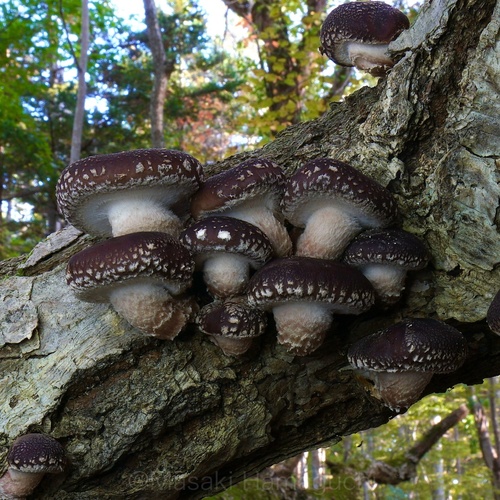
News & Stories / Relishing Medicinal Mushrooms Part II Food Is Medicine Coach/Chef Zachary Mazi welcomes you back to our two-part journey into the use of medicinal mushrooms in cooking. Chef Zachary Mazi • April 1, 2013 Photo copyright by Masaki Hamaguchi (https://www.inaturalist.org/photos/443071643) In the first part, we visited the history and use of medicinal mushrooms, and attempt to answer why, at this time in our history, we are inundated with a wealth of new knowledge on the subject. Now, in part 2, we will explore the medicinal values of many of our favorite edibles. We will also include more delicious recipes that Food Is Medicine has created to really relish this delicious medicine. In part 1, we explored the historical context for our desire to know more about mushroom medicines, learned a few of their traditional uses, and learned how vast and truly varied the subject is! Indeed, every year, scores of new studies using medicinal mushrooms and their fractionated parts and pieces are being explored. Their pharmaceutical grade, nearly side-effect-free medicines are indeed being eyed as the next cash crop for pharmaceutical manufacture. The results of these studies are often times staggering, as many of the medicines tackle some very trying problems such as cancer, heart disease, diabetes and brain disease, while leaving few of the side effects associated with our current medications. In certain cases, these medicines make changes in how our bodies respond in ways that can last long after the medicine is no longer ingested. Our body is physically changed! In order for our medicine to be able to utilized in cooking, it must either be medicinal when eaten in its whole form (bio-available) or it must be extractable in water, hot or cold. Miraculously, almost all of our commonly eaten mushrooms that you are likely to find in the grocery store, or even a local foray in the fall, have medicines that are available either from the tea, or decoction, or from consumption of the whole mushroom, either cooked or dried. Without leaving the comfort of Button, Shiitake, Chanterelle, Oyster, Morel, Porcini, Maitake, Chicken of the Woods, Cauliflower, and Matsutake mushrooms, we can find effective medicines for the nervous, digestive, skeletal, circulatory, and immune systems. In addition, within this small (and delicious) medicine cabinet, we also find help for skin disorders, and almost all specimens instigate positive tumor growth modulation, many even help with controlling viruses such as HIV/AIDS and hepatitis. And all of the above have some anti-microbial properties. Chicken of the Woods, or Laetiporeus sulphureus kills E.coli on contact! Sparassis crispa, the cauliflower mushrooms has shown promise against drug-resistant super bacteria… we may demand medicinal mushrooms in the near future if our antibiotic use continues unchecked. Maitake mushrooms seem to have more recorded health effects and means of deriving medicines than any of the above, and many of the medicines derived from this delicious mushroom require complex laboratories. Just Google “maitake medicine” and sit down for a long read. Laboratory or not, there is no reason to stop eating them! Just within this small and extremely accessible selection of fungi, we find vitamins A (and beta carotene), the entire B complex, C, D, K, CoQ10, minerals such as iodine, magnesium, iron, copper, gold, potassium, germanium, zinc, many diverse amino acids, including the essential eight we can’t manufacture in our bodies and must get from the environment. Not to mention a library of thousands of molecules both small and extremely large, (like the polysaccharides such as the beta-glucans that are receiving the spotlight for their clear role in cancer prevention and reversal) arranged bio-chemically into incredibly diverse suites of molecules, many newly discovered and named for their sources exclusive to the parent fungi (Rogers). There is great benefit in exploring the commonly known and recognized mushrooms for medicines. Many of them have been written about for more than a millennium, as in the case of shiitake ( Lentinula edodes , mentioned in part 1). Most common edibles—because of their relative accessibility—have been more thoroughly researched and studied over the past fifty years than many of the more obscure and difficult to access medicinal fungi. Unfortunately, it would take a book to talk about all of the benefits of each of these mushrooms, so we will touch on five of the most popular edibles, and leave the rest for another article or conversation…this topic is as vast as the unknown Kingdom itself. Agaricus It seems fitting, to discuss the delicious and healing properties of mushrooms in the order of popularity and familiarity. One mushroom amongst all others, so well known that it is the default that comes to mind when “eating mushrooms” is mentioned: the Agaricus mushroom. It is commonly known as the button mushroom, the crimini mushroom, or the mighty Portobello (the “adult” crimini). All three of these belong to the Agaricus bisporus (or A. brunnescens , depending upon whom you ask), and indeed there are a number of Agaricus mushrooms not commonly eaten that can provide powerful medicines as well, such as the Horse mushroom ( A. arvensis ), and the field mushroom ( A. campestris ). The common button mushroom has been used in Chinese medicine for many centuries, for easing indigestion, and increasing appetite. In 2008, the Journal of Nutrition published the following about a study at Tufts University: “The results suggest that white button mushrooms may promote immune function by increasing production of antiviral and other proteins that are released by cells while seeking to protect and repair tissue.”(3) White button mushrooms! The US produces 500 million pounds of white button mushrooms every year, a portion of the world trade, and of these almost 350 million pounds are grown near Kennett Square, PA, USA(4), which holds a yearly mushroom fest open to the public. Unfortunately, it is also one of the most common crops to rely on the heavy use of pesticides and preservatives like hydrogen peroxide, which is used to prevent browning and kill invaders(2). It is important to seek organic mushrooms exclusively, as these mass produced mushrooms are generally not washed before being served in even the most elegant eating establishments. What’s more, uncooked button mushrooms contain the carcinogen agaritine, a potentially lethal chemical in the hydrazine family (think: rocket fuel) that seems to break down during cooking. Some texts purport, however, that as much as 75% of the toxin does not even break down in cooking, and that long binges on these mushrooms can cause a toxic build-up in the body of these potentially lethal chemicals. The Agaricus is probably not a good everyday mushroom, but certainly not one to be simply forgotten in lieu of the more exotic mushrooms to which we now turn our attention. The medicine is in the mushroom! Shiitake Second in commercial popularity only to the Agaricus is the shiitake mushrooms ( Lentinula edodes ), which have now taken a significant bite out of the multi-billion dollar industry of white button mushrooms during their 30 year rise in use and popularity. These are flavorful and indispensible addition to the refrigerator pharmacy. First, they are easy to grow at home, even easier to find at almost any grocery store, and are often grown locally because of their viability as a crop. Second, very few pesticides are needed to grow these beauties; and third, both their taste and texture can be well adapted to almost any style of cuisine despite their Japanese origins. Shiitake mushrooms have some very powerful medicines indeed. They have been shown to possess compounds that lower triglycerides, cholesterol and phospholipids in blood; decrease bile cholesterol while increasing bile acids, helping to emulsify and digest fats more readily. They are an effective alternative to statin type drugs, which have negative side effects, and decrease blood glucose and increase insulin in diabetic patients. In addition, they are immuno-stimulating, with better recorded activity than Trametes , Cordyceps and Ganoderma (reishi) mushrooms, all of which are currently getting more press than the humble shiitake for their respective medicines! Hot water extracts of shiitake, besides making a delicious miso soup broth, are effective in breast cancer inhibition, and one of the isolated compounds is medically prescribed in Japan for gastric cancer, lung cancer and melanoma. They work with the body systems, and are effective in stimulating the body’s own immune system against the offending cancer cell. In one trial the extract, applied externally to skin carcinoma, induced cell death in the cancer cell and had zero reaction in the adjacent healthy skin cells. Amazing! (Stamets). Even more amazing, they are anti-candida, and hot water extracts inhibit herpes, equine encephalitis, polio, measles, and mumps! The juice of the mushroom was especially effective against E. coli and Staphylococcus aureus , but left the beneficial bacteria in even better condition due to the presence and preference of their mushroom sugars! While some immune reactions have been recorded with shiitakes, it has usually involved dramatic exposure to the mushrooms, such as farm workers or gluttonous binges, rather than normal individual consumption. Eat shiitakes everyday. Coming next month: Oysters, Chanterelles and Morels Members Only Content Login Join FFSC Related Posts Relishing Medicinal Mushrooms Part III Relishing Medicinal Mushrooms Part I Previous Article All News & Stories Next Article
- Puffball Hushpuppies | Fungus Federation of Santa Cruz
Puffball Hushpuppies Hushpuffies ? Here'a fun twist on hushpuppies, made with giant puffballs! by Shea Moss Calvatia booniana. © Zane Walker (CC-BY-NC) (inaturalist.org obs. 283647904) Method Sauté the linguiça until barely pink, then remove and reserve. Add the diced puffballs to the same pan and pour the vegetable oil over the puffballs. Toss to mix well, then sauté the puffballs. The puffballs will absorb the oil and then begin to give off their water. Continue sautéeing until the liquid has evaporated. Add the diced green peppers. Cook for 3 minutes, then remove and set aside to cool. In a 2-quart mixing bowl, whisk the egg together with the milk. Sift the cornmeal, baking powder, salt and cayenne pepper together, then add the dry ingredients to the mixing bowl and blend well. Fold in the chopped linguiça and the sautéed mushrooms until well-incorporated. Let stand for 15 minutes. Heat 1-inch of vegetable oil in a heavy frying pan to 400°F or until it pops when you (carefully) put a drop of batter or water into it. Pat a tablespoon of puffball batter into a ball and gently drop it into the hot oil. Deep fry the hushpuppies, turning over once, until golden and crisp. Lift out the hushpuppies as they are done, and place on a wire rack, or on paper towels to drain. Serve as soon as they can be handled without burning your fingers. Hot Coriander Chutney Blend the chutney ingredients to create a spicy dip. Other condiments are also excellent as dipping sauces: Any chutney Sweet Hawaiian style mustard Horseradish sauce Hot mustard with a catsup swirl Sweet and sour sauce Sweet and tangy BBQ sauce Recipe contributed: October 1988 Certain puffball species are considered edible when young and the gleba is still firm and white (like marshmallow or tofu). However, be very sure of your ID, because there are inedible and toxic species and lookalikes such earthballs, stalked puffballs, Amanita eggs (i.e., Amanita that are still enclosed in their universal veil). Serve with a couple of dipping sauces, one sweet and one spicy. My favorite dipping sauce is a hot coriander chutney, which I've included in this recipe. Objective: Appetizer Total Time: 30 mins Yield: About 20 pieces Suggested Mushrooms: Puffball (Calbovista subsculpta, Calvatia booniana, Calvatia gigantea, Lycoperdon perlatum) Join FFSC or renew your membership to access the rest of this content. Join FFSC Login as an FFSC member to access the rest of this content. Login Ingredients 1/4 lb. linguica, diced 2 cups puffballs, peeled and diced 4 Tbsp. vegetable oil 1/4 cup bell pepper, diced 1/2 cup cornmeal 1/4 cup flour 1 1/4 tsp. double acting baking powder 1/8 tsp. salt 1/8 tsp. cayenne pepper 1/4 cup milk 1 whole egg Hot Coriander Chutney 1 tsp. sugar 1/4 tsp. black pepper 1/4 cup fresh lemon juice 1/4 cup water 2 firmly packed cups of coriander leaves, stems and roots 1/4 cup grated coconut 1/4 cup chopped onions 2 Tbsp. freshly grated ginger root 3 tsp. jalapeño pepper, finely chopped (or to taste) Previous Recipe All Recipes Next Recipe
- Alaska Foray Species List — August 21-28, 2004 | Fungus Federation of Santa Cruz
News & Stories / Field Reports Alaska Foray Species List — August 21-28, 2004 Twenty one FFSCers converged at Bill & Gerri White’s lodge on the Kenai River for a foray this August. It was an extreme drought year by Alaska standards: we had California weather and yet we identified 81 species. John Brown • November 1, 2004 Lyophyllum decastes. © Douglas Smith (from mushroomobserver.org) More were collected and our identifiers were diligent, but remember, this was a vacation! Some mysteries were left for another time, which rumor has it might be next year. Foray group at Skilak Lake, Alaska Foray 2004. Photo by Paul Kutis Our first foray to Skilak Lake yielded several species of Leccinum right off the bat. Some mushrooms were familiar, others were new. Both puffballs and moose nuggets were abundant, and at first glance it’s easy to get excited about the wrong thing! Bill and Gerri graciously opened their beautiful home to us for a fish feed, potlucks, tastings and mushroom ID. One tasting featured Rozites caperata (rare down here and delicious!), Agaricus pattersonae , Leccinum insigne , Lyophyllum decastes and Laetiporus sulphureus . Outstanding Latkes with Leccinum were made by Paul Kutis, and chocolate mushrooms imported from Santa Cruz by Phred Molnar rounded out the sampler. Mushrooming and hiking on the Kenai Peninsula were the primary, but by no means only, activity. Silver salmon were running and several people caught limits on multiple days. The sashimi was outstanding! Razor clams were abundant and succulent. Kenai Fjords and Prince William Sound were incredibly beautiful, and Homer is an interesting and picturesque town. The Pratt Museum had outstanding interactive displays about the area’s natural and cultural history and included a mushroom quilt in its collection. A number of people enjoyed swimming in the warmer pothole lakes. All in all, it was a great trip and we had a lot of fun! Thanks to Bill and Gerri White for making it all possible. - Debbie Johnson, Minister of Propaganda More Species Observations John Brown at the ID table, Alaska Foray 2004. Photo by Paul Kutis Sunny weather greeted us. It was warm enough that three forays included a dip in the lake, and though our last day wasn’t so warm, we still found the spirit to moon the tour boat at the glacier. We got a hoot from their guide: “There you have it, folks, and at absolutely no charge.” We turned, waved, laughed, and then hiked back out. We had a few surprises while foraging. Lyophyllum decastes kept showing up in clumps at the base of trees. Now we know where they grow when they don’t have paths or roads. Leucopaxillus albissimus ’s odor seemed off, and it didn’t always have forking gills. There were far too many unfamiliar cortices, though that doesn’t really fit well in ‘surprises’. Igor Malcevski greatly improved the ID table: A Washington resident, he recognized many of the mushrooms with which we were unfamiliar. He also made clam tubes for several people to go razor clamming, and I think Bill White inherited them, should you go next year. By the way, Igor is trying to organize a Washington foray for next year - more to come on this subject. We ended up with 81 species. The paucity of tree fungi was more a reflection of my unwillingness to ID these than their actual scarcity. Bill White did a couple. In fact, besides scouting for us and making the trip enjoyable for all, Bill spent a great deal of time at the ID table. An encounter with a hornet nest dimmed Henry’s enthusiasm at the ID table till near the foray’s end. Never seen him move quite so fast, either. - John Brown, Science Minister FFSC members can login for the complete list of species below. Members Only Content Login Join FFSC Related Posts Kenai Peninsula Foray, Alaska 2005 Foraging in Alaska in 2008 Previous Article All News & Stories Next Article
- Chewy Noels | Fungus Federation of Santa Cruz
Chewy Noels What, you may ask, is a Chewy Noel? If you’ve been to a FFSC event (circa 2006), you’ve probably had them: they’re the mysterious chewy, nutty confections John Brown sometimes makes. by John Brown Holiday party dessert table Method Preheat oven to 350° Separate 4 eggs, beat till stiff whites, then yolks, mix together. Add 2 cups white sugar, ¼ cup molasses and 2 tbsp. vanilla, mix. (You may substitute white sugar/molasses with a 1 lb. of brown sugar.) Separately mix ⅝ cups flour (10 Tbsp), ½ tsp. salt, 1 tsp. baking soda, and add to above mixture. Melt ½ cube (2 oz. or 4 Tbsp.) salted butter into a 9"x13" pan. Crumble 2 cups walnuts (12 oz. if weighed) into goo, pour into pan and bake for about 30 minutes. When done, it can be burnt on top & collapsed in middle. Doneness test: toothpick comes out clean, but remember that the bottom of cake is intentionally gooey. Cut around edge of pan while still hot. Cool, remove from pan, cut into pieces & roll in powdered sugar. Recipe contributed: December 2006 I call them "mysterious" because until I read the ingredients, I had always thought they involved dates, or carob, or something, well, mysterious. Nary a mushroom in them, but they’ll be a fine addition to your holiday celebrations. Objective: Dessert Total Time: About an hour Yield: Varies by appetite Suggested Mushrooms: Without mushrooms (non applicabilis, sine fungis) Join FFSC or renew your membership to access the rest of this content. Join FFSC Login as an FFSC member to access the rest of this content. Login Ingredients 4 eggs* 2 cups white sugar 1/4 cup molasses 2 tsp. vanilla 5/8 cups flour 1/2 tsp. salt 1 tsp. baking soda 1/2 cube (2 oz) salted butter 2 cups walnuts 1/2 cup powdered sugar (for rolling pieces in) * If making a double batch, besides doubling everything add an extra egg. If making a double batch, besides doubling everything add an extra egg. Previous Recipe All Recipes Next Recipe
- Phil Carpenter receives Knighton Award at Appalachia NAMA 2023 | Fungus Federation of Santa Cruz
News & Stories / Phil Carpenter receives Knighton Award at Appalachia NAMA 2023 Phil Carpenter, FFSC Science Advisor, has been awarded the 2023 Harry and Elsie Knighton Service Award by the North American Mycological Association (NAMA) ! Sue Willis • August 3, 2023 Phil Carpenter receiving Knighton Award. Photo credit: Brennon Strnad The Harry and Elsie Knighton Service Award was established by the NAMA Board of Trustees to recognize and encourage persons who have distinguished themselves in service to their local clubs. It is named for the Knightons, whose efforts began the North American Mycological Association in 1967. The annual award consists of: A plaque Publicity for the winner and club in The Mycophile A one-year membership in the organization Rregistration, housing and foray fees for the next NAMA Foray. Each year's recipient is selected by the three most recent recipients of the Award. Every NAMA-affiliated mycological club may nominate one candidate whom it feels has performed meritorious service during the current or preceding year, which has to be described! The North American Mycological Association (NAMA) is a 501(c)(3) non-profit organization of professional and amateur mycologists with over 90 affiliated mycological societies in the United States, Canada, and Mexico. Phil was presented with the award at the 2023 NAMA National Foray in North Carolina, with over 400 amateur and professional mycologists in attendance. Read a summary of Phil's contributions on pages 9-11 of The Mycophile Quarterly (July August September 2023 issue). Phil Carpenter. (Photo credit: Dan Tischler) Congratulations, Phil! Members Only Content Login Join FFSC Related Posts Field Report - 2021 NAMA Foray Grandby CO Time Lapsed Laetiporous Previous Article All News & Stories Next Article
- Maccheroncini alla Boscaiola | Fungus Federation of Santa Cruz
Maccheroncini alla Boscaiola This is a rustic "woodcutter's" pasta dish, made with short, tubular pasta like rigatoni, penne or macaroni. by Bo Letos Stock photo of pasta Method Detach the stems from the mushrooms and slice both the stems and caps very thinly. In a large sauté pan, sauté the crushed garlic cloves in the olive oil, on medium high. When the garlic becomes colored a deep, golden brown, remove it from the pan. Add the fine ham strips to the pan, stir once or twice, then add the mushrooms and cook at a lively heat for about a minute. Add the chopped parsley, salt, and a few grindings of papper. Stir constantly for about 30 seconds, then add the chopped tomatoes and their juice. Stir well, turn the heat down to low, and cover. Bring 4 or 5 quarts of water to boil. Add a little salt, and when the water boils again add the pasta. Cook the pasta until tender but still firm to the bite (al dente). Do not cook until soft. Drain the pasta well, and add it to the pan with the mushrooms. Raise the pan heat to medium, and stir everything well for about 30 seconds. Add the Parmesan, turn off the heat, and stir until the cheese is distributed well. Notes from the author : I first tried this recipe with Amanita calyptrata (now calyptroderma ). However, I have found since that A. velosa is also very good. It gives a lighter, sweeter, less obvious touch than coccora, but it still shines through the tomato flavor. I still think both are superior to Boletus edulis when used with pasta, though not all would agree. I wonder how many recipes were constructed with coccora in mind, only to have cooks substitute porcini instead. I try all pasta-based recipes at least once with coccora to test the effect. For those who refuse to collect the edible Amanitas for the table, may God bless you. In any event, I think you will find it fast, easy, and very good. Editor's Note: This recipe was originally published in the March 1985 issue of Duff. The name of the contributor was not cited, but it was likely the Duff editor that month (perhaps Luen, David, or Bob?) Recipe contributed: March 1995 Many cooks make this recipe with porcini, or with portabello or cremini mushrooms. Note : The original author used coccora or A. velosa . While these are edible Amanita species, they have toxic and deadly lookalikes, and should thus only be collected by those with the expertise to distinguish them. As a reminder, FFSC does not permit serving any species of Amanita at our events. (See Potluck Essentials for a list of permitted species for culinary events.) Objective: Main course Total Time: 30 to 60 minutes Yield: Serves 2 Suggested Mushrooms: Coccora (Amanita calyptroderma) Porcini (Boletus edulis, Boletus regineus, Boletus rex-veris) Springtime amanita (Amanita velosa) Join FFSC or renew your membership to access the rest of this content. Join FFSC Login as an FFSC member to access the rest of this content. Login Ingredients 1 lb fresh mushrooms 1/3 cup green olive oil 2 peeled, crushed garlic cloves 1/2 cup cooked ham, sliced into thin strips 2 Tbs. chopped parsley 1 cup canned plum tomatoes*, chopped fine with their juice 2/3 lbs. maccheroncini or similar tubular pasta 1/3 cup freshly grated Parmesan freshly ground black pepper to taste Additional parmesan for the table * I have also tried this recipe without the tomatoes, and like it just as much as this version. Previous Recipe All Recipes Next Recipe
- CEO's Epistle to the Fungophiles: Welcome New Members | Fungus Federation of Santa Cruz
News & Stories / CEO's Epistle to the Fungophiles: Welcome New Members Welcome to our new members! Upcoming events include our Beginner/Intermediate ID class held on the first Wednesday of the month from 7-9 PM at the Santa Cruz City Museum of Natural History on East Cliff Drive. Deb • February 1, 2000 Arrhenia chlorocyanea. © Darvin DeShazer (CC-BY-NC) (inaturalist.org, obs. 10190256) Our next General Meeting, held on February 16th at the Harvey West Scout House, will start at 7 PM. The program will focus on "What's Up" — mushrooms fruiting in our area, with small group instruction on identification of mushroom characteristics. A mushroom "Tapas" tasting will be held at Blacks Beach Cafe on February 8th, providing an opportunity to taste a great variety of mushroom dishes and meet fellow fungophiles. Our annual Wme & Mushroom Fest will take place on Saturday, March 11th. These activities and more are noted in the Upcoming Events table. A brief description of activities is provided, as well as whom to contact for further information. Many of you have been asking about our website. Good news! FFSC's new website is operational at www . ffofsc . com . Check it out! Many thanks to Kristen Olsen, who put a lot of time and effort into creating this beautiful, functional site. She has done a great job, and is working on more good things to come. The loading time is a bit slow due to server speed, so bear with us and clean your desk or read up on a new mushroom while you wait. This will improve, too! Hope to see you all with baskets full of mushrooms! Members Only Content Login Join FFSC Related Posts Previous Article All News & Stories Next Article
- Scholarships | Fungus Federation of Santa Cruz
Mycology students are welcome to submit applications for funding for specific projects, classes or assistance. If you're an FFSC member who needs financial assistance to take special mycology classes or outside workshops, or to attend regional or national forays, you can also submit an application for assistance. Scholarship information and application forms for larger and smaller scholarships and grants can be found in the PDF document below. Those applying for smaller grants (books, microscopes, workshops) do not need to fill in the "Education" section of the form. Apply for a Scholarship or Grant FFSC Scholarshop and Grant Application .pdf Download PDF • 261KB To submit your request: Online : Use the Contact form at the bottom of the Contact FFSC page, choose "Scholarship Application" and then upload your PDF. Paper Copy : Mail your completed application to: Attn: FFSC Education Minister PO Box 82 Santa Cruz, CA 95063-0082 Past Funding Recipients Quotes from a couple of our past scholarship recipients: Julien Pometta Julien Pometta "I received my scholarship during my sophomore year of college at UC Santa Cruz. I applied for it because I was starting a project that attempted to capture a snapshot of the macrofungal diversity within the UCSC Arboretum. I documented observations on iNaturalist, collected specimens that are stored at the Norris Center for Natural History on campus, and even managed to sequence 25 of those specimens. At the end of the project, I compiled my findings into a book, Mushrooms of the UCSC Arboretum, An Annotated Checklist , which also served as my senior exit requirement for my major. "The scholarship made working on this project much more accessible; I was able to purchase the necessary equipment to properly collect specimens and towards the end, it helped cover the costs of publishing and printing copies of my book. Aside from the financial aid of the scholarship, it made me feel encouraged about my project at a time when I was still figuring out how I would get everything done. I am very grateful that I was able to pursue a project like this during college, the experience it gave me applies to many different types of environmental jobs. The sequencing experience helped me land at my current job where I work as a lab technician in a molecular ecology lab at UCSC." Peter Vahlberg Peter Vahlberg "I am happily studying Computer Science at Gonzaga University, and I’m hoping to get a PhD in a similar area of study. Despite my interest in technology, I’m still captivated by the world of fungi, and most other kinds of nature. Getting the scholarship meant a lot to me, particularly because it meant that I was taken seriously at a relatively young age. I feel like I was able to contribute something real to science, and I learned a lot from it. Just the other day I spied a Coprinellus (the genus that I studied) while driving, and I just had to go and see it." More examples: FFSC Scholarship Awarded to Christian Schwarz FFSC Scholarship Awarded to Alison McGregor FFSC Scholarship Awarded to Kristopher Hennig FFSC's mission statement also includes an outreach to the community here in Santa Cruz. To this end we are exploring the purchase of mycology books to be donated to the Santa Cruz Public Library; and we periodically donate resources to the library at UCSC. We also helped to fund their herbarium and several different fungal studies. "Now that's a hedgehog". Credit: Unknown Scholarships & Grants To aid in promoting education about mycology, we offer full and partial scholarships to members needing financial aid or who express a deep interest in mycology; students pursuing an interest in fungi; and grants to local educational institutions.
- 2007 NAMA Annual Foray Report | Fungus Federation of Santa Cruz
News & Stories / 2007 NAMA Annual Foray Report A large contingent of FFSC members attended the mid-August NAMA foray in West Virginia. We stayed at McKeever Lodge in Pipestem State Park, situated near the top of a ridge over-looking the Bluestone River gorge. David Rust • September 1, 2007 Scutellinia scutellata. Photo by Debbie Viess At night, the river valley filled with fog, and at dawn, bats combed the balcony alcoves. On the grass below, a woodchuck prowled the grounds for whatever food was tossed his way. Judging from his girth, he’s very well fed. Debbie Viess and I took a couple days before the foray to explore the area. We met Coleman McCleneghan, one of many professional mycologists at this year’s foray. She arranged a canoe trip on the Shenandoah River for us, and then Debbie and Coleman went off to Virginia while I attended meetings at Pipestem. Part of the fun of a NAMA foray is being in a beautiful new place with totally different mush-rooms, and trying to capture the “lay of the land.” Then once you find something, figuring out what the heck you’re looking at. The forest in and around Pipestem was mixed conifer and-hardwood, with many unfamiliar trees. I arrived a day early and ended up going on a pre-foray just outside the park. As I walked among some stumps, I spotted a unfamiliar cauliflower mushroom. Sparassis spathulata is shaped like an Elizabethan ruffed collar, unlike our West Coast species Sparassis crispa , that looks more like a neatly stacked pile of egg noodles. I ended up going to that same foray location three times, because the property was situated at a low elevation with streams and springs, damp soil and shaded forest — one of the most productive areas for fleshy fungi. It had been unusually hot with no rain for a few weeks and most of the local forests were sparse picking. Phil Carpenter, Coleman McCleneghan, Debbie Viess and Henry Young. Photo by David Rust One of the highlights of any NAMA foray is the wide range of presentations by the nation’s best professional mycologists. Pipestem was no exception. On the first full day, the program included “Mushroom Taxonomy…” with Rytas Vilgalys, “Mushrooms of the West Virginia High Country” by Walt Sturgeon, and an excellent intro to the “World of Myxomycetes” by renowned slime mold expert Steve Stephenson. Because this foray was dedicated as a memorial to Orson Miller, many of his former graduate students gave talks and participated in a tribute. Coleman McCleneghan gave an excellent talk on “Southern Appalachian Species of Pholiota , Stropharia , and Hypholoma .” Pat Leacock and Tom Volk. Photo by David Rust Other speakers included Tom Volk, who lec-tured on mushroom myths, and foray chief mycologist Bill Roody, who gave an enticing tour of the mushrooms of Spain. (Perhaps the Pyrenees should be our next long-distance foray destination?) On Sunday morning, Rytas Vilgalys wrote out the names of mushroom families on large sheets of paper and set out representative exam-ples from the collecting tables, which he used to illustrate the new direction of fungal taxonomy. Starting with the simplest forms, the yeasts, molds and rusts, he explained how fungi may have evolved over the millennia, developing different reproductive strategies such as pores, teeth and gills, and how modern science using Rytas Vilgalys discusses clades. Photo by David Rust DNA techniques, is expanding our knowledge about the relationships between mushrooms. His extemporaneous talk amazed the 50 or so people who stood around the table. You could almost see the wheels turning inside people’s heads as they struggled to supplant their older taxonomic knowledge with the new order. The final tally, including slime molds, lichens and a large array of polypores, was 330 species from Pipestem State Park and environs. Not bad for dry conditions and very challenging collecting. Next year’s NAMA foray will be held in McCall, Idaho. Hope to see you there! David Rust NAMA Region 11 Trustee Members Only Content Login Join FFSC Related Posts Previous Article All News & Stories Next Article
- Echo Summit Foray 2000 — Field Report | Fungus Federation of Santa Cruz
News & Stories / Field Reports Echo Summit Foray 2000 — Field Report While the first foray of the year may not have been a bonanza for everyone, several people hauled away a couple of bags of boletes, basically the only edible found. Horst Kuhlmann • November 1, 2000 Turbinellus floccosus. © max_forster (CC-BY-NC) (inaturalist.org, obs. 193831911) Members Only Content Login Join FFSC Related Posts Echo Summit Foray Species List: September 26th 2003 2004 Echo Summit Foray Recap Previous Article All News & Stories Next Article
- Mushrooms are Everywhere! | Fungus Federation of Santa Cruz
News & Stories / Field Reports Mushrooms are Everywhere! Mushrooms are everywhere once you start looking... This beauty was photographed by Deb (at Verve Coffee Roasters on 41st Avenue)! Ram Aria • December 1, 2010 Can you see the mushroom? Photo by Debbie Johnson Photo by Sue Willis Sometimes they match the colors of the leaves... You just need to look twice! They’re here — now get out and find them! We'd love some samples to exhibit at the 2010 Santa Cruz Fungus Fair while you're at it! Look very, very carefully at the first image below... Hmmm. See anything? Maybe just south of the redwood cone? (To be viewed while listening to Flight of the Valkyries at top volume...) Members Only Content Login Join FFSC Related Posts Previous Article All News & Stories Next Article