Search this site
628 results found with an empty search
- 2002 Albion I Foray: Species List | Fungus Federation of Santa Cruz
News & Stories / 2002 Albion I Foray: Species List FFSC members can login to view the species list from the 2002 Winter Foray at Albion. Bill McGuire • January 1, 2003 Hydnellum peckii. © CC-BY-NC by ajbradley (from inaturalist.org, ID 99409043) Members Only Content Login Join FFSC Related Posts Previous Article All News & Stories Next Article
- What are Forays? | Fungus Federation of Santa Cruz
What are Forays? A foray is an outdoor hike where we explore diverse habitats and learn about fascinating fungi. We identify and photograph the mushrooms we find, and we collect mushrooms where permitted. Braving the California winter on an FFSC local foray FFSC forays are designed to be both educational and a great way to connect with nature and fellow fungiphiles. This is one of the safest ways to learn about hunting and identifying mushrooms! You get to see many different types of mushrooms that others collected (when collection is permitted). Plus, the foray leader and experienced members can help you verify what you think you found. How Do FFSC's Forays Work? After you register for a foray, the trip leader will send you details about where to meet, etc. On some forays, we explore a forest as a group. On others, we each go in different directions and then reconvene at the end of the day to look at what everyone found. If you're still new to mushroom identification, our science advisors and other experienced members can help you identify what you found. Learn more about the different types of forays we offer: Local Forays Long Distance Forays After the Hunt Mushrooms fascinate us, and we love to hear and read tales of the hunt. Here are some ways members share their experiences: Field Reports: We publish field reports on this website. Field reports typically list all the species that we identified, or they recap how a hunt went. Most field reports are only available to FFSC members (with a few exceptions). Personal Stories: Many members post brief recaps of their trips and discoveries in our News & Stories pages, on our Google Group community mailing list, and/or our Facebook Group. Visit our Contact FFSC page for info about how to access our social channels. Photos: We occasionally choose interesting and/or beautiful photos from our members' postings and feature them in our Mushroom Photo Gallery . Members Only Content Login Join FFSC
- What are You Doing This Summer? | Fungus Federation of Santa Cruz
News & Stories / Stewardship What are You Doing This Summer? Spring in Santa Cruz has few rivals. Here, Spring is the quintessential vernal definition of the season. Spring greens, lupine, California poppies, dogwood in bloom and our first black tail fawns now appear. Wendy Wells • May 1, 2009 Morchella. © Alan Rockefeller (from mushroomobserver.org) The month of May also brings us to the end of our local woodland forays and the beginning of the summer FFSC hiatus. During the months of June, July and August, our monthly meetings and publication of the Duff are suspended. Stay tuned to your email for summer announcements until we return in September. So, back to Spring. As the sun warms us and bakes the earth into a crust that even the mightiest of fungi have difficulty penetrating, we are faced with the daunting task of going to the beach, with friends and picnic basket in tow. There we watch for dolphins and search for the endangered sand fungi, “ Sanderellus wendyii smilealotus ”. Or, if you don’t like sand in your food, you can check out some of our upcoming summer events. If you will be traveling this summer, create your own foray or coordinate with one of our many nationwide clubs. A good place to start looking for clubs in other locales is the North American Mycological Association (NAMA) website, http://www.namyco.org/ . Wendy Wells Duff Content Editor A new voice for the Duff! I’m immensely pleased to introduce Wendy Wells, our new Duff Content Editor. We are the lucky recipients of her enthusiasm about mushrooms, the Monterey Bay, and the forest (she is a docent at Big Basin Redwoods), among many other things. Be assured she will keep the fun in fungi! This is one extraordinary woman — she took the job on before elections!Please welcome her and send lots of good things to her. I look forward to collaborating with Wendy on the Duff . She is seeking out and editing the text, and I’ll be doing the layout. This is Wendy’s first issue, and if, as they say, “the best is yet to come”, I think we have much to anticipate! Debbie Johnson Duff Layout Editor Members Only Content Login Join FFSC Related Posts Previous Article All News & Stories Next Article
- November 2009 Local Foray | Fungus Federation of Santa Cruz
News & Stories / Field Reports November 2009 Local Foray On Saturday, 22 November, the Fungus Federation held a local foray. Because Sunset Magazine featured FFSC in it’s November issue and publicized the foray, a larger than usual group was expected and realized. Margaret Carpenter • December 1, 2009 Talk at the Nov 2009 Local Foray. Photo by Margaret Carpenter Members Only Content Login Join FFSC Related Posts 2015 January Local Foray Wrap Up Field Reports 2016 February Local Foray Field Report Field Reports Previous Article All News & Stories Next Article
- Stephanie S. Jarvis, MSc | Fungus Federation of Santa Cruz
Stephanie S. Jarvis, MSc Director of Mycology R & D | M2 Ingredients Founder | Pacific Truffle Growers Stephanie Jarvis is an interdisciplinary mycologist and executive cultivator with over 20 years of leadership in solid-state fermentation, fungal biotechnology, and ecological restoration. With a Master of Science in Ecology, Evolution, and Conservation Biology from San Francisco State University, her groundbreaking thesis on the Lycoperdaceae of California included statewide fungal surveys, DNA sequencing, and the discovery of two new species. Stephanie has since built a career at the intersection of applied science and regenerative agriculture. She is the founder of Pacific Truffle Growers, where she leads orchard restoration, truffle DNA diagnostics, and mycorrhizal cultivation strategies across the U.S.A. Her dual background in taxonomy and field management has made her a trusted consultant for landowners, mushroom farms, and food innovators alike. Additionally, Ms. Jarvis is the Director of Mycology for the largest functional mushroom farm in North America, M2 Ingredients, where she spearheads many R&D projects to improve the efficacy of the functional mushroom industry. A recognized authority in functional mushroom cultivation, Stephanie has developed substrate efficiency protocols for species like Hericium erinaceus , Cordyceps militaris , and Ganoderma lucidum , leveraging qPCR and NGS to validate species purity and optimize biological efficiency. Her passion for sustainable systems includes pioneering the reuse of wine industry byproducts for Shiitake and Oyster mushroom cultivation. Beyond the lab and field, Stephanie is an award-winning educator, keynote speaker, and lifelong mentor. She has led university biology clubs, authored public-facing educational programs, and served as an advisor to the North American Truffle Growers Association. Certified as both an arborist and fermentation specialist, she brings rare fluency in science, soil, and storytelling — cultivating not only fungi but futures. 2026 Stephanie Jarvis in Spain with Tuber melanosporum 2018 2026 Santa Cruz Fungus Fair Talks Buy Tickets Truffles: The Egos, Ecology, and Economics of Cultivating and Hunting Nature’s Nuggets of Gold Because these fungi are far more than gourmet ingredients — they’re ecological power players, political lightning rods, and the ultimate test of patience for… Show More Saturday, January 10, 2026 11:05 AM - 12:05 PM Room 3
- Fall Mushroom Dinner | Fungus Federation of Santa Cruz
Fall Mushroom Dinner Join us in celebrating each new season! As Autumn beckons and we await or enjoy the first fungal fruitings, Chef Bob Wynn and the FFSC Culinary Committee welcome FFSC members and their guests to celebrate the season with our much-loved Fall Mushroom Dinner. The 2025 Fall Mushroom Dinner is scheduled on November 8, 2025. See the Members Only section below for time and location details. Fall Flavors The committee typically prepares the main elements of the meal (main dish, salad, and dessert). In some years we prepare a full dinner; and in other years members are invited to bring appetizers and sides to share, plus your own place setting and beverage of choice. The committee chooses a different theme each year, and it's sure to be a scrumptious menu! Price The price changes each year, depending on the cost of the venue rental and other factors. For 2025, we will not charge admission for this event. A donation bucket will be ready to accept contributions to offset rental fees and expenses. $10 per person is suggested. Thanks! Location The Fall Mushroom Dinner is open to FFSC members and their guests. The location varies each year. We usually post the location in the Members' section below by early October. Let’s come together to share food, celebrate community, and welcome the mushroom season with good cheer. We look forward to seeing you at the table! Members Only Content Login Join FFSC
- Dying Oaks: News for Homeowners | Fungus Federation of Santa Cruz
News & Stories / Mycology & Art News Dying Oaks: News for Homeowners My niece, Shannon Murphy, is a graduate student under Dave Rizzo, the UC Davis scientist who is leading the investigation into what's killing our oaks. Here is a recent e-mail from her. Phyllis Cole • October 1, 2000 Phytophthora ramorum (sudden oak death). © brock (CC-BY-NC) (from inaturalist.org, obs. 112123956) "I was talking with my prof, Dave Rizzo, about oak mortality (what else do we talk about?) and he was telling me some reasons that homeowners may have or get sick oaks. I thought these tips might be of use to you guys in your yard. First off Phytophthera fungi (the genus of the species causing this mass oak mortality) love water, so never water around your oaks. He also says grass lawns (or anything needing lots of irrigation) should be at least 20 feet if possible away from the oaks (or as far as possible). Thirdly, he says Rhododendrons (which if I'm not mistaken you have lots of in your yard) are a magnet for Phytophthora species and may bring lethal species into your yard. I hope these tips are helpful for you and not too depressing." The news is very depressing to us: many oaks are are within 20 feet of our lawn, and we have more than 100 rhodies. For now, we're going to cross our fingers and hope for the best. Members Only Content Login Join FFSC Related Posts Oak Woodlands: Threatened by a New Fungus Sudden Oak Death — Sensible Measures in the Woods Previous Article All News & Stories Next Article
- Message from Our Outgoing CEO | Fungus Federation of Santa Cruz
News & Stories / Message from Our Outgoing CEO It has been a distinct pleasure and honor to serve our club as CEO over the past four year. I must admit I accepted the job with considerable trepidation. With assurances from the other ministers (Henry Young in particular) that they would assist me if needed, I entered my name in the election. Bill White • May 1, 2009 Bill White It was a runaway victory made possible by the fact that no one else ran. As we come to the end of our FFSC fiscal year I have decided not run again for the CEO position. I think a new CEO can bring fresh ideas and energy to the task and help the club to continue to grow and prosper. I plan to stay involved with the club and will see you at the meetings and events. I have thoroughly enjoyed the experience and camaraderie. Minister positions are made even more enjoyable by the monthly Minister meetings at each others’ homes for dinner and FFSC business. It creates a fine opportunity to learn more about the club history as well as the other ministers. The food and wine make it even more fun. At the May general meeting the FFSC is holding elections for minister positions. I encourage all of you to attend and consider volunteering as a minister. Step-up and give some of your energy and time to help the club meet its goals for the community by entering your name for one of the open Minister positions. You will enjoy it as much as I have. Several Ministers are due special recognition for their contribution to the FFSC. Vernetta McGuire, our Minister of Culinary Events (with the capable assistance of hubby Bill) for her tireless efforts planning and executing the Christmas potluck and the highly admired Wine & Mushroom Feast. We owe her a debt of gratitude for her years of service to the FFSC. Margaret Carpenter and Richard Lyness are co-ministers taking on the challenges of the Culinary Committee. Monise Sheehan has worked diligently as the Minister of Stores for six years, generating considerable revenue for the club. She is stepping down and I must admit that she will be missed and difficult to replace. This is an extremely important position that provides the main source of revenue for the club. We are seeking a person who can follow her example and continue to coordinate our main finance source. The other Ministers are due their recognition too but I cannot put them all in this short piece. My apologies that I cannot detail the contributions of Marge Young, Richard Rammer, John Brown, and all of the other Ministers who give their energies tirelessly to make this club one of the premier clubs in NAMA. Our April speaker, Dr. Elio Schaechter, commented that the FFSC is different and more dynamic than most other myco-clubs he has visited. I suspected as much but his comments confirmed it for me. And his opinion is shared around the country — the Fungus Federation of Santa Cruz is special. This is because of our members and the way the FFSC conducts business. We want you to help perpetuate our image with your involvement in setting goals, policies and activities. Come get more involved and expand your enjoyment of the FFSC by becoming a Minister. Bill White CEO Fungus Federation of Santa Cruz Members Only Content Login Join FFSC Related Posts Message From Our Incoming CEO 2009 Previous Article All News & Stories Next Article
- Foray Potlucks | Fungus Federation of Santa Cruz
Foray Potlucks After a day of foraging in Mendocino, Tahoe, and farther afield, create an amazing gourmet potluck feast as you share tales of the hunt around a warm campfire. Members Only Content Login Join FFSC
- An Amanita Poisoning Account | Fungus Federation of Santa Cruz
News & Stories / An Amanita Poisoning Account I had a very big surprise recently. As I was coming upstairs from my shop, I saw a strange truck pull into the driveway. A man, somewhat familiar, walked up to me and said, “remember early September?” Phil Carpenter • March 1, 2007 "Club Dead" - Amanita phalloides. © Debbie Viess (from mushroomobserver.org) “Oh, my god, you came by after eating Amanita phalloides ”. “Yes, and one of the things I recall vividly is that you said I might need a new liver. Well, I’ve got one!” I asked him if he’d mind if I got his full story since I didn’t get any details at the time of the incident. It’s really difficult for me to grill people about their names and the circumstances of how they managed to poison themselves on deadly Amanitas, especially when it’s clear that they are really, really sick. He did tell me in September that he’d let me know how things came out with his experience. It turned out to be an incredible horrific story. When he and his wife showed up at my house on 9 Sept. ’06, it was clear that he was in bad shape. They had examples of the mushrooms and even though it was long before any rain had fallen and the examples were small and quite pale in color, it was clear that they were death caps. I was somewhat puzzled because they had their copy of Mushrooms Demystified along but had deduced that the spore print they had taken was pink and not white. At that time, I told them to delay no longer and go immediately to the closest hospital, in this case Watsonville. Saturday, I found out that it was only AFTER he had eaten them that he checked the reference. He said he went by memory back to a nice tasting mushroom he’d picked 15 years previously that he thought the current Amanitas looked like. He said that he spent a delirious 30 hours at the hospital in Watsonville where he was on IVs for dehydration and lots of oral charcoal. He was then transported up to the medical center at UCSF where he spent another awful three or four days before his liver transplant. He recalled being in absolute misery and pain and felt sure that he would die. He even dictated a will to his family. After the liver transplant, major complications set in, predominantly kidney problems. He said he spent three full weeks after the surgery in incredible pain with only IV feedings and heavy medication the full time. During that time he said he could not eat anything and he could barely function. He says he still has tightness in his stomach muscles, numbness at the point of the incision and a lot of numbness in his right arm, an remnant of either the IV or some other issue with the hospital stay. He said that his body is just now starting to produce red blood cells again. As a consequence his energy level is extremely low. The good news is that his liver is in great shape although he is still on anti-rejection meds, something he said may go on the rest of his life. He related that the major impact of the meal he ate, besides a very painful near-death experience, has been the cost. At this point medications are running him $1500 per month. The stay at the hospital in Watsonville was over $150,000, the ambulance ride up to San Francisco was $34,000 and the total to date (6 months later) is over $800,000! And the clincher? NO INSURANCE! What amazed me was he appeared to be a very happy man. He joked around a lot and seemed to be in excellent spirits. He told his story as if it were some kind of pleasant book he read or something. I didn’t ask how he was possibly going to pay for his expenses and he didn’t volunteer. At least he is still alive but what a story!!! Members Only Content Login Join FFSC Related Posts Yikes! Theres a Fly in My Mushroom! Previous Article All News & Stories Next Article
- Sorry, it's a Suillus | Fungus Federation of Santa Cruz
Sorry, it's a Suillus "Look at all these Boletes!" As an eager beginner, you spend an hour in the woods collecting what you think is going to be the meal of the year.... Sorry… it's a Suillus . It's the culinary equivalent of a wet sponge, and a maggot riddled one at that! by Adam Ryszka Suillus luteus (from scmycoflora.org) One of the most common remarks I get from eager beginners in the fall and winter is, "look at all these Boletes!" Excited that they have just hit the mother load of culinary excellence, I remark (as many before me), "sorry… it's a Suillus ". As what a Suillus is and why it is not on par with a "true" Bolete is explained, you can see the disappointment set in. Just one of those mushroom "rights of passage" we all have to go through. You spend an hour in the woods collecting what you think is going to be the meal of the year, only to find out you have the culinary equivalent of a wet sponge, and a maggot riddled one at that! With a little time and experience however Suillus is one of our easier local fungi to ID at the genus level simply by sight. Suillus pseudobrevipes . Photo by Christian Schwarz Suillus in generic terms is a Bolete, a common reference for pored terrestrial mushrooms in our area. In scientific terms they are in the order Boletales , defacto making them a Bolete. However Suillus is not only in a different genus, they are now in their own family Suillaceae . So what do they have in common with the mushrooms in the genus Boletus that trip people up? A few things: overall stature, pores instead of gills, habitat, color (sort of) and wishful thinking… When you see literally 20lbs of light-brown capped, pored mushrooms poking through the duff in a stand of pines the mushroom fever kicks in, and what in actuality is Suillus pungens , for a few frenzied moments is the greatest haul of Boletus edulis ever. Someone once said if you listen closely you can actually hear the mushrooms laughing at you… So what makes a Suillus a Suillus and not a Boletus , Leccinum, Aureoboletus , Buchwaldoboletus , Chalciporus , Tylopilus , Xerocomellus or Xerocomus ??? Lots of things, but here are a few stand-out macro characteristics that can be applied quickly in the field. First off, commonness and sheer quantity. Suillus outnumbers Boletus by what at times seems to be a billion to one. That epic patch you just stumbled on is not Boletus , it's Suillus . If it seemed too good to be true, that is because it is. The mushroom world plays by those rules as well. Also, Suillus will fruit fall through spring, whereas the prized edible Boletes tend to in fall and early winter, and normally only for a few weeks at best. Next is the slime! With the exception of one species in Aureoboletus , none of the "Boletes" even remotely come close to the cap slime, stickiness or goo of Suillus . Those pesky glandular dots! These always confuse people, so the simplest description I can give is small, dark dots or blotches on the stem that are greasy to the touch. None of the other Boletes have these (scabers on Leccinum are more bumpy and hard). Another characteristic I go with is smell. Suillus tends to have a very fresh, almost fruity aroma. It is very pleasant and reminds people of frozen orange juice or coniferous trees. And finally the "close, but not enough" characteristics of size and color. Suillus can be big mushrooms, but Boletus are normally bigger. Suillus caps tend to be brownish, but not as brown or brick red as Boletus caps. Suillus have pores, but they are not quite like Boletus . Really after an exhaustive survey of both genera one sees there is little in common when observed at a more objective, granular level. Here is a "scientific" description we have put together on the Santa Cruz Mycoflora Project website, for those that need a bit more: Suillus is a large and cosmopolitan genus, present throughout the world (in some places due to introduction). Recognition of the genus can take some time (since they are quite variable and intergrade to some degree with other bolete genera). The fruitbodies are usually medium-sized boletes. The caps are variably colored and show many different textures (smooth and extremely viscid to dry and scaly or hairy), but most have an easily-peeled skin (unlike many other boletes). The pores are often angular or slightly irregular and sometimes radially-arranged. Inspection of the stipe is important, as almost all species show either a partial veil or greasy glandular dots (the latter trait is unique to the genus). All are mycorrhizal, occurring in almost any setting as long as there are coniferous hosts in the family Pinaceae present. In our county, these hosts are the true pines and Douglas-fir. The genus is fairly speciose in California, with diversity structured around host and habitat specialization. Many species likely are undescribed or go by misapplied names. Fruitbodies found under non-native pines should be compared directly against European references, a number of Eurasian Suillus have been recorded in other parts of the state." -- Genus: Suillus , the Santa Cruz Mycoflora Project All jokes and remarks aside, what about actually eating them? I have read in Europe they are regularly eaten and in some areas, mainly Slavic countries, they are a prized edible. Locally they are typically shunned in favor of the "real" Boletes, chanterelles, Amanitas , etc. I have eaten a few of the local species and admittedly they were not that bad. Only fresh, firm buttons were used and the cap skin and slime was pealed off. If you can, remove the pores as well. They were fried in light butter and salt and eaten by themselves. One time they were added to a basic soup. Suillus pungens in my opinion is the best tasting one, but as fate would have it is also the most slimy one! S. pseudobrevipes was not too shabby and both S. caerulescens and S. fuscotomentosus were palatable. Since during our mushroom season you are literally almost guaranteed to find Suillus at any given time, it is worth giving them a shot as an edible. If you like them you will never be out of mushrooms again! Suillus actually are an interesting fungi to study as they have a very strict preference for mychorhizal hosts and apparently have very strict parasitic companions as well. Years of field work are showing that fungi in the family Gomphidiaceae parasitize Suillus on an intimate level. If research is correct literally each species of Suillus lives with only one type of conifer and is in turn parasitized by a specific species in Gomphidiaceae ! That is pretty specialized stuff! If you pay attention in our local woods you can witness this behavior for yourself. But alas, this is knowledge just for the science geeks amongst us, and at the end of the day for the average forager Suillus will remain the mushroom world's consolation prize in the sweepstakes for Boletes. Mushrooms covered: Suillus caerulescens (fat jack, douglas-fir suillus) Suillus fuscotomentosus (poor man's slippery jack) Suillus pseudobrevipes ( veiled short-stemmed slippery jack) Suillus pungens (pungent slippery jack) Suillus sp. Previous Description All Featured Fungi Next Description
- Mushroom Photo Exhibition | Fungus Federation of Santa Cruz
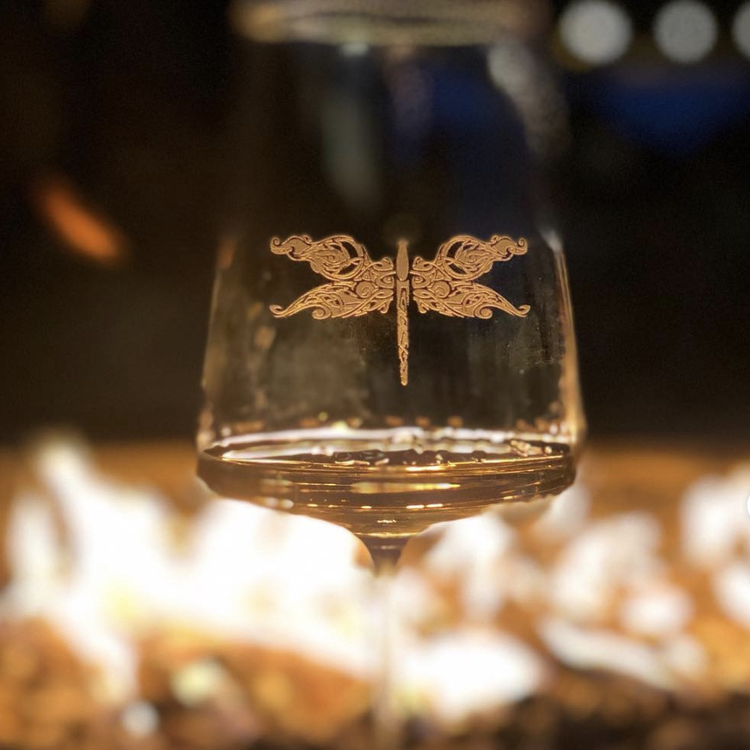
News & Stories / Mushroom Photo Exhibition An exhibition of Barbara Cordes' amazing fungal photography is on now at Odonata Winery Tasting Room . Deb • March 10, 2014 Odonata winery glass (from odonatawines.com). The exhibition is at 2343 Mission St. in Santa Cruz, March 6th-30th, 2014. I stopped in and I'll tell you, it was such a treat to see all the nice, drippy fruitings I missed this winter! Couple that with Dennis Hoey's delicious wine and you'll be a happy camper. Dennis got his start in winemaking working with Jeff Emery of Santa Cruz Mountain Vineyard and continues as SCMV's Production Manager. Members Only Content Login Join FFSC Related Posts Forager's Feast Photo Album Previous Article All News & Stories Next Article