245 results found with an empty search
- Coprinopsis Lagopus Group | Fungus Federation of Santa Cruz
Coprinopsis lagopus gr. © Terry Way Coprinopsis Lagopus Group Terry Way This beautiful mushroom was found in Terry's backyard. Phil Carpenter pegs it as being in the Coprinopsis lagopus group. One of the Inky Caps, this exquisite and evanescent member of the Psathyrellaceae family is a feast for the eyes. Not for the table, though: this tiny mushroom is considered inedible. Camera Canon EOS 5D Mark III Focal L. 100mm Aperture f/22.0 Shutter Sp. ISO 10000 Flash Off Photo taken on September 29, 2014 Mushroom(s) ... Previous Photo Back to Gallery Next Photo
- Red Russula | Fungus Federation of Santa Cruz
Red Russula. Photo by Justin Ciccone Red Russula Justin Ciccone This beautiful Russula was photographed by Justin Ciccone during a nice rainy hike at Nisene Marks park on November 19, 2014. Happy Holidays! Camera Nikon D90 Focal L. 35mm Aperture f/7.1 Shutter Sp. 1/200s ISO 125 Flash Fired Photo taken on November 19, 2014 Mushroom(s) ... Previous Photo Back to Gallery Next Photo
- Spring Fungi of the Sierra Nevada, June 2013 | Fungus Federation of Santa Cruz
News & Stories / Mycology & Art News Spring Fungi of the Sierra Nevada, June 2013 Dr. Dennis Desjardin will introduce students to the different kinds of mushrooms and other large fungi that occur in the spring in the Sierra Nevada. Marje Young • May 1, 2013 Morel, the Magnificent Morel (2013). Photo by Hugh Smith Emphasis will be placed on the analysis of macro – and micromorphological features, as well as ecological roles, to aid in the identification of taxa. The daily class routine consists of an 8:00-10:00 am lecture followed by a field trip until approx. 3:00 pm. Transportation on the field trips will be by car pooling. Upon return to the camp, collections will be examined and identified in the laboratory (3:30-6:00 pm) in collaboration with the instructor and a knowledgeable graduate student assistant. All equipment, microscope slides, cover slips and reagents required for accurate determination of specimens will be provided. In the evenings, several lectures and slide shows will be presented, and the laboratory will be open for additional work on collections. If sufficient quantities of edible fungi are collected, they will be prepared for consumption and served to the class by the camp’s chef. Class Schedule: Participants should plan to arrive Sunday afternoon in time to attend an orientation lecture on Sunday evening at 8:00 pm. The last class meeting ends at noon on Friday. Tuition: $348 Accommodation (additional fee) details : http://www.sfsu.edu/~sierra/Accommodations.html Details and registration information can be found online at http://www.sfsu.edu/~sierra/Course_Fungi.html Dues-paying FFSC members interested in an FFSC Scholarship to help fund your attendance should contact Marje Young. Members Only Content Login Join FFSC Related Posts Spring Fungi of the Sierra Nevada, 2014 Mycology & Art News Previous Article All News & Stories Next Article
- Algae and Fungi Team Up--and They're Lichen It... | Fungus Federation of Santa Cruz
News & Stories / Mycology & Art News Algae and Fungi Team Up--and They're Lichen It... A bit of lichen-laden poetry (with apologies to Robert Burns) as intro to the upcoming Bioblitz at the Golden Gate National Recreation Area. Deb • March 2, 2014 Fungi and lichen. Photo by Nick Wagner We turn to National Geographic for poetic lichen, as we get ready for the upcoming Bioblitz at the Golden Gate National Recreation Area -- virtually your back yard --March 28-29, 2014, enjoy. Check out the poetry here: https://web.archive.org/web/20140226235002/http://newswatch.nationalgeographic.com/2014/02/25/algae-and-fungus-team-up-and-theyre-lichen-it/ Find out about the Bioblitz, organized by the National Parks Service and National Geographic: https://web.archive.org/web/20140303211118/http://www.nationalgeographic.com/explorers/projects/bioblitz/golden-gate-california-2014/ Members Only Content Login Join FFSC Related Posts Will Mushrooms Make Styrofoam Obsolete? Mycology & Art News Previous Article All News & Stories Next Article
- Gomphidius in the Rain | Fungus Federation of Santa Cruz
Gomphidius in the Rain (spike cap). Photo by Jim Austin Gomphidius in the Rain Jim Austin More about Gomphidius: Gomphidius , Wikipedia Spikes (genus Gomphidius) , iNaturalist Camera Nikon D5300 Focal L. 48mm Aperture f/10.0 Shutter Sp. 1/200s ISO 1000 Flash Off Photo taken on December 6, 2014 Mushroom(s) ... Previous Photo Back to Gallery Next Photo
- I took a Walk | Fungus Federation of Santa Cruz
I Took a Walk. Helvella lacunosa (fluted black elfin saddle). Photo by Kaye Peyron I took a Walk Kaye Peyron Found in Watsonville, CA. During this time of year it was rainy and cold. At first we almost missed it because it was under all these leaves. We did not collect this baby elfin for it needed more time to grow before consideration of collecting. Camera Canon EOS 60D Focal L. 85mm Aperture f/5.6 Shutter Sp. 1/100s ISO 1000 Flash Off Photo taken on March 1, 2019 Mushroom(s) ... Previous Photo Back to Gallery Next Photo
- Clathrus ruber | Fungus Federation of Santa Cruz
Clathrus ruber. Photo by Anne Elvin Clathrus ruber Anne Elvin "It is nice to know that although my family is not quite excited about mushrooms as I am; I have made a difference where when they see an interesting fungus, they let me know. Texted to me from a Palo Alto Elementary School."--Kitty Clathrus ruber , Wikipedia Camera Phone Focal L. Aperture Shutter Sp. ISO Flash Photo taken on November 1, 2016 Mushroom(s) ... Previous Photo Back to Gallery Next Photo
- Purple Mycena | Fungus Federation of Santa Cruz
Purple Mycena at FFSC's Santa Cruz Mycoflora Foray (2018). Photo by Michelle Torres-Grant Purple Mycena Michelle Torres-Grant Michelle C. Torres-Grant took this picture attending our 2018 Santa Cruz Mycoflora Foray. We had some rain so we were focused on the small and tiny. Glad we did. Camera (Not provided) Focal L. Aperture Shutter Sp. ISO Flash Photo taken on December 15, 2018 Mushroom(s) ... Previous Photo Back to Gallery Next Photo
- Mushroom Photo Exhibition | Fungus Federation of Santa Cruz
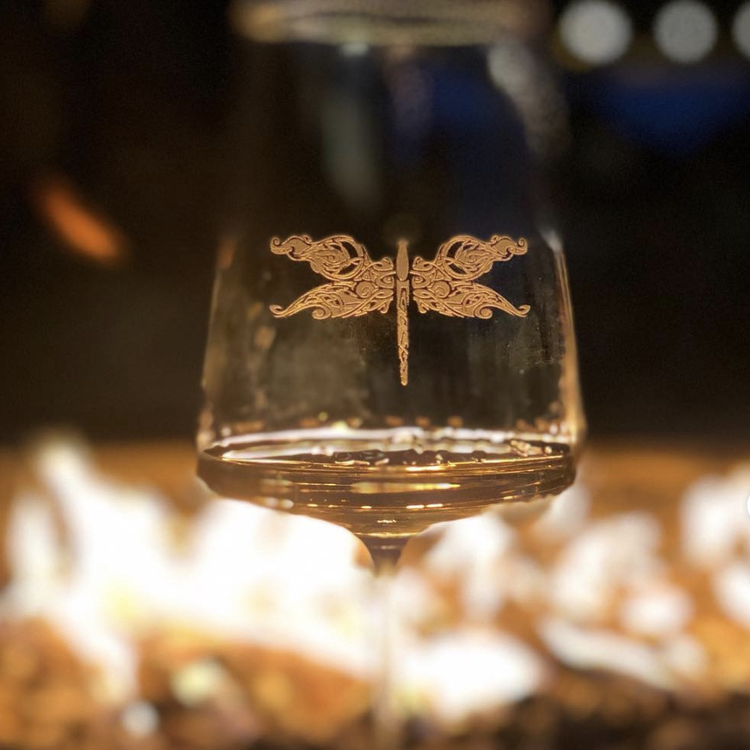
News & Stories / Mycology & Art News Mushroom Photo Exhibition An exhibition of Barbara Cordes' amazing fungal photography is on now at Odonata Winery Tasting Room . Deb • March 10, 2014 Odonata winery glass (from odonatawines.com). The exhibition is at 2343 Mission St. in Santa Cruz, March 6th-30th, 2014. I stopped in and I'll tell you, it was such a treat to see all the nice, drippy fruitings I missed this winter! Couple that with Dennis Hoey's delicious wine and you'll be a happy camper. Dennis got his start in winemaking working with Jeff Emery of Santa Cruz Mountain Vineyard and continues as SCMV's Production Manager. Members Only Content Login Join FFSC Related Posts Forager's Feast Photo Album Mycology & Art News Previous Article All News & Stories Next Article
- Four Dry Season Mushrooms | Fungus Federation of Santa Cruz
Four Dry Season Mushrooms At the beginning of the season, while we wait patiently for the fall rains to arrive, there are still some interesting sporocarps lurking in our local outdoor spaces. ... Two Princes Oyster mushrooms ( Pleurotus ostreatus ) and the Prince ( Agaricus augustus ) often fruit in the summer fog season, and Dead Man’s Foot or the Dyers Puffball, ( Pisolithus arhizus ) pops up unexpectedly in dry meadows and sandy trails with hardly any moisture. But one of the most spectacular dry season fungi is the Hardwood Sulfur Shelf, Laetiporus gilbertsonii . Chicken roosting In our area, L gilbertsonii is found on eucalyptus, oak, and other hardwood species. It can grow on logs, stumps, or on dead or living trees and can fruit in inland valleys during the driest part late summer without any sign of nearby moisture. It first appears as a small blob, expanding into broad semicircular shelves that can form rosettes or impressive clusters with overlapping layers. The main body is a striking salmon pink to orange color with bright lemon yellow or sulfur yellow pores on the undersides of the tips. When fresh, the colors are vibrant and the texture is soft and spongy. (Members can view photos of a Time Lapsed Laetiporous for examples of this growth.) With age, the fruiting body slowly turns lighter in color and becomes harder and more brittle, eventually turning dull white. Crumbly remnants can persist for months before slowly weathering away. Laetiporus is a brown rot fungus, a type of saprobe which breaks down the cellulose in dead wood. The affected wood will often appear brown, cracked, and shrunken with a soft brittle texture. It is also parasitic, so living trees can be hollowed out and drop large branches or break in strong winds, so you have reason for concern when you find this fungus on that old oak tree that is shading your house. But on a more positive note, when fresh and tender, Laetiporus gilbertsonii is a prized edible, commonly referred to as “chicken of the woods.” It is one of the “foolproof four” wild edible mushrooms recommended by Clyde Christianson in his book Common Edible Mushrooms , first published in 1943. Along with the giant puffball, ( Calvatia gigantea ), morels ( Morchella sp. ), and the shaggy mane ( Coprinus comatus ), “chicken of the woods” was considered to be a choice edible that was both abundant and distinctive enough that a prudent beginner could easily identify it without risk of confusion with any dangerous species. But of course nothing is completely foolproof. Christianson’s “chicken of the woods” was Laetiporus sulphureus , which has since been divided into at least eight distinct species including our L. gilbertsonii and another western species L. conifericola , which not surprisingly grows on conifers. Most of the species are so similar, that they cannot be differentiated by macroscopic or microscopic physical characteristics alone. Looking at the species of wood they are growing on, location on the tree, and region where they are found provides some clues, and DNA sequencing is ongoing to clarify the definitions of this group of similar species. Luckily, all seem to be relatively safe edibles. What is meant by relatively safe, you might ask? Just like chicken, chicken of the woods should be cooked thoroughly. Though it is not fatal, people have been sickened by eating raw or undercooked Laetiporus . Only tender young fruiting bodies or the tender outer tips of older specimens should be eaten. There are reports of gastric upsets caused by fungus harvested on eucalyptus, though many people (including the author) have eaten L. gilbertsonii from eucalyptus without any ill effects. Still it is best to eat just a bit the first time to make sure you don’t have a bad reaction. L. conifericola is equally edible and should be treated with the same precautions. And again, don’t forget to cook it thoroughly. But when well cooked, this mushroom does make a good chicken or meat substitute. With its firm flakey texture and a bit of imagination, some people claim it tastes just like chicken (or snake or turtle etc). There are about as many ways to cook this mushroom as there are to cook chicken. Here is one recipe to start with, Curried Green Beans with Sulphur Shelf . Mushrooms covered: See code Previous Description All Featured Fungi Next Description
- Hygrocybe Punicea Group | Fungus Federation of Santa Cruz
Hygrocybe punicea grp. Photo by Cass Fuentes Hygrocybe Punicea Group Cass Fuentes These Hygrocybe were growing in a mix of mostly Bay Laurel and Oak, in the Santa Cruz Mountains near Los Gatos. Being the first time I encountered the "Scarlet Waxy Cap", I was mesmerized by their beautiful color, and taking pictures of them started my path in mushroom photography. Camera Nikon COOLPIX S220 Focal L. 6mm Aperture f/3.1 Shutter Sp. 1/200s ISO 122 Flash Off Photo taken on February 28, 2010 Mushroom(s) ... Previous Photo Back to Gallery Next Photo
- Learn About Mushrooms | Fungus Federation of Santa Cruz
Learn About Mushrooms The Fungus Federation of Santa Cruz is all about educating its members and the general public about the dangers and delights of collecting, studying, consuming , and creating art with wild mushrooms. We understand that people learn in different ways. We aim to offer something for everyone! Winter Chanterelles Bunch. Photo by Yevgeny Nyden Classes & Speakers FFSC members take ID classes & workshops from our science advisors to learn the systematic procedures of mushroom identification. This is particularly critical for anyone planning to eat wild mushrooms. We host monthly speakers , and also invite speakers to present at the Santa Cruz Fungus Fair and some of our Long Distance Forays . Plus, we share recipes for mushroom dishes, along with information about external classes for people interested in photographing mushrooms, cooking mushrooms, and even creating crafts with mushrooms! Online Learning Our Featured Fungi pages highlight some of the local (and few not-so-local) mushrooms that you may find in your wanderings, courtesy of our current and past science advisors and foray leaders. As tech evolves, we're also experimenting with new ways to share tips and advice to help people learn about mushrooms! Check out our free FFSC Online Learning area for our first few programs on how to get started with collecting and identifying mushrooms. Note: The educational content we provide on this website is intended to supplement (not replace) formal classes, published books and field guides. Informal Knowledge Sharing Many FFSC members enjoy sharing their knowledge and experience via our Google Group mailing list, as well as in person at our club events, and at our biggest event: The Santa Cruz Fungus Fair. Knowledgeable members of FFSC make themselves available to provide mushroom ID services to others. (In fact, local hospitals have consulted with a select group of our science advisors for many years, to evaluate mushroom poisoning cases.) Special Projects & Scholarships Are you working on a mycology project at your school? FFSC offers scholarships and grants to support STEM and mycology research. See our Scholarships page for more information. More Resources Other Mycological Clubs Other Nonprofit Resources Members Only Content Login Join FFSC