Search this site
647 results found with an empty search
- So Long Without Rain... | Fungus Federation of Santa Cruz
So Long Without Rain. (YWI 16th Annual). Photo by Hugh Smith So Long Without Rain... Hugh Smith So long without rain Mushrooms poking their heads up Soon become crispy! 2014 had been the driest year on record for Santa Cruz, having received only 1.3 inches so far that season of our average 11 inches to date... Camera (Not provided) Focal L. Aperture Shutter Sp. ISO Flash Photo taken on January 5, 2014 Mushroom(s) ... Previous Photo Back to Gallery Next Photo
- Diesel Fuel From a Fungus? | Fungus Federation of Santa Cruz
News & Stories / Mycology & Art News Diesel Fuel From a Fungus? On November 2008, while the media were immersed in the news of a national election, a little-known story was released to the press in Bozeman, Montana. John Muñoz • December 1, 2008 Fungus Fueled FUV. llustration by John Munoz Dr. Gary Strobel from Montana State University released news of a novel fungus that makes diesel compounds directly from cellulose. The fungus has been discovered in the Patagonian rainforest of Southern Chile. Professor Strobel’s paper, published in the November issue of Microbiology , is based on his discovery of the unique properties of the Patagonian fungus Gliocladeum roseum , living in the tissue of the Ulmo tree. G. roseum is an endophyte (a plant that lives between the cells of another plant) that produces a number of different complex molecules made of hydrogen and carbon found in diesel. Strobel calls the fuel produced by the fungus "mycodiesel" and he acknowledges that although G. roseum produces only diesel fumes he and his team will try to identify exactly what is responsible for the production of the hydrocarbon vapors. Scott Strobel, a member of the team, is already attempting to isolate the genes responsible for G. roseum ’s diesel making properties. “If you can identify that, you can hopefully scale it up so you end up with better efficiency of production” said Scott Strobel. Ultimately, scientists in a variety of disci-plines may be able to combine their talents to optimize production and find a way to turn what is essentially a vapor into liquid fuel. Dr. Gary Strobel’s statement about G. roseum pronouncing that “this is the only organism that has ever been shown to produce such an important combination of fuel substances” should be taken with a grain of salt. Fuel termed biodiesel can be processed from algae and research in this process is currently underway. Algae has special appeal because the organism can reproductively double in 24 hours and readily converts sunlight and carbon dioxide into hydrocarbon fuel. Perhaps we should overlook Dr Srobels excitement and possible hyperbole as he expounds on the wonder and potential of Gliocladeum roseum . It’s quite a story. Equally or more interesting is the story of how Dr. Strobel initially discovered its special properties and the special and beneficial properties of many other endophytes that he and his colleagues have discovered over the years. To learn more: https://www.montana.edu/news/6417/msu-led-team-finds-new-type-of-fuel-in-patagonia-fungus https://www.montana.edu/news/7872/msu-receives-2-million-to-further-study-diesel-producing-south-american-fungus Members Only Content Login Join FFSC Related Posts Will Mushrooms Make Styrofoam Obsolete? Previous Article All News & Stories Next Article
- Mushrooms of Australia and New Zealand | Fungus Federation of Santa Cruz
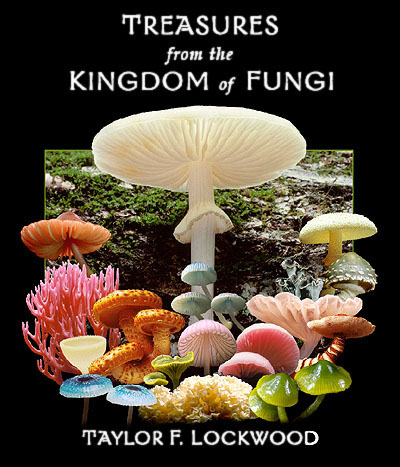
News & Stories / Mushrooms of Australia and New Zealand A new illustration from Taylor Lockwood. Can you count how many mushrooms are there? :-) Yevgeny Nyden • March 5, 2014 Mushrooms of Australia and New Zealand (from mushroom.pro). ©2013 Taylor F. Lockwood Members Only Content Login Join FFSC Related Posts Cam Cam by Taylor Lockwood Taylor Lockwood's National Geographic Magazine Debut Previous Article All News & Stories Next Article
- Macrofungal Ecology Project | Fungus Federation of Santa Cruz
News & Stories / Mycology & Art News Macrofungal Ecology Project FFSC member Christian Schwarz will be presenting his Macrofungal Ecology Project, Spatial distributions and community structure of macrofungi , at the UCSC environmental studies undergraduate research symposium. Christian Schwarz • May 1, 2009 Beginning DNA extraction from mushrooms. Photo by Christian Schwarz Biologists have long recognized that macrofungi - those that produce visible fruitbodies - are an extremely diverse and ecologically important group. Some macro-fungi form ectomycorrhizal mutualisms with trees and shrubs, others are plant parasites, while others are vital wood decomposers or soil-building saprophytes. While these fungi are critical to maintaining the structure of ecosystems, the ecology of macrofungi remains under-studied. Details of the distribution patterns and community structures of macrofungi are relatively unknown. For example, it is generally accepted that many ectomycor-rhizal and parasitic macrofungi form symbioses with limited sets of hosts. Furthermore, many non-ectomycorrhizal macrofungi (ie. wood-decay species and leaf decomposers) exhibit strong habitat preferences apparently related to domi-nant vegetation. Since macrofungi are certainly geo-graphically limited by environmental factors, it is likely that their distributions are shaped by environmental fac-tors on smaller scales within their habitat. Both availability of suitable hosts and environmental conditions can limit and influence the distribution of macrofungi, but because many macrofungi are nutri-tionally dependent on plant hosts, I expect that the availability of suitable host plants will be the most important driver of macrofungal distribution. Through precise, detailed spatial monitoring, I will test the hypothesis that variation in the composition of plant communities will explain more variation in associated communities of macrofungi than will variation in envi-ronmental conditions. This investigation will provide foundational information to construct more realistic concepts of the community structure and spatial ecology of macrofungi. Members Only Content Login Join FFSC Related Posts Citizen Science - Amateur Ain't a Dirty Word Mycology & Art News Microscopy of Gilled Mushrooms Mycology & Art News Previous Article All News & Stories Next Article
- Fungi for Teachers and K-6 | Fungus Federation of Santa Cruz
Fungi for Teachers and K-6 We offer educational support for teachers; and kids are welcome at our forays, ID classes, free monthly talks, and culinary events! Cover image of the Fungus Files, by terraBrie Stewart and Rost Koval, courtesy of NAMA As a teacher, there are many ways you can encourage students to learn about mushrooms, even if you're not an expert yourself. A Free Educational Resource The North American Mycological Association (NAMA) has generously shared an incredible resource with K-6 educators and the public: Image from The Fungi Files by terraBrie Stewart and Rost Koval, courtesy of NAMA The Fungus Files: An Educator’s Guide to Fungi K-6 (Second Edition) , is a newly revised e-book packed with dynamic and diverse activities designed to be easily adaptable to students of all ages, learning styles and ability levels. This publication is the best thing to come along in mushroom education in a decade. Written by terraBrie Stewart and designed and illustrated by Rost Koval, The Fungus Files can be used by anyone teaching about fungi to school groups, science clubs, local nature groups, and any non-specialist audience. Stewart resides in Edmonton, Alberta. Forays and ID Classes Families and teachers are welcome to join any of FFSC's publicly available forays, and to come to our free monthly talks. If you're a teacher, we encourage you to join a foray or take an ID class, and learn the basics about how to collect and study mushrooms safely. You can use what you've learned to help your students examine mushrooms in place while on nature walks (or collect samples for study in the classroom, if permitted). Parents can bring their kids to any of our forays, classes, or other events. Santa Cruz Fungus Fair Our annual Fungus Fair is FREE for kids under 12, and discounted for older students. This event really is fun and educational for the whole family! The Fair opens on Friday afternoon, so school groups can come to check out all the fascinating mushrooms when they're freshest. (Note that the Vendor Areas and Craft Room are only open on Saturday and Sunday.) We do our best to keep the tickets affordable. That said, parents and older students who cannot afford tickets can get in free by volunteering at the Fair . Create an iNaturalist Project While students under 13 years old cannot have their own iNaturalist accounts, some teachers and communities have created iNaturalist projects and posted samples that were found or photographed by students. Here are some examples to explore for inspiration: Star Elementary School 2025 Project PRAIRIE Bioblitz iScience Middle School iNaturalist Projects Saint Edward's School Nature Project Join or Start a MycoBlitz Several organizations and regions run periodic projects to catalog species in a particular location or time frame. Learn more: North American Contentental MycoBlitz iNaturalist Bioblitz Guide Scholarships and Grants FFSC accepts grant requests to help educators and institutions advance the understanding and study of fungi. For example, if you and your students have a special research project in mind, or if your school needs assistance to purchase mushroom field guides or mycology equipment for the classroom, you are welcome to apply. Visit our Scholarships and Grants page to learn about the application process. Members Only Content Login Join FFSC
- Gloria's Excellent Adventure | Fungus Federation of Santa Cruz
News & Stories / Gloria's Excellent Adventure Picture chanterelles, golden chanterelles, masses of golden chanterelles proud above the duff, thousands of golden chanterelles amongst the trees and bushes like blossoms blanketing the forest floor. Gloria Woodside • March 1, 2003 Chanterelles in Gabon. © Anne-Hélène Paradis (from inaturalist.org, ID 334600620) Fantasy? No. Where? Gabon. Africa. Western Africa, on the equator, nine hours by four-wheel drive from the coast into Lope Wildlife Reserve. Was I there for fungi?No. The gorillas, reclusive lowland gorillas. To see them you hike the thick hilly rainforest: never-see-the-sun thick forest, all tree trunks and green bushes and vines and leafy, muddy trail with the occasional bright flower or fruit or flutter of a brilliant butterfly. Groups of three go with two Baku tribesmen trackers. They are the "pygmies" and know every organism in the forest and what to use it for. We hike steadily, slowly, watching feet, quiet, listening, pausing for sightings of animals with whispered names and plants with uses. We walk about ten hours a day. It's total immersion in the forest to see the animals: eights pecies of monkeys, dozens of gorgeous birds, forest elephants (to be avoided), red river hogs (furry with silly white tufts on their ears and tails), duikers (like little deer), and the main attraction, the gorillas. My group saw them high up in trees above us watching with their ever-so-wise brown eyes. And were terrified by the roaring and chest-pounding display of the silverback behind the bushes. Impressive. But to the chanterelles. The day was getting late and I was dripping, and days of hiking were taking their toll on my legs and feet, and it had been a couple hours since we had seen so much as a monkey, and I just wanted a cold shower and bed. We finally headed back a direct route. That meant straight over the ridges: huff and puff and slog up and then slippy and slidy down. An hour of that and then across a flattened dip in the land and there they were. Gold amongst the green - for hundreds of feet and ever so perfect. The most incredible patch of chanterelles I ever dreamed of finding. Out came the cameras, exhaustion forgotten. The Baku started picking and piling them in huge leaves to wrap up. I wandered about, incredulous - "I don't believe it. I don't believe it." Ten minutes of mushroom heaven in a place I never imagined they could exist. Fungal serendipity. The stuff dreams are made of. A nature encounter of the surreal kind. A highlight of a trip never to be forgotten. - Gloria Woodside, Minister of Archives Members Only Content Login Join FFSC Related Posts Setas Silvestres in San Sebastian Adventures in Austria Previous Article All News & Stories Next Article
- Champagne Champignons | Fungus Federation of Santa Cruz
Champagne Champignons This dish by past FFSC president, Ed Aguilar, was a hit at FFSC's third annual Wine and Mushroom dinner. by Ed Aguilar Agaricus bisporus © Christian Schwarz (CC-BY-NC) (from inaturalist.org, obs. 2619999) Method Preheat the oven to 425 degrees. Melt butter in a sauté pan and cook the mushrooms uncovered (4 minutes). And champagne and cook another 4 minutes. In a small bowl, combine renaiing ingredients, except cheese and parsley, and add the mushrooms. Simmer 1 minute and pour mixture into a glass baking dish. Top with cheese and parsley and bake for 10 to 15 minutes. Recipe contributed: February 1987 After the dinner (held in December 1986), Ed's dish was noted by Malcolm Hébert, a cookbook author and former San Jose Mercury News and Chicago Tribune food and wine editor. Objective: Side or first course Total Time: About 30 minutes Yield: Serves 4 to 6 Suggested Mushrooms: Portobello/portabella, champignon, cremini, button (Agaricus bisporus) Join FFSC or renew your membership to access the rest of this content. Join FFSC Login as an FFSC member to access the rest of this content. Login Ingredients 2 Tbsp. butter 1 lb mushrooms, sliced 1/4 cup champagne 1/3 cup sour cream 1/2 tsp. ground nutmeg 1 Tbsp. flour 1/2 cup Swiss cheese, shredded 1/4 cup parsley, chopped Previous Recipe All Recipes Next Recipe
- Porcini Pastries | Fungus Federation of Santa Cruz
Porcini Pastries This recipe is inspired by Eastern European pastries. Give it a try, and let us know what you think! by Bo Letos Boletus edulis. © Darvin DeShazer (CC-BY-NC) (from inaturalist.org, obs. 324431143) Method Dough Combine flour, salt and baking powder in a large bowl. Cut in butter till mixture is crumbly. Stir in yogurt till a ball of soft dough forms. Wrap in wax paper and refrigerate. Filling Boil potatoes with skins on and chop into quarters. Soak boletes in 1 cup hot water for about 20 minutes or until reconstituted. Drain and reserve the liquid. Chop the mushrooms. Heat oil in a skillet, and add onions and garlic, then sauté till translucent. Add boletes and sauté about 5 minutes. Add the mushroom-soaking liquid and continue to sauté till 2-3 Tbsp. of liquid remains. Add the potatoes, caraway, savory and eggs. If mixture seems very dry, add softened cream cheese. Assemble and Bake Preheat oven to 375°F. Remove dough from refrigerator, and divide into eight equal sized balls. Roll each ball to about 1/4 thick, and shape into rectangles. Place about 1/4 cup of the filling in center of each rectangle. Fold long sides of dough inwards, then seal by wetting the overlaps with water. Fold the shorter sides of dough inwards, then seal by wetting the overlaps lightly with water. Place on a cookie sheet with the folded side down. Bake in a preheated 375 oven for 30 minutes or till golden brown. Recipe contributed: November 1994 Editor's note: This recipe was inspired by a recipe found in the Asheville Mushroom Club's March 1993 issue of Sporadic News . Objective: Main course Total Time: About an hour Yield: About 4 servings Suggested Mushrooms: Porcini (Boletus edulis, Boletus regineus, Boletus rex-veris) Join FFSC or renew your membership to access the rest of this content. Join FFSC Login as an FFSC member to access the rest of this content. Login Ingredients Dough 2 1/2 Cups flour 2 tsp. baking powder 1/4 tsp. salt 1 c. butter 1 c. yogurt extra flour for rolling Filling 1 1/2 oz. (one and a half ounces) dried boletes 6 medium red potatoes 1 chopped onion 2 cloves garlic, chopped 2 Tbsp. oil 1/3 tsp. caraway seeds 1/2 tsp. savory 2 hard-boiled eggs, chopped Salt & pepper to taste Previous Recipe All Recipes Next Recipe
- Culinary Kudos to the 2005 Wine & Mushroom Volunteers | Fungus Federation of Santa Cruz
News & Stories / Stewardship Culinary Kudos to the 2005 Wine & Mushroom Volunteers I hope all who attended enjoyed the Wine & Mushroom Festival as much as I did. There are so many facets to this affair, it's difficult to thank everyone involved. Vernetta McGuire • April 1, 2005 Wine glasses at a Wine and Mushroom Dinner. Photo by Katherine Elvin Members Only Content Login Join FFSC Related Posts 24th Annual Wine & Mushroom Fest: Edible and Choice! The Wine and Mushroom Experience was Phenomenal Previous Article All News & Stories Next Article
- Savory Stilton Cheese Tart | Fungus Federation of Santa Cruz
Savory Stilton Cheese Tart This tart can be served as a starter, a light lunch, a side dish, or as a contribution to a potluck buffet! by Hensl Lise Craterellus tubaeformis. © Taye Bright (CC-BY-NC) (from inaturalist.org, obs. 337620451) Method Prepare the Dough Place the dry ingredients in a food processor, and pulse to blend. Add the butter and run the machine until the mixture is crumbly. Pour in the egg yolk and water. Run the machine until a ball of dough is formed. Cover and chill for 30 minutes or so. Prepare the Filling Saute the onion & mushrooms in the butter until the mushrooms are fully cooked. Moisten with the Champagne, and simmer until the liquid is absorbed. Set mushroom mixture aside. Whisk together the cream, eggs and seasoning. Assemble and Bake the Tart Roll out the tart dough and press it into a 10 inch pan. Crumble the cheese inside, spread the onions on top, and pour in the rest of the filling. Bake at 425°F for 10 minutes. Lower the temperature to 350°F and continue bake until the crust is browned and the filling is set (about another 25 to 35 minutes). Recipe contributed: March 1996 Objective: Side or first course Total Time: About 1.5 hours Yield: Serves 8 Suggested Mushrooms: Giant cypress Agaricus (Agaricus lilaceps) Hedgehog (Hydnum olympicum, Hydnum repandum , Hydnum umbilicatum, Hydnum washintonianum) Oyster / king oyster mushroom (Pleurotus eryngii, Pleurotus ostreatus) Porcini (Boletus edulis, Boletus regineus, Boletus rex-veris) The Prince (Agaricus augustus) Yellowfoot (winter chanterelle) (Craterellus tubaeformis) Join FFSC or renew your membership to access the rest of this content. Join FFSC Login as an FFSC member to access the rest of this content. Login Ingredients Crust 1 1/4 (1.25) Cups flour 1/4 Cup Parmesan cheese, finely grated 1/4 tsp. salt 12 Tbsp. butter ( 1.5 sticks) 1 egg yolk 3 Tbsp. cold water Filling 1 small red onion, sliced 1-2 Cups fresh wild mushrooms, sliced (or 1 to 2 oz. dried wild mushrooms, reconstituted and mixed with oyster or store mushrooms) 4 Tbsp. butter 1/4 Cup Blanc de Noirs Champagne 1 1/2 (1.5) Cups heavy cream 6 egg yolks 1/4 tsp. salt 1/8 tsp. cayenne pepper 1/8 tsp. freshly grated nutmeg (optional) 1/4 lb. Stilton (or any blue cheese), crumbled 10" baking pan Previous Recipe All Recipes Next Recipe
- Wild Mushroom Bread Pudding | Fungus Federation of Santa Cruz
Wild Mushroom Bread Pudding I'm sure you won't be disappointed with this recipe. I served this at a potluck luncheon where it received great reviews. by Rene Seltzer Pleurotus ostreatus. © dietel (CC-BY-NC) (from inaturalist.org, obs. 142192368) Method Preheat the oven to 350°F. Butter glass baking dish. Heat oil in a heavy, large pot over medium-high heat. Add all the mushrooms and garlic to the pot and sauté 10 minutes, then add basil and parsley (I used a very generous amount), sage, and thyme. Sauté 5 more minutes, then remove pot from the heat. Whisk eggs, cream, milk, parmesan, salt and pepper in a large bowl. Add bread cubes, and toss to coat. Let stand 15 minutes. Stir in mushroom mixture. Transfer to buttered baking dish. Sprinkle parmesan cheese over top. Bake at 350°F until pudding is golden brown and set in the center (about 1 hour). Serve warm. Bon appetit! Recipe contributed: February 2000 It was served with a Windsor '96 Petite Syrah, which has a wonderfully dry finish. As it opened up, the wine just kept getting better and better. Objective: Side or first course Total Time: About 2 hours Yield: Serves 10 to 12 Suggested Mushrooms: Oyster / king oyster mushroom (Pleurotus eryngii, Pleurotus ostreatus) Portobello/portabella, champignon, cremini, button (Agaricus bisporus) Join FFSC or renew your membership to access the rest of this content. Join FFSC Login as an FFSC member to access the rest of this content. Login Ingredients 3 Tbsp. olive oil 6 oz. shiitake mushrooms, sliced (omit stem) 6 oz. oyster mushrooms, sliced 6 oz. cremini mushrooms, sliced 2 oz. portobello mushrooms, sliced (omit stem) 4 tsp. chopped garlic 1 Tbsp. chopped fresh basil 1 Tbsp. chopped fresh parsley 1 tsp. dried rubbed sage 1 tsp. dried thyme 5 large eggs 2 cup whipping cream 1 cup milk (I used 1% to balance the cream!) ⅓ cup Parmesan cheese ¾ tsp. salt ½ tsp. ground pepper 6 cups 1" cubes crustless sourdough French bread 8"x8"x2" glass baking dish Previous Recipe All Recipes Next Recipe
- Asco Workshop Recap 2012 | Fungus Federation of Santa Cruz
News & Stories / Mycology & Art News Asco Workshop Recap 2012 If you are strictly a foodie, or are in process of eating a meal while you read this, maybe you shouldn’t. Debbie Viess • May 1, 2012 Sporormiella spores and asci. Photo by Debbie Viess Members Only Content Login Join FFSC Related Posts Previous Article All News & Stories Next Article