282 results found with an empty search
- Adam Ryszka | Fungus Federation of Santa Cruz
Adam Ryszka You can't find them all, but I am sure going to try! FFSC Title: Minister Emeritus Joined FFSC: Late 2006 Adam has been very active with the FFSC from the day he joined and within a year was nominated and elected Minister of Local Forays. He brings to the club a first-hand knowledge of the north-western woods of Santa Cruz county, having wandered through them for many years. Ever present at local events, especially the Santa Cruz Fungus Fair, he has become a familiar face to many. Active in outreach for the FFSC, he has volunteered his time for mushroom related events with UCSC, the YMCA, local Scout troops and the Monterey Natural History Museum. Currently he is working with local researchers and citizen scientists on field studies and transforming that data into modern media (web, video, digital publication). And of course he is also engaged on that never-ending search for deeper woods and greener meadows... 2026 Adam Ryszka 2026 Santa Cruz Fungus Fair Talks Buy Tickets
- Dye Workshop Recap 2013 | Fungus Federation of Santa Cruz
News & Stories / Mycology & Art News Dye Workshop Recap 2013 Alissa Allen’s dye workshop held on March 16th was attended by 20 fungus and fiber enthusiasts, and it’s safe to say that everyone had a lot of fun! Deb • April 1, 2013 2013 Alissa Allen Dye Workshop - Group photo. . Photo by Deb Johnson 10 mushroom and 2 lichen species yielded a vivid rainbow of 28 hues on wool, and two community dyepots bubbled with yarn, socks and shibori silk scarves. Who knew you could get olive green from Phaeolus schweinitzii ? No worries if you missed this one; more to come next season. Members Only Content Login Join FFSC Related Posts Previous Article All News & Stories Next Article
- Mushroom Photo Exhibition | Fungus Federation of Santa Cruz
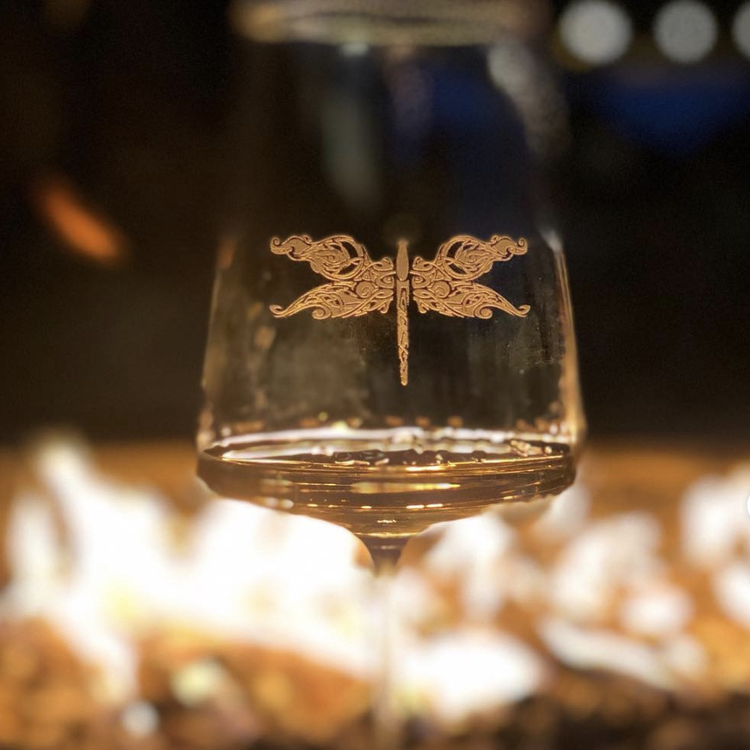
News & Stories / Mushroom Photo Exhibition An exhibition of Barbara Cordes' amazing fungal photography is on now at Odonata Winery Tasting Room . Deb • March 10, 2014 Odonata winery glass (from odonatawines.com). The exhibition is at 2343 Mission St. in Santa Cruz, March 6th-30th, 2014. I stopped in and I'll tell you, it was such a treat to see all the nice, drippy fruitings I missed this winter! Couple that with Dennis Hoey's delicious wine and you'll be a happy camper. Dennis got his start in winemaking working with Jeff Emery of Santa Cruz Mountain Vineyard and continues as SCMV's Production Manager. Members Only Content Login Join FFSC Related Posts Forager's Feast Photo Album Previous Article All News & Stories Next Article
- Andrew Ratz | Fungus Federation of Santa Cruz
Andrew Ratz Field and Lab Technician | University of Minnesota I am fascinated by biogeography and the dynamic ways life shapes its environment; as well as how these environmental conditions, in turn, structure where organisms live and how they move through the world. I am particularly interested in the processes through which biological communities influence abiotic landscapes and the complex spatial patterns that can emerge from these interactions. This passion has led me to work across a range of systems, from aquatic plants and insects to snow algae and soil microbes. I am equally at home in forest plots, fungal forays, running DNA extractions, and analyzing large and messy data. I graduated from the University of Minnesota in 2024 and now work as a field and lab technician. I enjoy both hands-on ecological work and uncovering hidden patterns in big datasets. Outside of research, I spend my time running around the Twin Cities, bouldering, and delving into lengthy fantasy series that take ages to finish. 2026 Andrew Ratz surprised by Chicken of the Woods 2026 Santa Cruz Fungus Fair Talks Buy Tickets Fungal Sporecasting: From Continental to Local Spore Drifts and Constraints on Fungal Dispersal Fungi are vital ecosystem drivers, along with delectable and wondrous organisms, yet their dispersal via microscopic airborne spores remains a challenge to study. This… Show More Saturday, January 10, 2026 10:15 PM - 11:15 PM Room 3 Truffles in the Wind: Unexpected Airborne Pathways for Underground Fungi While most mushrooms cast their spores to the wind, truffles have evolved to stay underground. They release strong scents and can mimic berries or… Show More Sunday, January 11, 2026 5:30 PM - 6:30 PM Room 3
- FFSC Accessibility Statement | Fungus Federation of Santa Cruz
Support FFSC Website Accessibility Efforts An accessible website allows visitors with disabilities to browse the site with the same or a similar level of ease and enjoyment as other visitors. To make this website accessible, we rely on the capabilities of the system on which the site is operating, tools which help us determine where the site might not be compliant, and our evolving understanding of WCAG guidelines. Accessibility Adjustments on this Website When building this website, we have: Used various tools to determine font size and color contrast ratios for text and neighboring elements. Used our web platform's Accessibility Wizard to find and fix potential accessibility issues Set the language of the site to US Attempted to maintain consistent heading structures on all of the site’s pages Implemented text and background color combinations that meet the required color contrast in WCAG 2.1 guidelines, to at least a level of AA. In 2025 we will also be working to: Set the content order of the site’s pages Add alternative text to images Make videos and audio files on the site accessible (e.g., with audio transcripts available) Avoid looping motion effects Prevent videos from playing automatically when our system permits it, and/or allow users to stop video effects Test the website with assistive technologies such as screen readers and keyboards Areas of Partial Compliance with the Standard The accessibility of certain pages on the site may vary, depending on two main factors: We sometimes use applications that belong to external platforms (ticketing, shopping, video, etc.) which own and manage their own user interfaces, and we have no direct control over certain features. We are a volunteer-run organization. Over time, some volunteers who contribute content to this website might not consistently follow the standards. We don't always have volunteers available to fix such content in a timely manner. (If you're an FFSC member with expertise in website accessibility, and you're interested in volunteering to assist with such maintenance, please let us know!) Requests, Issues and Suggestions If you are personally affected by an accessibility issue on this website, or if you need further assistance, you are welcome to contact our website volunteers via any of the methods on our Contact FFSC page, or come to one of our Minister Meetings to chat in person. We'll do our best to address or mitigate such issues. FFSC Accessibility Statement This statement was last updated on August 12, 2025. We at the Fungus Federation of Santa Cruz are working to making the ffsc.us website accessible to people with disabilities.
- A Little Buggy | Fungus Federation of Santa Cruz
A Little Buggy. Photo by Karen Hilker A Little Buggy Karen Hilker During a walk in the Sierra, I snapped some pictures of a light tan blob on a charred tree... Camera Canon PowerShot S3 IS Focal L. 6mm Aperture f/2.7 Shutter Sp. 1/200s ISO Flash Off Photo taken on July 8, 2011 Mushroom(s) ... Previous Photo Back to Gallery Next Photo
- A Very Mushroomy Halloween To You, Too! | Fungus Federation of Santa Cruz
News & Stories / Mycology & Art News A Very Mushroomy Halloween To You, Too! Halloween is fast approaching, and this is Santa Cruz’s favorite holiday. Are your kids dressing up? Are you? Deb • September 27, 2013 Omphalotus olivascens (western Jack o'Lantern) at the Fungus Fair Julian and Gabriel sported magnificent Muscaria costumes while out trick-or-treating with their family and some friendly elves last year. We can’t wait to see what they do this year, and would love to see your costumes, too! Send photos to our Google Group or Facebook group. Larger images are preferable, thanks. For further inspiration, visit Pinterest: http://www.pinterest.com/search/pins/?q=mushroom%20costume Members Only Content Login Join FFSC Related Posts Haikus Celebrating the Secret Life of Fungi Previous Article All News & Stories Next Article
- November 2014 Habitat Walk | Fungus Federation of Santa Cruz
News & Stories / Field Reports November 2014 Habitat Walk A great group of people attended the Habitat Walk this last Saturday. These hearty mushroom enthusiasts were greeted with early rain, muddy conditions… Cass Fuentes • December 1, 2014 Soggy participants of the Habitat Walk Members Only Content Login Join FFSC Related Posts Habitat Walk Summary - 2013 Previous Article All News & Stories Next Article
- Hygrocybe singeri, Western Witch's Hat | Fungus Federation of Santa Cruz
Hygrocybe singeri, Western Witch's Hat Have you ever found a bright orange to red waxy cap, and brought it home only to find your once colorful mushroom was dingy black colored? You have found one of the blackening Hygrocybe , or the “Witch’s Hats”. ... Hygrocybe singeri. Photo by Noah Siegel They are some of our more common Waxy Caps, occuring in a wide variety of forest types; with a particular fondness for redwood or cypress duff. Our most common species is Hygrocybe singeri , recognized by its bright red, orange to yellow colors, a narrowly conical, often viscid cap, and black staining on all parts. Although the name H. conica has been used in California for fruitbodies with a dry stipe, many of these records seem to fall within the variably range of H. singeri . The joke is, you find H. conica in dry weather, and H. singeri when it is raining. However, there may be more than one species in the H. singeri complex. Hygrocybe olivaceoniger . Photo by Noah Siegel Other species of “Witch’s Hats” in California include Hygrocybe olivaceoniger ; which is a smaller species with a greenish to yellow cap, without orange-red tones. It can be difficult to distinguish from small, pale H. singeri , unless one has a range of fruitbodies. It’s an uncommon species in the North Coast redwood forest. Hygrocybe nigrescens . Photo by Noah Siegel More distinct is H. nigrescens (sensu CA), which has larger, consistently redder caps and occurrence under hardwoods. It can be common during wet years in the Sierra Nevada foothills and upper Central Valley oak zone. Hygrocybe conica grp. Found in Phil's Yard. Photo by Noah Siegel I have also seen a spring-fruiting species in the Sierra Nevada which appears to be distinct, a tiny species in Chamise duff ( Adenostoma fasciculatum ) in the foothills and one in Phil’s yard which looks closer to the European H. conica (but doesn’t match genetically). Hygrocybe singeri "alba" (Skyline 2012). Photo by Noah Siegel To make matters more confounding, species of Hygrocybe in this group can have pigmentless forms. The white form of H. singeri soon takes on a grayish cast, then blackish stains overall as it ages. Hygrocybe ( Hygrophorus ) albinellus , described from Boulder Creek appears to be a pure white form of H. acutoconica (and likely, a legit name for our western H. acutoconica ). Mushrooms covered: Hygrocybe (Hygrophorus) albinellus Hygrocybe acutoconica Hygrocybe conica (witch's hat) Hygrocybe nigrescens ( blackening waxcap) Hygrocybe olivaceoniger Hygrocybe singeri (western witch's hat) Previous Description All Featured Fungi Next Description
- Haikus Celebrating the Secret Life of Fungi | Fungus Federation of Santa Cruz
News & Stories / Writings Haikus Celebrating the Secret Life of Fungi FFSC President Richard Lyness challenged the membership to come up with our own haikus based on the 2016 Fungus Fair theme, "The Secret Life of Fungi". Katherine (Kitty) Elvin • December 17, 2015 Albion Finds. Photo by Zachary Hunter Haiku is a Japanese poetry form. A haiku uses just a few words to create an image in the reader's mind. Traditionally the haiku is written in 3 lines: Five syllables Seven syllables Five syllables Here are haikus our members came up with. "The Secret Life of Fungi" Fungus fair haiku mycellium duff spores rain creative and fun -- Richard Lyness "Fall" Fall is upon us The secret life of fungi Soon to be revealed - -Kathy Welch "Untitled" Cleaning chanterelles Golden glow beneath the mud My, that’s a big one! --Deb "Mushroom haiku" What mushroom are you? Small brown job or something more? Rain drops light your top. --Shea "Red drops" Little red drops peek Hiding in the fuzzy duff Yellow lips glisten --Shea "Mushroom Haiku" First-rain scent rising Moss-quiet expectation Pathless, perfect woods --Susan Labiste "Mushroom Haiku" Matsutake bride In deep humis lies the mate holds her threaded veil --Susan Labiste "haiku" hyphae intertwine beneath the moist duff and soil primordia grow --Marjorie Young Share More Poetry You can share your haikus or other poetry on the FFSC Google Group, FFSC Facebook group, and/or (as of 2025) our new FFSC Discord channel! Join our conversations your favorite way. Members Only Content Login Join FFSC Related Posts 40th Fungus Fair: Time lapse of the Island setup A Short History of the Fungus Fair Previous Article All News & Stories Next Article
- A Bolete by Any Other Name... | Fungus Federation of Santa Cruz
A Bolete by Any Other Name... Many mushrooms we see in our local woods now have a new name or spot in the myco tree of life. One of our most prized groups of local mushrooms, the boletes, is no exception. Let's look at some name changes that you might need to be aware of if you're using older field guides. ... Porcini (bolete) found on an Albion foray. Photo by Katherine Elvin As many of you know, the mushroom world has been going through a lot of changes in recent years with the onset of genetic sequencing. One of the main impacts of this has been the renaming or reclassification of not only singular mushrooms, but in some instances whole genera (heck, Suillus got its own family!). It sometimes seems that just about every mushroom we see in our local woods now has a new name or spot in the myco tree of life. And one of our most prized groups of local mushrooms, the boletes, is no exception. With the recent publishing of scientific papers some of their names have changed as well. So let’s dive in on some of the name changes which have impacted our beloved Boletus . A few important notes before we begin... One , I am only going to cover the more common stuff that you would encounter in the woods and would also be found under the genus Boletus in Mushrooms Demystified . Two , these mushrooms have for better or worse worked themselves into different discrete groups, which in turn prompted the creation of new genera. The King Group Queen Boletes (Mendocino 2016. Photo by Katherine Elvin The heavy hitters of Boletus and the ones most are scouring the woods for once the first big fall rains arrive. These mushrooms have remained in the genus Boletus but with some species name changes. Here is what we have: Species Notes Boletus barrowsii The “White King” bolete remains with no changes. Boletus edulis var. grandedulis The “King” bolete got “ var. grandedulis ” appended to its name. We may also have the true European king bolete here growing with imported pine trees, but that will remain speculation until the genetic work is done. Boletus regineus The “Queen” bolete, which used to be Boletus aereus , a misapplied European name. Thankfully the name change did not affect its edibility. The Butter Group Butter Boletes (2017). Photo by Katherine Elvin Here is, in my opinion, the biggest change of them all. The “Butter” boletes have now been moved out of Boletus and into their own genus Butyriboletus . On top of that, we now have three local species instead of the traditional two. Here they are: Species Notes Butyriboletus persolidus Our traditional “Butter” bolete, that beautiful, intense blue staining, rock hard edible bolete found with hardwoods. It used to go by Boletus appendictulatus . Butyriboletus querciregius The “Pink-capped Butter” bolete, aka the elusive cousin of the more common butter bolete. I have still never found this thing.. Butyriboletus autumniregius The new one on the scene is the rosy autumn butter bolete, a.k.a., the “other” pink-capped butter bolete. This one differs from the other both genetically and by preferred habitat. It grows with coastal conifers instead of with hardwoods. This is probably the one that grows with the pine (and matsutake) around the fire roads of upper UCSC campus. The Cracked-Cap Boletes Xerocomellus dryophilu sp. Photo by Martin Livezey (from mushroomobserver.org) These are usually way more common than any of the boletes we have covered thus far. Sometimes called the “Woodland” boletes, they flourish fall through spring in both our live oak and tan oak habitats (they like hardwoods). Identifying down to species can be tough, and we may have undescribed species or members going by European names. Basically, dry caps that crack, often staining blue, often reddish stipes, often parasitized by Hypomyces and even more often not worth eating... So what matters here? For a long time they were in Boletus , then moved to Xerocomus , and now they are in Xerocomellus . Looks like they will stay in Xerocomellus with our one “true” Xercomus , Boletus subtomentosus , moving into its proper nomenclature home. Still with me? Current species: Species Notes Xerocomellus chrysenteron The “Cracked Cap” bolete. Used to be B. chrysenteron . Xerocomellus dryophilus Xerocomellus dryophilus – Probably one you are not familiar with. Really pretty red-capped mushroom that is sporadic in the county, but often common where it does occur. Formally B. dryophilus . Xerocomellus truncatus Xerocomellus truncatus – Macroscopically very similar to X. chrysenteron and often difficult to tell apart. Used to be B. truncatus . Xerocomellus zelleri and Xerocomellus atropurpureus “Zeller's” bolete and supposedly the best edible of the bunch... (But put enough butter, salt and garlic on a piece of cardboard and it too can be the best edible in Office Max. Fifteen glasses of wine prior probably does not hurt either...) Regardless, a really striking mushroom when fresh. Both to be B. zelleri . Xerocomellus atropurpureus is considered the more common of the two. Auroboletus (Oh yeah! Those things!) This change has been around for a while and is pretty easy. The boletes with the neon yellow pores are now in Auroboletus . We currently only have two which grow with local hardwoods (both are edible). Some years they are scarce, some years abundant. During one abundant year we decided to cook them up for some UCSC students. They actually really liked them! Go figure... Species Notes Aureoboletus citriniporus The dry-capped one. Previously Boletus citriniporus Aureoboletus flaviporus The slimy-capped one. Boletus flaviporus Poisonous Boletes Rubroboletus eastwoodiae . Photo by Yevgeny Nyden I guess what could be called the “poisonous” bolete group, these two were in limbo for a while, but have now been reclassified. Species Notes Suillellus amygdalinus No common name that I know of. Orangish pores and intensely stains blue. Grows with hardwoods. Long thought to be poisonous, recent discussions and some unverified taste tests claim it is actually edible. That is NOT an invitation for you to find out for sure. But if you do let me know. Formerly Boletus amygdalinus . Rubroboletus eastwoodiae The North American counterpart to "Satan's bolete" ( Rubroboletus satanas ). The common name is often misapplied here. Formerly known as Boletus eastwoodiae and Boletus satanas . Huge and gorgeous. Some years scarce, some years fruiting in enormous quantities. Easy one to learn. This species is without question seriously poisonous ! So there you have it. The current status on our local boletes, all of which could be wrong by this time next year. See you in the woods... Mushrooms covered: See code Previous Description All Featured Fungi Next Description
- How I Spent My Summer Vacation | Fungus Federation of Santa Cruz
News & Stories / How I Spent My Summer Vacation I officially retired in Oct 2024 and after the end of our club season this year, I suddenly had more time to go foraging. Katherine (Kitty) Elvin • November 10, 2025 2025 Calabria gang My allergies are the opposum and fish I headed down to Mexico and joined Chad and Rose Hyatt in Oaxaca with Zachary Hunter of TheFungivore.com . I signed up for the MyComida Rupestre - Forage & Feast. For those who know me, what I love almost more than hunting mushrooms, is traveling and eating. This tour was to explore the foods of Oaxaca with a fungal bent. All my three loves in one tour. It was a culinary feast: mole, squash blossoms, corn many ways, insects, mezcal and much more. Unfortunately, the rains arrived 2 days before we were done, but we still found many mushrooms, flowers, plants and insects to entertain us. We were up in Sierra Norte Mountains at around 7000 - 8000'. We found Boletus edulis , Amanita ceasarea , and at Monte Alban inside a tree trunk Volvariella bombycina flaviceps which Chad got really excited. This mushroom was on his bucket list. This area is part of the cloud forest and we found orchids, air plants and carnivorous plants. Definitely worth visiting. Josepha and Ken Hendry. That's a lot of Chicken of the Woods in their Maine neighborhood I headed to Maine to visit with Josepha and Ken Hendry (FFSC members) in Windham Maine and was joined by Phil and Margaret Carpenter who happened to be on the East Coast for the Nama foray. This coastal part of Maine has elevation which was much lower than Oaxaca and more like here in the Bay Area. We hiked around many lovely lakes. I found my first Velvet Foot ( Flammulina velutipes ). We found chicken of the woods and was gifted a large fresh hen of the woods from a member of the Maine mycological club. Josepha managed to get us invited to a local foray nearby. One surprisingly delicious mushroom was the Aborted Entoloma ( Entoloma abortivum ). The current thought is this mushroom is a parasite of Armillaria species. My favorite find was the ghost pipes ( Monotropa uniflora ), this parasitic plant of Russulaceae species. While in Maine, I enjoyed eating lots of lobsters, the crustacean type and not the fungal type. Very much appreciated the hospitality of the Hendry's for putting us up and planning our forays into the woods. What's Cookin Calabria group picture I finished my summer vacation by heading to Italy. I was joining my favorite mushroom tour group, What's Cookin and this time we were visiting Calabria. I have gone on about 5 tours around Europe and parts of Italy with this group led by mycologist Britt Bunyard. Their tours cover my 3 loves: travel, food and fungus. Calabria is famous for their chili and sweet onion and we definitely got to taste those offerings. We hiked amongst conifers and chestnut trees checking out the fungal offerings. Again, I was skunked by the lack of rains and although we had some rains earlier, things were looking a little dry. We found Boletus edulis , chanterelles and many others. I got to eat a soft polypore, call goats foot which was pickled and delicious. What I love about these tours is we have a local mycologist on our foray along with Britt. I love traveling and foraging in different areas. I get to try eating different mushrooms prepared differently from us. I learn that in spite of the differences, I see many similar mushrooms and characteristics. I am a newbie in their woods and with my newbie eyes, I pay more attention and relearn to stop and look deeply. I remember why I love foraging for mushrooms and the best part is even if I don't manage to collect anything, the beauty of the woods is more than enough so I breathe and live. Kitty (Apprentice newbie of the woods) FFSC Long Distance Foray Minister Enjoy the Trip Members Only Content Login Join FFSC Related Posts My Adventures in Telluride Colorado Field Report - 2021 NAMA Foray Grandby CO Previous Article All News & Stories Next Article