332 results found with an empty search
- Spring Fungi of the Sierra Nevada - 2026 Recap | Fungus Federation of Santa Cruz
News & Stories / Spring Fungi of the Sierra Nevada - 2026 Recap Each spring, the retreat of the snowpack provides a unique ecological window of opportunity for “snowbank fungi”, a group of mushrooms that (as the name suggests) grow in and around snowbanks. As spring gives way to summer, curious mycophiles from around the world gather at a rustic campus in Tahoe National Forest to study these fascinating fungi. Lisa Tesler • June 18, 2026 Snowbank fungi (Mycena overholtsii). Photo by Lisa Tesler At the beginning of June, my mom and I headed up to the Tahoe area to participate in Spring Fungi of the Sierra Nevada . This is a 5-day mycology course designed for absolute beginners and experienced mycophiles alike. Snowbank fungi are endemic to the high-elevation coniferous forests of western North America, where short, cold summers allow snowbank remnants to linger into August. To help others learn about these interesting species, the renowned mycologist Dr. Harry D. Thiers created this course in 1982. Over the years, other instuctors have included Dr. Roy Halling , Dr. Andrew Methven , and Dr. Dennis E. Desjardin . As of 2017, Dr. Brian Perry has been leading the course. Dr. Perry maintains a detailed species list and grows it each year. So in lieu of a field report, here's a recap of what we experienced in this year's course. The Campus Setting Daily Activities Course Registration Final Comments The Campus Setting Sierra Nevada Field Campus sign. Photo by Lisa Tesler The academic setting is SF State's Sierra Nevada Field Campus, a semi-rustic outpost tucked off Highway 49 , along the North Yuba River in the Tahoe National Forest. Due to limited funding and historic preservation agreements, this campus' architecture sits somewhere between a 1970s research station and a U.S. Forest Service campground. In fact, a non-profit group, Friends of the SNFC , and the university are both seeking donations to improve student amenities and the facilities. ( More info below ) The campus center is a two-story wooden building, housing a single communal classroom downstairs, along with bathrooms and showers, and a dining hall upstairs. For this course, Dr. Perry (Brian) converted the classroom’s long tables into rows of temporary lab workstations. Each workstation included a compound microscope plus basic supplies (razor blade, forceps, slides, cover slips and lens wipes). Pairs of students also shared a dissecting scope and an assortment of diagnostic reagents. Our classmates included a few mother/daughter participants (like my mom and me), as well as couples and friends who had come up together. So the pairs formed quickly, and those who came solo synced up to form the remaining pairs. Other buildings on the property include housing for the campus director, teaching staff, etc., as well as forest-service-style showers and bathrooms at both ends of the campus for students who were camping. On-Site Lodging Tent photo from https://sierra.sfsu.edu/gallery-0 Most students rented large canvas-wall tents built on wooden platforms (which were apparently pretty comfortable), or pitched their own tents among the pines. Alternatively, some people slept in their own camper vans or trailers in the parking lot across the river. (For our own accessibility and health reasons, my mom and I opted to stay in Sierra City, about 10 minutes away.) Due to an aging bridge and limited budget for road maintenance, students who camped could drive to their tents to unload/load gear on the first and last day, but otherwise we were all asked to leave our cars in the main parking lot during the week. Food Options As this is bear country, the campus provided an industrial refrigerator in the dining hall for personal perishables, plus shelves for non-perishables. If you attend this course and opt in to camping on campus, please note that the kitchen was for staff only, and students were asked not to cook or have food in their tents. Campus chefs typically prepare one tasty main dish per meal (with variants for meat-eaters and vegetarians). When we were there, they offered stroganoff, Chilaquiles, Taco Tuesday, etc. and incorporated wild mushrooms as available. They also laid out self-service buffets for morning cereal, brown-bag lunches, and evening salads. Daily Activities We followed a regular daily schedule, with each activity building on what we had learned in the morning earlier in the week: Morning Lecture Daily Foray(s) Afternoon Lab Session Evening Talk Morning Lecture Each morning after breakfast, we gathered at 8:15am for a lecture in the dining hall. Dr. Brian Perry started the week with lectures on macro- and micro-morphological characteristics. As the week progressed, he shifted to beautiful slides covering the taxonomy of local Spring basidiomycetes and ascomycetes. (Heh--for my part, I spent most of that time taking notes on how Brian pronounced the Latin names--much to my mom’s amusement, along with her observations about California’s high school education system no longer requiring Latin...) Daily Foray(s) View of the Yuba River from the the Sierra Nevada Field Campus bridge. Photo by Lisa Tesler At around 10:30am each day, we packed up our lunches and baskets, and we headed outdoors. After a short walk across the Yuba River, we gathered in the parking lot, while enjoying the fresh air and a swarm of California Tortoiseshell butterflies. From there, we carpooled along Highway 49 to seek the types of fungi we had studied so far. Some participants were experienced snowbank mushroom foragers, and seemed to easily find interesting species left and right. Others initially found the hunting to be a little more challenging--especially if used to hunting for large edibles in areas where the mushrooms practically stand up and wave at you. With some time, everyone still found plenty to study for the class. On the first day, a fellow participant whom my mom befriended approached our car during a break, reverently holding a beautiful Spring King. “It’s the first porcini I’ve ever found, after all these years!” she bubbled. We congratulated her, and my mom asked if she was planning to prepare a special meal with it. “I’m going to donate it to the campus kitchen, so everyone can enjoy it!” she replied with delight and generosity. Another delightful foray location was at around 7,000 feet, where the air was cooler, and the mosquitoes were still blessedly dormant. Hunting here was familiar and yet different (compared to our typical FFSC forays). For this hunt, we started by looking for patches of snow. Then, with sunglasses and face masks on for sun protection, we carefully peered under and around the melting edges of the snowbanks. Note: One passerby was clearly baffled to see people surrounding snowbanks near the road, each of us hunched over, squatting, or nearly lying down amongst broken logs and rocks. In this habitat, we found elegant mushrooms like the snowbank fairy helmet ( Mycena overholtsii ). This is a paradoxical giant among the usually tiny mycenoids, growing up to 6 inches tall, with caps over 2 inches wide. Like other snowbank fungi, their fruiting bodies are just warm enough to melt small caverns in the snow, allowing them to grow tall until they break through the surface (or the snow melts away) to release their spores. The snowmelt also created an ideal habitat for spring orange peel fungi ( Caloscypha fulgens ), black snowbank cups ( Donadinia nigella ), and other beauties. On another foray, we visited a wide open area at around 5,000 feet, where we found more black snowbank cups, along with bird’s nest fungi, and more. One day after lunch, some people began a little show-and-tell and “what is it?” with Brian and others. My mom took the opportunity to rest, so in the last few minutes before we left the area, I strolled back to revisit some trees where I had seen a couple of large, decomposing porcini, but I still didn’t find any others. Basket with Porcini ( Boletus rex-veris ) That is, of course, until I experienced the classic foray trope: On the way back to my car, right smack in the middle of the area where 20 other students had just been hunting for over an hour, three robust porcini caps peeked out at me from under pine needle ‘shrumps, like sleepy foreheads emerging from blankets after a long winter slumber. With strategic mercy, Brian saved the wettest and most mosquito-choked habitats for Thursday, our last day of foraging. Some of the rarer high Sierra species only grow in marsh grasses or tucked into soaked logs, so upon arriving at this soggy location, students donned sandals and/or rubber boots—and a lot of mosquito repellent—to see if they could find some rarities. My mom and I didn’t find any of the rare specimens, but we were at least pleasantly rewarded with other enjoyable species. The group forays typically ended at around 2pm, giving everyone time to hunt at their own secret spots, rest/shower, or get ice cream at the Bassett’s Station Store. (My mom reported that the ice cream was very good.) At 3pm, we reconvened in the coolness of the lab. Afternoon Lab Session On our first afternoon in the lab, Brian briefly reviewed the morphological characteristics of basidiomycetes. Assistant instructor Taye Bright made sure everyone had at least one mushroom of the same species, and then they led us through a traditional group ID session. We used a set of dichotomous keys which Brian and Dennis Desjardin had developed for the course. (If you’re not familiar with dichotomous keys, think of an eye exam where you are asked to choose “A or B?”, and then each answer takes you to the next “A or B” question until you drill down to the species.) Next, we used our microscopes to look at the mushroom’s spores, to ensure everyone was able to see the same shapes. On Tuesday, we reviewed how to study more complex microscopic features, and Taye walked us through another ID session as a group. From then on, each of us began to work at our own pace in the lab—given that some students were professional biologists, and others were microscopy newbies. Several course alumni and guest advisors joined the sessions for the first few days, including Mike Woods , Douglas Smith , Dr. Andrew Wilson , and others. Thus, those of us who were new to microscopy (or who hadn’t touched a microscope since high school) got plenty of one-on-one help. They showed us (or in some cases re-showed us) how to prepare a basic squash mount, operate the microscope, understand which parts of different specimens to dissect, etc. Note : If you’ve attended this course in the past, Dr. Perry said alumni are welcome and encouraged to come back as guest advisors. You can join the forays, assist students in the lab, and sit in on lectures. Evening Talks (and Final Exam Day) After dinner each evening, students could attend optional evening talks, gather around picnic tables to socialize, or do their own thing. This year's speakers were Brian, Dr. Andrew Wilson , and campus Director Lynx Gallagher. In addition, J.R. Blair led an evening trip to go birding in the Sierra Valley. Tortoiseshell butterfly taking the final exam? Photo by Niecea Freeman On Friday morning, the instructors set out several specimens on those same picnic tables, with test questions as a final exam. (This was an open-book test, mostly for ourselves.) By Friday, my mom and I were mentally and physically exhausted, but happy about what we’d learned. Despite being tired on the drive home, we couldn’t resist stopping a few times to explore potential foray areas. “Let’s just look for 5 minutes…” we’d say, and then of course we’d poke around for 20 minutes. Knowing we still had a long drive back to the Monterey Bay Area, we finally agreed “This is the last spot!” The elevation was lower and the ground was pretty dry by then. We only found the remains of one morel, some Dyer's polypore ( Phaeolus schweinitzii ), and not much else. “Time to go,” said mom. But then, once again, while walking back toward the car, I noticed a clearing where the sun lit a pile of pine needles on an odd-looking rock. “Hmm… Is that a rock, or could it be a ‘shrump?” I wondered, and detoured over. Sure enough, another three porcini!! A tasty end to a long week. Boletus rex-veris on the way home. Photo by Lisa Tesler Course Registration Speaking of porcini, this year the course registration fee was $395 (plus meals and camping fees). Given the price of fresh morels and porcini at my local fine foods store, the edibles we found on this trip were probably worth about the same as the class fee! Even if you don’t look at the pricing that way, many commercial half-day and weekend ID classes range from $100-$150 per day and only have enough time to cover a fraction of this course’s depth. SNFC classes are treated like part of an extension program, which means you don’t need to be a matriculated student at SF State (or anywhere else) to take this course. In fact, this year’s cohort ranged from teenagers to octogenarians, and beginners to biologists. It should be noted that this course may be canceled if conditions are overly dry (as occurred in 2014 ). In fact, Brian normally co-leads a course with Alison Pollack the following week ( Myxomycetes of the Sierra Nevada ), but that course was canceled this year, due to inopportune conditions. Scholarship (and Donation) Options If you’re hesitant or unable to afford the $400 investment, I would encourage interested students and members to apply for an FFSC scholarship to cover (or at least offset) the fees. A non-profit group, Friends of the Sierra Nevada Field Campus , also offers scholarships for this course-and for any other SNFC courses and workshops. The Friends group also accepts tax-deductible donations . Over the years they've successfully funded many of the amenities that affect day-to-day campus life. Plus, the university is seeking larger donations to help fund infrastructure improvements to the bridge and buildings. Final Comments If you’re not interested in fungi that grow in the Sierra Nevada, there are many excellent courses in the Bay Area (including through FFSC ) that can teach you how to use dichotomous keys and/or how to use a microscope. That said, the length and depth of the Spring Fungi of the Sierra Nevada course (not to mention the lack of cellular, WiFi, and TV distractions) gives you a unique opportunity to focus (no pun intended) on your microscopy and ID skills. After you learn a skill, you get several more days of practice with attentive instructors and advisors in the room. They’ll answer your “Did I get this one right?” questions in real time, troubleshoot your squash mounts, and/or thumb through the keys alongside you to figure out why you went down an unexpected path. And it's a lot of fun! Where to Learn More about the Course In this YouTube video, Dr. Brian Perry gives an overview of what he covers in the course. You can read more about snowbank fungi in the Spring 2009 issue of Fungi Magazine : https://www.fungimag.com/spring-09-articles/13_Snow.pdf Members Only Content Login Join FFSC Related Posts Spring Fungi of the Sierra Nevada, June 2013 Microscopy of Gilled Mushrooms Previous Article All News & Stories Next Article
- FFSC Members receive NAMA Awards and Honors in 2009 | Fungus Federation of Santa Cruz
News & Stories / FFSC Members receive NAMA Awards and Honors in 2009 We're truly fortunate to have people like David Rust and Jennifer Krekes in our midst! Wendy Wells • December 1, 2009 David Rust David Rust, FFSC member and BAMS co-founder, was given the President’s Outstanding Service Award at the annual foray of the North American Mycological Association in Louisiana last month. The award is given to those who have been of outstanding service to NAMA. David follows in the footsteps of Ben Woo and Orson and Hope Miller, last year’s recipients. His biggest project was the complete revamping of the NAMA website, www.namyco.org. Take a look (view the archived version from 2009 ) — he did a fantastic job! Closer to home, David has created site specifically tailored to the Fungus Fair. So David is appreciated across North America, but particularly here in Northern California. Another bit of awards news from NAMA to the Bay Area: Jennifer Kerekes was the recipient of the 2009 NAMA Memorial Scholarship in the amount of $2000. Jennifer is a Ph.D. candidate in the Department of Plant and Microbial Biology at the University of California, Berkeley under the supervision of Dr. Tom Bruns. Her dissertation project is entitled Diversity and ecology of saprotrophic fungal communities in Californian grassland and forest ecosystems . Members Only Content Login Join FFSC Related Posts Phil Carpenter receives Knighton Award at Appalachia NAMA 2023 Previous Article All News & Stories Next Article
- Salt Point State Park Closed to Mushroom Gathering | Fungus Federation of Santa Cruz
News & Stories / Salt Point State Park Closed to Mushroom Gathering Mushroom collecting has been suspended until the rains come. Katherine (Kitty) Elvin • September 27, 2015 Slime mold (Salt Point). Photo by Katherine Elvin Due to the ongoing drought, the lead biologist at https://www.saltpoint.org/ has determined that tromping through the woods could be permanently destructive. Members Only Content Login Join FFSC Related Posts Jackson Demonstration State Forest Permit Changes Previous Article All News & Stories Next Article
- Mushrooms of Australia and New Zealand | Fungus Federation of Santa Cruz
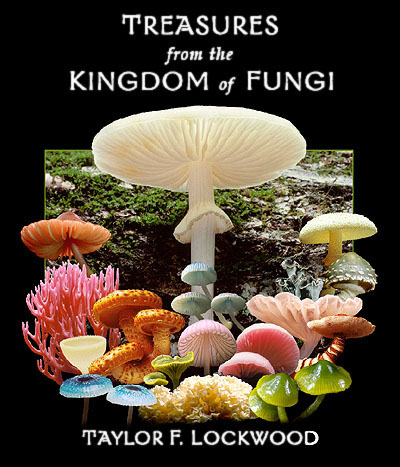
News & Stories / Mycology & Art News Mushrooms of Australia and New Zealand A new illustration from Taylor Lockwood. Can you count how many mushrooms are there? :-) Yevgeny Nyden • March 5, 2014 Mushrooms of Australia and New Zealand (from mushroom.pro). ©2013 Taylor F. Lockwood Members Only Content Login Join FFSC Related Posts Cam Cam by Taylor Lockwood Mycology & Art News Taylor Lockwood's National Geographic Magazine Debut Mycology & Art News Previous Article All News & Stories Next Article
- Ending, Beginning Anew | Fungus Federation of Santa Cruz
News & Stories / Writings Ending, Beginning Anew Perusing past issues of Duff provides a great retrospective on mushrooming on the Central Coast since the founding of the Fungus Federation of Santa Cruz in 1984. We've moved most of the articles to this website, and will no longer publish the PDF. Deb • May 1, 2013 Bob Sellers (from the final issue of Duff, May 2013) During the past 29 years some of the most noted mycologists in the world have addressed our group. We’ve collected oodles of mushrooms on local, long distance and ad hoc forays, dined royally, held fungal fashion shows, tailgate tastings and culinary forays. Excerpts from the first issue of Duff ’s precursor, the Federation Flyer , are included below for the whole alpha-omega experience. I think Bob Sellers would be happy to know he will always make us laugh! Our lectures, classes and workshops have provided tools for better understanding and helped us stay abreast of changes in nomenclature and molecular sequencing technology. FFSC has sponsored countless Fungus Fairs — next year will be the 40th! And we have all enjoyed ourselves immensely and made some very good friends in the bargain. Sincere thanks to the editors of Duff over its 29 year history: Bob Sellers, Greg Ferguson, Bridget Binko, Ford Johnson, Flick Christensen, Larry Payne, Madeline Wycke, Roxane Kitely, Wendy Wells and Debbie Johnson. We are also grateful to all of you who contributed articles, questions, photos and ideas over the years. Your generosity has enriched both the newsletter and our club. We look forward to enjoying your pictures and prose on the new website, which will launch in the fall at ffsc.us ! You’ll receive email notification when everything is up and running. Please send tales and photos of your morel hunts and summer mushrooming adventures to our Google Group! Wishing you fruitful forays, Debbie Johnson Minister of Propaganda Duff's predecessor, The Federation Flyer : Members Only Content Login Join FFSC Related Posts Demise of the Duff Writings Previous Article All News & Stories Next Article
- Collecting Conditions in Mendocino at ACCF 2014 | Fungus Federation of Santa Cruz
News & Stories / Field Reports Collecting Conditions in Mendocino at ACCF 2014 I went to the All California Clubs Foray (ACCF) in Albion last weekend. We actually found an amazingly large number of mushrooms so the myco-geeks were thrilled. Edibles? - only a few chanterelles, hedgehogs and winter chanterelles. Phil Carpenter • February 27, 2014 Fomitopsis pinicola. © Ember Erebus (from mushroomobserver.org) I just wanted to let you all know that it is my opinion that the right decision was made to cancel Albion II. All of the "usual" places were dry, dry, dry and essentially devoid of fungi. We all sought out the deepest canyons that never saw the sun to find damp spots to collect. Even then, things were sparse (especially edibles). With a lot of people gathering and spending the time, we had plenty of diversity and things to discuss. I thoroughly enjoyed working with the excellent mycologists present to continue my education. It was a good call to bring this subject up for a vote, Wendy! I agree that our group would have been disappointed. Members Only Content Login Join FFSC Related Posts Report from the Mendocino Coast 2018 December Albion Foray Species List Previous Article All News & Stories Next Article
- Reality Check: Dispelling a Myth | Fungus Federation of Santa Cruz
News & Stories / Writings Reality Check: Dispelling a Myth Have you ever walked down a trail you know, searching for mushrooms you had missed? What was different? Your perspective? So was mine--I could not recognize ground I covered from a different direction. I was lost. Henry Young • January 26, 2015 Forest at Kings Fire (2015). Photo by Yevgeny Nyden (Reprinted from FFSC's original Duff newsletter, 1998) After getting rained out on this year's annual Eldorado camping foray, Phil and I decided to return several weeks later based on reports from a friend of good hunting. We drove up Friday evening, June 5, arriving at the campground about 10:30 PM. First things first, we each had a beer. Then we made a minimal camp. We decided that since we could see the moon through the clouds that it wouldn’t rain and didn’t set up the tent. Phil set out his tarp and sleeping bag at the base of a large pine. I set my gear down in the open. On a trip to the restroom I found three Boletus edulis with my flashlight! We both took this as a good sign and planned on checking the campground in the morning. Before dawn I awoke to a clear sky and stars. Not long after, with the first sounds of morning, birdsong greeting us, the day began. With daylight we had coffee and sweet rolls and headed for the burn. Forest at Kings Fire (2015). Photo by Yevgeny Nyden Burns, whether controlled burns or forest fires, are good places to hunt morels in the Sierra Nevada. This was a controlled burn from the previous year. Arriving at the burn, Phil recommended a road I was unfamiliar with, that ran along the ridge above the burn. The road I knew was a few hundred yards below the ridge.This road was more like a stream bed than a road. The surface was “gravel” composed of 3-6” rocks. The lower road was earthen and smoother. With the burn bounded by the two roads we had good reference points for knowing where we were in relation to the truck. We would hunt up and down the slope and move down the road, driving the truck up a few hundred yards at a time. At the first likely spot we looked, we found a few fresh morels in what I call bear clover (not sure of the species) a habitat where neither of us had previously found any fungi. Encouraged, we kept moving up the ridge, stopping, checking, and collecting a few here and there. We found good habitat after a couple of hours and collected several pounds of morels each. At about 11:30 AM we broke for lunch. Phil had those obnoxious sardines in hot sauce, cheese, pickles, and potato chips. “Have you had the fat free chips?”, he asked. “Try some, they’re really good”. I did, not bad. I had my usual chub of salami, cheese, bread and some fruit. Of course both of us had beer. While we had lunch we observed the skyline and Phil noticed a coolness in the air that presaged a storm. Since we had heard the weather prediction, thunderstorms starting late Saturday for the weekend we were not surprised and agreed to get off that road before the rain started. After lunch we went back for more morels. At one point Phil chose to go further down the slope. Starting to tire, I decided to head back up slope to the truck. As I went, I intentionally drifted east or to my right thinking to search areas we hadn’t been in before I got to the road. I expected to come out on the road above the truck and just walked down to the truck. When I got to the ridge there was the road and a nice patch of morels which I picked. I then started down the road to the truck but quickly realized that I was on a different road than the ridge road the truck was on. This road led down between two ridges. “How did this happen?”, I asked myself. As I had worked my way up the hill I kept the ridge in sight and felt that I was still below the ridge road. What I did not know was that the ridge road ended a short distance from the truck and I had gone past that point before reaching the ridge. The road I was on was on the next ridge over. It was then about 2PM and I wasn’t worried about time to find my way back yet. Thinking to retrace my path, I returned to the last morel patch and tried to figure which way led back the way I had come. I realized that I had gotten turned around and no longer knew which way to go. Have you ever walked down a trail you know, searching for mushrooms you had missed? What was different? Your perspective? So was mine, I could not recognize the ground I covered from a different direction. I was lost. In the hope that I was wrong, I started up the ridge road I was on. I thought that if I was on the right road I’d get to the truck in a few minutes. Five minutes became ten, then fifteen, at which point I turned around and started back to the morel patch. By this time I was fatigued and not thinking clearly. I had gone out wearing just a tee shirt and jeans, leaving my fanny pack with emergency supplies in the truck. I had no food and no water. As I walked, and I walk at a fast pace, I noticed that my hands were turning blue. I assumed that it was from oxygen deprivation, since the day was still warm and I was not chilled, and I stopped to catch my breath. After that I would walk for 24-40 paces, stop, and breath ten times and resume walking. When I got back to the morel patch reference pointI spent about fifteen more minutes frantically trying to figure which way to go. As I tried to hike through the woods, off road I got light headed and dizzy, my legs cramping. I returned to the road and decided on the direction that led out to North-South Road and headed down it. After what seemed to be a couple of miles, I decided that I had gone too far and was going in the wrong direction. I turned around thinking that I should have followed one of the first rules when lost, stay put . I wanted to get back to the last morel patch because I knew it was within a few hundred yards of the truck and Phil would at some point honk the horn on the truck and I could follow the sound back. Then it started raining. Meanwhile Phil was wondering where I was since we had agreed to get out before the rain started. After I had left him he hunted down the slope and back up. When he got to the truck and I wasn’t there he just figured that I was still hunting elsewhere so he went back out again. Returning the second time and finding that I still wasn’t there he got concerned. He started honking the horn and calling out to me. When he got no response he became worried that I might be hurt and unable to respond. He then searched the slope we had been hunting, up and down, side to side. Since I had not gotten lost in the twelve years we’ve hunted together, he held firm in his mind, “Henry doesn’t get lost” . So the only other explanation for my absence was that I was hurt. When it started raining he knew that something must be wrong and he got his rain gear on and hiked out to North-South Road, where some horsemen were camped. This was because I had the truck keys and had not given him a duplicate since we were not locking the truck. He explained the situation to them and one of them gave him a ride to the nearest phone at the campground to call for help. Phil started by calling 911, but they could not connect him to the ranger search and rescue team. He finally got the search and rescue phone number and called direct. The effort to find me, beyond Phil’s, had begun. It was a frustratingly slow start for Phil as it took over an hour to get anyone else into the woods to search. He and two sheriff’s deputies finally got back out to where the truck was and re-searched the slope we had been hunting on. By then it was 5:30PM and Phil was tiring from all of the hiking he had done that day but he still moved up and down the slope easier and faster than the two deputies half his age. With darkness approaching, the deputies call off the search in the woods and explained to Phil that they would drive the roads with lights and sirens on to give me something to hone in on. At this point Phil said, “Aren’t you going to keep looking? Give me a light and I will.” “No. We don’t need two missing persons.” “But I’m telling you, Henry doesn’t get lost. He must be hurt and down in this rain he won’t survive the night.” “We’re going to drive the roads. You stay with the truck in case he shows up.” “What are you going to do about me?”, Phil asked. “Can’t you sleep in the back of the truck?” “No, it’s wet and full of gear.” When the rain started I knew that I had to make a shelter and hope that a rescue effort would start soon. I needed shelter from the rain and the cold of night. I chose a cedar tree to build a lean-to against. I chose the cedar because of its thick canopy, hoping it would help shed the rain. I started building the lean-to with eight foot branches about 3 inches in diameter. I leaned three main poles against the tree and started cutting green boughs from other trees to layer over the poles. I then added pine duff and more boughs. Then two of the poles collapsed and all I had was a pile of debris. I fished out the poles, moved the boughs and duff out of the way and started over. I made the second attempt a bit smaller than the first, but it too collapsed. At that point, I remembered that for heat retention, smaller is better . My third attempt to build a lean-to was small , the poles only touching the tree about three feet up. Just enough so that sitting with my back to the tree I had just enough room. This time it worked. I piled and gathered and piled until at most all I could see when looking out was a few specks of daylight. I left one side open so I could get in and out. One side kept collapsing which let the breeze flow through – finally though it stabilized. It helped to drape green branches over the doorway to reduce airflow. By then I was soaked to the skin and my activity and adrenaline were not enough to keep me warm so I stuffed my T-shirt with pine needles for insulation . Around 4PM I reached the point of exhaustion and chill that I could not work on my lean-to any longer, so I crawled in to wait. After a while I started thinking, “There’s still lots of daylight, the rain is letting up, I could walk for ½ hour trying to get back, and if not, return to the shelter.” I crawled out of my shelter, picked up my basket and started walking. I reached a dirt bike road going up a short distance from my shelter and started up it. My legs protested with trembling and cramps. My head spun. “You idiot, get back to your shelter.” I did. Sitting in my little lean-to, I had a lot of time to think over all of the things I could or should have done. The first and most obvious was that I should have worn my fanny pack. Had I done so, I would have been warm and dry in my shelter rather than cold and soaked to the skin. Being tired, I should have just gone to the truck instead of hunting more. As anyone who knows me is aware I wear a bandana to keep the sweat out of my eyes. I took it off and squeezed as much water out of it as I could. I then retied it in triangular fashion over my head to help retain some body heat. A short while later I reached up and felt it, it was dry! If you are cold, cover your head . You lose a lot of body heat out the top of your head and a hat will help retain it . I wondered what Phil was thinking and doing. I hoped he’d realized I was lost by this time and had gone for help. I shivered and rubbed my arms, stuffed my shirt with more pine needles and waited for dark. A while before dark I did something I hadn’t done in years. I said a prayer. This was different though. I prayed to my mother who had died just over two weeks ago on May 20. I prayed to her because at her funeral service, Father Mike urged us to when we were in a time of need. It was short and simple, “Ma, please send someone to find your son”. With darkness I started the long wait for the return of daylight. After calling for search and rescue, Phil called home to have his wife Margaret pass the word that I was missing to Marje, my wife. Marje was spending her afternoon shopping. About the time it started raining on me she started feeling uneasy. At 4PM a voice inside said “Go home, now!”. So she did. Since Phil or I hadn’t called to say we’d be back in time for dinner, Marge made dinner plans with a friend. Then Margaret called with the news that I was missing. Marge’s concern was the same as Phil’s. “Henry doesn’t get lost, so he must be hurt.” Two Eldorado Park Rangers arrived on the scene and following directions headed to where my truck was. Whether the directions were inaccurate or in the darkness they missed the second road to the right I don’t know. They wound up taking the third road right. Sitting shivering, thinking, fearing the night and hypothermia, I heard the sound of a motor vehicle. Turning toward the sound I saw headlights and spotlights round a bend in the road. I was instantly out of the shelter shouting and whistling to get their attention. The vehicle started down a side road away from me when I heard a woman’s voice say, “Where are you?”. I was thinking, “Come up the road not down.”, but all I could shout was “Up, up, up.” They understood and drove up to where I was. I had been found. Getting out of the vehicle someone noticed my lean-to and said, “Built yourself a shelter, smart move.” At that point I was untucking my shirt and dumping out the pine needles. I must have been a sight. “What are the pine needles for?” “Insulation.” “Another smart move.” They made room for me in the truck, gave me the front passenger seat and cranked up the heat. The myth? Henry doesn’t get lost; dispelled. Henry got lost. Now read Phil's account of this day from a companion's point of view. Members Only Content Login Join FFSC Related Posts Lost: The Companion's View Previous Article All News & Stories Next Article
- FFSC Minister Elections 2013 | Fungus Federation of Santa Cruz
News & Stories / FFSC Minister Elections 2013 The Fungus Federation By-Laws call for election of Club Ministers (Officers) every two years. Phil Carpenter • April 1, 2013 Ministers 2011. Illustration by Angele Mele We are now at the end of the current two year term and re-election of Ministers will be conducted at our last regular meeting of this mushroom season in May. Our bylaws also call for a slate of Ministers nominated for the next season to be announced in the April and May issues of the DUFF . At the April general meeting, the Ministers nominated will be announced and additional nominations from the floor will be taken. The slate to date is printed below. Duties of the various Ministers can be seen in the bylaws. This notice is a call for nominations for the elected Minister positions. If you are interested in doing some interesting and rewarding work, please notify me regarding the position you are interested in. While some Ministers have graciously consented to continue their positions for another two years, all positions are open for nomination (volunteering) and election. We would welcome the chance to have two people vying for a position! As someone who has been a Minister for most of the 25+ years that the FFSC has been around, I can attest that it is a lot of fun (the monthly Minister’s meetings alone are worth it!) and a great group of which to be a part. Consider joining us! Phil Carpenter Prime Minister Members Only Content Login Join FFSC Related Posts Elections 2013: Wednesday May 15th Previous Article All News & Stories Next Article
- Origami Microscope | Fungus Federation of Santa Cruz
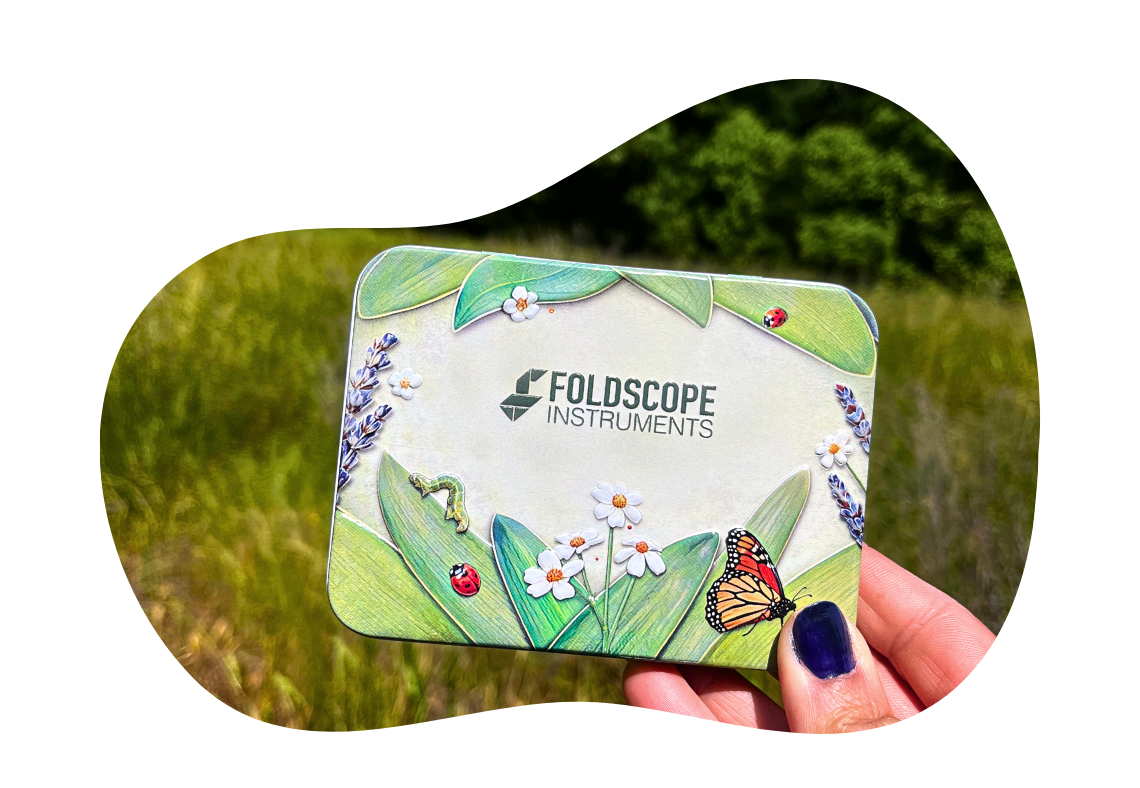
News & Stories / Mycology & Art News Origami Microscope Stanford’s Prakash Lab has engineered a folding microscope made of a sheet of paper. Shea Moss • June 9, 2014 Foldscope image (hosted on foldscope.com). Yes, it is indeed an Origami microscope. It can be used outdoors, is strong enough to survive a drop from a second story window, and is somewhat water resistant. It was developed with the idea of promoting science in undeveloped countries as well as in education. The scope costs about $.50 cents to $1.00 to manufacture. The Foldscope project at the lab won the Gates Exploration Grant. Now it is being field tested. Unfortunately we are hearing about this too late to apply to be one of the 10,000 Beta testers they were looking for, but it may be well worth our while to keep an eye on their progress. It would be a wonderful field mycology tool. To read more: http://www.foldscope.com/ Prakash gave a TED talk about the device, and shows the Foldscope in this YouTube video: https://www.youtube.com/watch?v=h8cF5QPPmWU Don’t miss this one…. Amazing!!! Editor's Note: In 2016, Foldscope was successfully crowdfunded on Kickstarter. Members Only Content Login Join FFSC Related Posts Microscopy of Gilled Mushrooms Previous Article All News & Stories Next Article
- Citizen Science - Amateur Ain't a Dirty Word | Fungus Federation of Santa Cruz
News & Stories / Citizen Science - Amateur Ain't a Dirty Word In 2014, after a lot of flamey discussions over at Mushroom Observer, Christian Schwarz came to realize that many folks aren’t sure what "citizen science" is, how it works, or how it should be done. Christian Schwarz • July 5, 2014 A very far eastern Dendrocollybia… (hosted on https://mycobratpack.tumblr.com/). © Christian Schwarz "I thought a blog post might help quell the animosity and clear up some of the common outstanding questions and misconceptions under discussion," writes Christian. "The discussions revolve around Citizen Science and the associated questions: How does it work? Is it really science? Am I a citizen scientist? If so, is there a cure?" Read Christian's full article on Notes of a Mycophile (tumblr). Members Only Content Login Join FFSC Related Posts How Many Mushrooms in One Day? Previous Article All News & Stories Next Article
- Chanterelle Look Alike Rewriting Evolutionary History | Fungus Federation of Santa Cruz
News & Stories / Chanterelle Look Alike Rewriting Evolutionary History This beautiful little mushroom isn't a mushroom at all. It is Dendrogramma enigmaticaI, a newly named organism from the deep seas near Australia and it may be rewriting evolutionary history. Well named...It is in fact an enigma! Cortinarius • September 2, 2014 Dendrogramma enigmaticaI (hosted on nationalgeographic.com). Photo by Jorgen Olesen Found in 1986 but only recently named, this deep sea organism can't be classed in known animal groups. It's relatives could have roamed the seas 540 million years ago. Now, biologists are scratching their heads over the little guy and wondering what it can tell us about evolutionary history. For more information visit: https://web.archive.org/web/20140904222855/http://news.nationalgeographic.com/news/2014/09/140903-evolution-animal-dendrogramma-mushroom-species-ocean/ Thank you Richard Rammer for this news post from National Geographic! Members Only Content Login Join FFSC Related Posts The Wood Wide Web (from the BBC) Previous Article All News & Stories Next Article
- 2016 Alaska Foray Field Report | Fungus Federation of Santa Cruz
News & Stories / 2016 Alaska Foray Field Report Before going, Noah Seigel was saying it was going to be a banner year for mushrooms in Alaska... I was getting excited and checking the weather of Soldotna months before the trip. My palms were sweating. Katherine (Kitty) Elvin • September 18, 2016 Cruise view. Photo by Katherine Elvin This will be my fourth consecutive trip now and I am an Alaskan fixture at Bill White's Sports Lodge. I will start off with Hugh's unique verbiage of our trip,"North.. to Alaska, we're goin' North, the rush is on! It rained for two weeks before we arrived in Alaska. Locals said it rained for a month. Wednesday we landed in Anchorage and the sun came out. Everything was wet. No sign of rain. We arrived two days early so we could do something other than mushroom hunt (!). After all, this IS our 4th trip. (On our 3rd visit we said that it would be our last). We drove to Seward. Arriving there, itwas still raining. It rained all night. It rained harder. It was rainingThursday when we woke up. And then... it stopped. The sun came out and it never rained again for our entire 11 days inAlaska! (Forecast for days after we left was rain). View from the cruise Thursday morning we took a six hour cruise to Kenai Fjords NationalPark. There are no roads in this park, paved anyway, and it is our nation's largest park next to Denali, also in Alaska. (Denali has roads). I've got to tell you; until you've been up to the face of a glacier in the ocean, you have not experienced a glacier. Although the face of Holgate Glacier is 200 feet high, all scale is lost.The captain shut the engines down. The whole scene appeared to be static, motionless.Silence. Then great cracks and explosions were heard in the ominous silence, asif from many bolts of lightning. The sky was clear. Pieces of ice, some as big as cars, fell off the face from multiple sites. In actuality we were not near the face at all. The sound was arriving too late! The ice was hitting the water as the sound arrived in great rolls!Silence again. But static? No! Is that a creek at the base? No. A river, hardly noticeable on this scale, was gushing from a void at the base of the glacier, violent and raging like a boiling cauldron. This is no creek. This is beyond description. The next day we went Zip Lining. Sandi and I have done this in theTropics a couple times and I must say here, I think the Tropics were much more fun. But the Arboreal forest has much to offer in it's own right. One of our guides knew the trees and our other guide knew the berries and plants, the forest floor. He knew of 6 types of berries that were edible and other plants with medicinal uses. They knew almost nothing of mushrooms. Although they did know of Morels and Chicken Of The Woods(which we found), that was the extent of their mushroom knowledge. Sandi and I started pointing out mushrooms from our perches up in the trees. There were Russula , Cortinarius , Leccinum , Hedgehogs, Hebaloma , Clitocybe , Yellow Feet... too many to name. They were fascinated! I showed them a few they could eat, the differences, the warnings. It was an exciting trip for all of us. They were ready for a hunt and they had access to the land. What a day! On the Kenai Peninsula everywhere we went is one hour forty minutes away. Anchorage to Seward. Seward to Sterling. Sterling to Seward! Sterling to Homer. Homer to Sterling! Everywhere, that is except for the mushrooms. The mushrooms are not far apart at all. The mushrooms are everywhere you step. Just try and NOTstep on one. Go ahead. Think you can do it? ... Sent two dehydrators ahead of us. Shoulda sent 4. Running 5 right now. Coulda used one more. (That's a poem). Ted showing off an Alaska Gold The hunts were awesome. We found King Boletes, Chicken Of The Woods, Hedgehogs, Hawk's Wings, Yellow Feet, Matsutake, Man On Horseback, Gypsies, Alaska Gold, Bears Head... But those are the mushrooms I didn't eat. Weird huh? Yeah that's weird. But I'm Hughish. I actually tried several though... King Bolete (stipe, no. Cap, fair, on the BBQ), Matsutake (better in Top Ramen), Alaska Gold (no), Russula xeramphalina (no), Man On Horseback (pretty good), Bears Head (that's good!). It really DOES depend on the chef and the method, doesn't it. We have added many species to the original list created by our group from the 2010 trip. Debbie, Irene, Mark and Phil documented 192 species on that list. That was the trip where we had several Mushroom Wizards in our group. A Wizard is one of those people I look up to. Wizards can identify pretty much any mushroom, at least to Genus. Mushrooms not on the 2010 list include Laetiporus conifericola , Ganoderma applanatum (Artist's Conch), Hygrocybe (2 species), Amanita (grisette), Inonotus (Chaga), Neoboletus luridiformis ( Boletuserythropus ?), Daldinia , Hericium abietis (Bears Head)... To make a long story short, it was another great trip! Now we are home to the Dog Days of Summer. But what a trip! Farewell, Alaska Parting thoughts, Fungi are an ubiquitous, integrated part of life on Earth. Fungi break down organic material until that material cycles again into that which went before it. Mushrooms are everywhere, more common than plants. Life on this planet could not exist without fungi yet few people consider them if they notice them at all. I feel very fortunate to have been exposed early on to the macro world by my mother; the insects in the yard, the fauna in the puddles, and the vast array of creatures in the oceans' tide pools and then, by my brother, the fascinating diversity of the forest and the forest floor. What a thrill! And last, A special thank you to our gracious hosts, Bill and Jerri, who also extend their thanks to their son. Without their son's influence, and without Bill and Jerri's, this kind of trip may not ever have happened. Without them, we may never have experienced Alaska. Thank you!" Hugh sums up our trip pretty much. We found many mushrooms. The B. edulius was plentiful near the lodge, but with all that sunny weather many were big and beautiful, but buggy. As we headed out toward Seward and Girdwood they were younger and pristine. More mushrooms we collected (try to stop us), more mushrooms we had to prep and dry. All the agony of cleaning and prepping a trunk load of mushrooms, pounds and pounds. You got to feel sorry for us! Denali Several of us got on planes and got an amazing unobstructive view of Denali and joined the lucky 10% club, where I too am a member (year 1) while some of us went out to Cooks Inlet to view grizzlies. Both groups got amazing views of glaciers along the way. "The flight over Denali was the high point of the trip for me. Crystal clear weather; glorious views. Loved seeing the Native art exhibits and picking lots of boletes. Potlucks were fantastic. Hugh's antics were delightful and everyone was in high spirits (with a few resultant hangovers)"- Richard Rammer Alaska is truly the last wilderness we have and we need to cherish it. We can freely pick mushrooms in all the parks and they cheer you on, what a breath of fresh air. "What a spectacular time we all had in the Land of the Midnight Sun! The best company, breathtaking scenery, delicious food , more mushrooms than one could take home, tons of laughs and almost too much fun!. What more could anyone ask for!" -Ron Bader Thank you Bill and Jerri for introducing Alaska to us. For those who have made it here, we are lucky. I want to come back... so much more to do and see. "Another magnificent Alaskan foray! Great people and phenomenal mushrooming in the midst of incredible natural beauty. What's not to love? Hard to choose just one highlight, so take your pick: Crossing Kachemak Bay with otters and a pod of humpbacks, followed by a spectacular hike. Denali! Epic quantities of boletes. Mushrooms to dye for! This was my third visit and definitely not the last." - Debbie Johnson Now if I can shake off the tiredness. Days in the Alaskan summer where the sun does not go down until 9PM mess with your cerulean clock. You wake up early and go, go, go all day - hunting, fishing, shopping, hiking and eating. Crash to sleep at midnight. So when you come home, you are dragging for days until you body says OK, I finally made up the rest you failed to provide me on your vacation. Smile Till I return, I will have to hang on to the memories... This was my husband's first trip to Alaska. If his smile is not an advertisement, I don't know what is. Check out the Members Only section below for links to more photos. Members Only Content Login Join FFSC Related Posts 2015 Alaska Foray Report Previous Article All News & Stories Next Article